


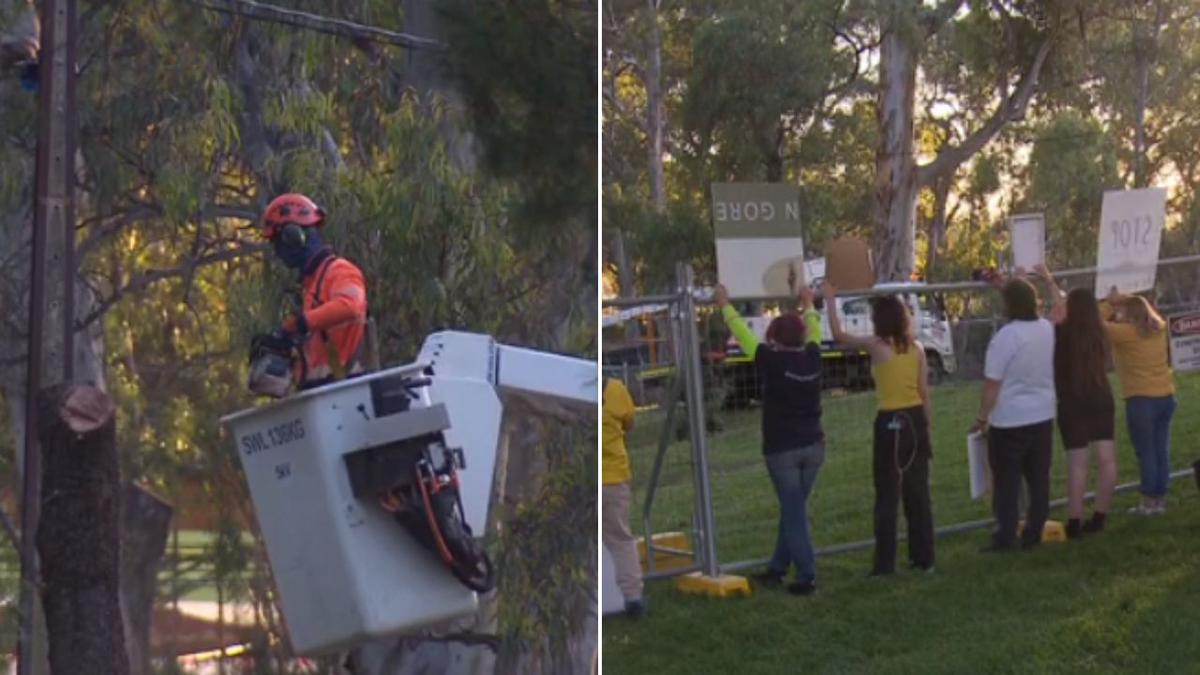
A 44-year-old woman has been accused of driving through a worksite in Adelaide’s East Parklands and injuring a police officer during a protest over tree removals.
The woman, from Semaphore Park, allegedly drove a Toyota sedan through traffic cones at the Rundle Road site near Rundle Park shortly after 6am on Wednesday.
Police allege she intended to protest against work under way in the parklands. When officers directed her to leave, she allegedly refused and became disorderly.
Officers further allege that, as they attempted to arrest her, she drove the vehicle forward, causing minor injuries to one officer. A second officer allegedly suffered minor injuries while the woman resisted arrest.
She has been charged with disorderly behaviour, acts to endanger, causing harm by dangerous driving and causing harm while resisting a police officer.
The woman was refused police bail and is expected to appear in Adelaide Magistrates Court on Wednesday.
The incident came amid protests by the Stop the Chop campaign against the removal of mature trees to allow safety upgrades linked to plans for a new Adelaide street circuit for the Australian Motorcycle Grand Prix.
Campaigners argue the works would have an unacceptable environmental and heritage impact. The South Australian Government has defended the project, saying the tree removals are needed to meet international motorsport safety requirements, while thousands of trees will be planted elsewhere.
Eastern District officer in charge Superintendent Scott Denny said South Australia Police supported lawful protest, but warned that dangerous or unlawful behaviour would lead to intervention.
“South Australia Police supports peaceful and lawful protest,” he said.
“However, any behaviour that endangers public safety, interferes with workers carrying out their lawful duties, damages property or constitutes a criminal offence will be dealt with appropriately.”
He added: “Those who choose to engage in unlawful activity or dangerous behaviour should expect police intervention and may face arrest and criminal charges.”
