


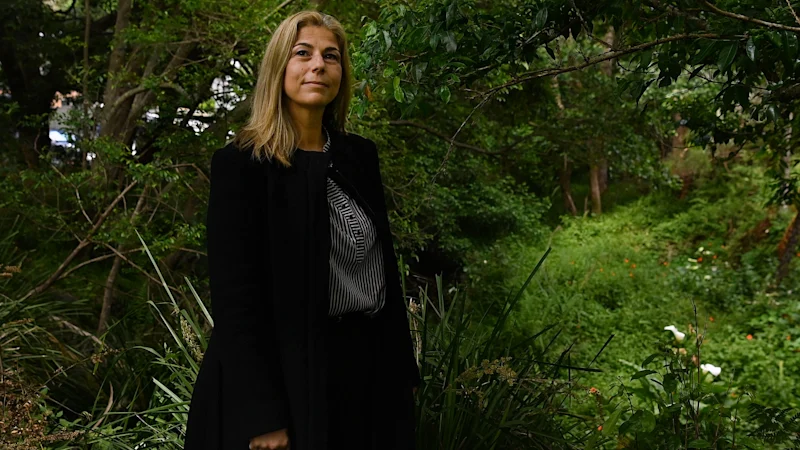
Australian war widows are preparing to honour loved ones at Remembrance Day events this week, while urging greater recognition of the sacrifices made by families who supported serving personnel at home.
Queen Dunbar, president of the Families of Veterans Guild in New South Wales, said the contribution of war widows was often overlooked despite the responsibilities they carried while their partners served overseas.
“Our sacrifices are not seen, and if they are seen, they are seen once or twice a year,” she said.
Dunbar’s husband, Adam, joined the Australian Army in 1996 and served in the Solomon Islands, Iraq and Afghanistan. He was discharged in 2015 after being diagnosed with post-traumatic stress disorder and died by suicide two years later from injuries suffered during his service.
Dunbar was 41 at the time. Their children, Joshua and Sarah, were 15 and 11, while she worked three jobs to support the family.
She said it took about a year to understand that she was a war widow, and credited other widows with helping her recover from the immediate shock of her husband’s death.
“I was trying to make it through the pain and the grief, and knowing that I actually have a place where I belonged, changed my outlook on life,” she said.
More than 28,000 war widows are recorded in Australia. The Families of Veterans Guild says many families face financial pressure, while three in five reported that their children had experienced problems at school during the previous year.
Families seeking more tailored veterans’ support
Dunbar combines work as an English teacher and flight attendant with supporting her children. She considers herself underemployed because of the demands placed on her family.
Her 20-year-old daughter faces mental health difficulties linked to her father’s service, which Dunbar expects could be a lifelong struggle. She has called for support packages to be designed around the needs of individual families and for better assistance for former service personnel moving into civilian life.
“My children’s wellbeing has impacted my employment because I’ve had to sit there and try to find support for my daughter,” she said. “My career has been impacted because of their needs that the department wasn’t able to meet.”
The Department of Veterans’ Affairs acknowledged continuing challenges in delivering tailored support, saying work was under way to better understand the needs and priorities of families. It expects to have implemented two-thirds of the recommendations of the Royal Commission into Defence and Veteran Suicide by the end of 2026.
For Shirley McLaren, the loss of her husband brought immediate upheaval. She was 39, with three young children, when Roy, a Royal Australian Air Force member, died unexpectedly on Christmas Eve in 1972.
Two days after his funeral, McLaren was removed from Defence accommodation. With no support from a widows’ network, she drove her family to Canberra, where they slept in sleeping bags in friends’ dining rooms while she rebuilt their lives.
McLaren had herself enlisted in the Women’s RAAF at 18 in 1951. She later found some widows’ groups unwelcoming, but now makes a point of ensuring that no newcomer sits alone at Guild meetings.
“You’ve gone from a couple, doing everything together, and suddenly, you’re on your own,” she said. “Tears are the price we pay [for love].”
The 94-year-old continues to remember Roy each week by placing six stems of rosemary beside his photograph at her rural cottage south of Canberra. She has also shared his story with her great-grandchildren, Will and Tom.
McLaren will lead the Ode of Remembrance at the Families of Veterans Guild’s first Remembrance Day lunch at the Australian War Memorial on Tuesday. About 70 war widows and veteran families are expected to attend.
The guild was founded in 1946 by Jessie Vasey, seven months after the death of her husband, George, in the Second World War. Vasey wrote to 2,000 widows while grieving, arguing that meaningful help for widows could come only from others who had experienced the same loss.
McLaren said the passage of time did not remove the pain of losing a partner through military service.
“I lost a wonderful, loving husband, the father of my children, the love of my life, so my remembrance goes out to all veterans, of course, who have served and are no longer with us,” she said. “It doesn’t matter how long it is … the grief is very deep and long-lasting.”
