


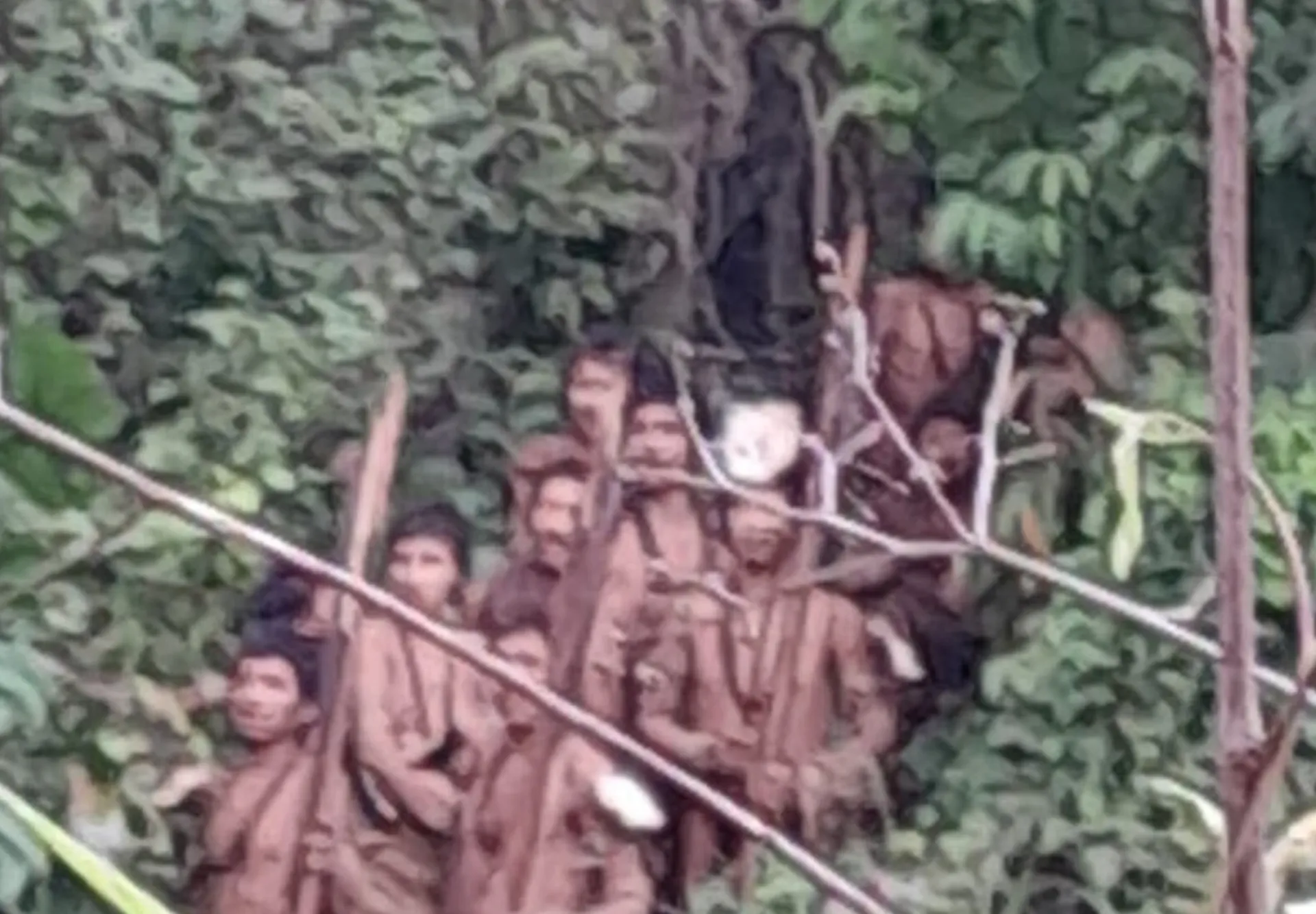
Rare images of an isolated Indigenous Awa group in Brazil’s Amazon rainforest have drawn attention to the dangers posed by illegal loggers, hunters and ranchers, advocates say.
Survival International said about 20 uncontacted Awa people approached a government team for food during what it described as a historic encounter in Maranhão on Monday.
The Awa are a Tupi-Guarani people living in north-western Maranhão. Some members of the community remain in voluntary isolation, according to Brazil’s Indigenous affairs agency, Funai.
Funai said it was examining videos and social media accounts showing isolated Awa interacting with people in a village in the Arariboia Indigenous Land. It stressed that the Brazilian state was not seeking contact with the group, in line with its non-contact policy.
Brazil’s Ministry of Indigenous Peoples said the encounter began near a government access control post and the village of Tawari, which is home to Guajajara Indigenous people. Members of the Guajajara community recorded the footage.
Survival International said it released the images at the request of the Guardians of the Amazon, an Indigenous organisation campaigning against illegal loggers and ranchers.
Threats facing the isolated Awa
Caroline Pearce, Survival International’s director, said the group was being pushed into an increasingly restricted area as illegal activity encroached on its territory.
“The uncontacted Awa are under extreme pressure as intruders encroach from all sides of their territory, driving them into an ever-smaller island of the Amazon rainforest, surrounded by destruction,” she said.
The Maranhão Indigenous organisation COAPIMA said the encounter underlined the need for responsible agencies to act carefully. It warned that unplanned contact could expose isolated groups to diseases.
Across the Amazon, isolated Indigenous communities have faced pressure from illegal miners, loggers and ranchers in recent decades. Contact has proved deadly for some groups: in Colombia, about 40 per cent of the isolated Nukak people died from diseases after outsiders reached them in the 1980s.
“If there is no forest, there are no uncontacted peoples,” Teresa Mayo, a senior researcher at Survival International, said in a report on the Nukak.
