


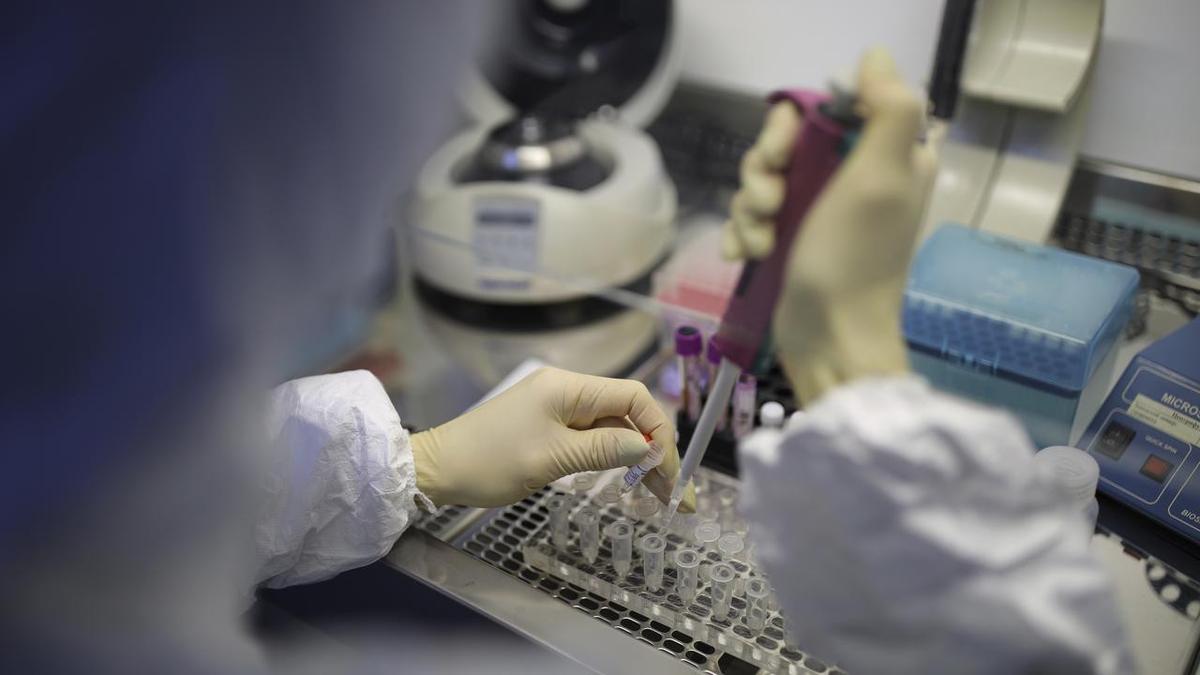
Russian health authorities have reported no plague cases among people who came into contact with a laboratory worker who died in Siberia, as officials sought to calm concern over the unexplained illness.
The 28-year-old woman, employed at a plague research institute in Irkutsk, died on Friday from pneumonia of an as-yet undetermined origin. The case has drawn international attention, including from US President Donald Trump.
Rospotrebnadzor, Russia’s health watchdog, said extensive testing had found no microorganisms in the woman’s body linked to her work. It added that no infectious diseases had been reported among staff at the institute during the previous 10 days.
People who had been in contact with the woman were identified and placed under medical observation in hospital, where they underwent daily laboratory testing.
“A comprehensive set of anti-epidemic measures was immediately organised and implemented in full in accordance with public health legislation,” Rospotrebnadzor said.
The testing identified two cases of Covid-19 and two of rhinovirus infection, but no pathogens linked to other infectious diseases were detected. The watchdog said none of those being monitored had shown changes in their health associated with an infectious disease.
Elena Sofina, deputy head of the Shelekhov district near Irkutsk, said the “dangerous diagnosis” had not been confirmed. About 60% of those placed in quarantine as a precaution had been released, while local media reported that around 200 people had previously been isolated.
The World Health Organisation said Russia had told it there were no cases of plague in the city of Irkutsk. It was not immediately clear whether that ruled out plague in the laboratory worker’s case.
In Shelekhov, where the woman is reported to have died in hospital, residents said daily life had largely continued as normal. Some people had initially worn surgical masks in shops, but locals said the situation remained calm.
One resident, who gave her name only as Anna, said people had been ready for restrictions to be imposed but that they had not significantly disrupted the town.
“Everyone had face masks at home and wore them for no more than 24 hours,” she said.
Another resident, Denis, said the death had been widely discussed locally. He said the hospital had temporarily stopped carrying out diagnostic tests before resuming normal services.
Kremlin spokesman Dmitry Peskov welcomed an offer of help from Mr Trump, although he did not say whether Moscow intended to accept it.
“It’s always good when mutual assistance is offered,” Mr Peskov told reporters.
Mr Trump had described the situation as a “big problem for Russia”, while US Secretary of State Marco Rubio said Moscow should provide more information.
