


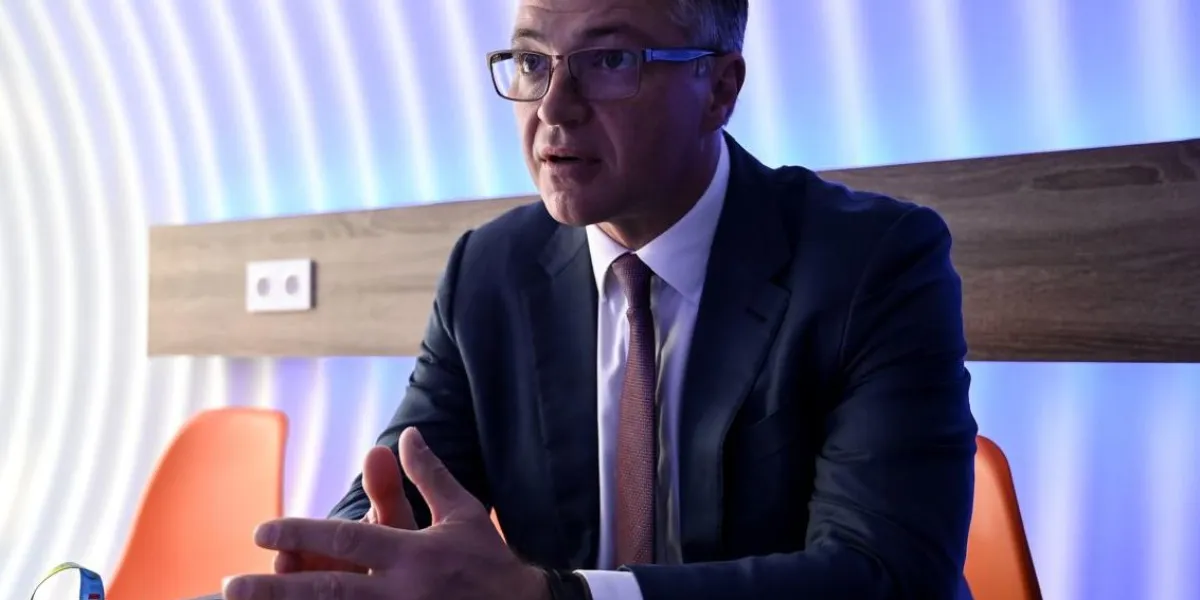
Ukraine’s steelmaking industry is facing collapse as Russian attacks cripple production and new European Union tariffs restrict its access to the bloc’s market, according to Metinvest chief executive Yuriy Ryzhenkov.
Metinvest, Ukraine’s largest steelmaker, employs 33,700 people, while more than 8,000 of its workers are serving in the Ukrainian armed forces. Its factories have been repeatedly bombarded and hundreds of employees have been killed.
Ryzhenkov said the latest phase of the war had been among the most difficult for the company since Russia’s full-scale invasion began more than four years ago. Bombing in August and September forced both of Metinvest’s steel mills to stop operating, he said, with 14 people killed at the facilities.
“We’ve been hit numerous times. Our facilities have been hit over the last four and a half years, and even though we were restoring them after every hit, you lose,” Ryzhenkov said.
“You get weaker with every such attack. In wartime you cannot afford to restore to the original state. You do the best you can to continue operating and that best is never the ideal.”
Ukraine steelmaking hit by EU quota reduction
The company is also facing tighter trading conditions in Europe. In July, the EU reduced its key tariff-rate quota for Ukrainian steel by 60%, a move expected to cut imports from Ukraine by 1.3 million metric tonnes a year, according to the GMK Center, a Ukrainian think tank.
Ryzhenkov said the reduction had come when Ukraine’s seaports were already blockaded, leaving the EU as its only available market for steel exports.
“If you compare the quotas that were allocated to Ukraine this year to what was supplied last year, it’s minus 60% and that’s at the time when the ports were already closed, and we literally have no other alternative,” he said.
He said the EU had initially removed restrictions on Ukrainian steel after the invasion, but had subsequently treated Ukraine in the same way as other countries outside the bloc despite the exceptional difficulties facing its industry.
“It was too harsh, given the circumstances,” Ryzhenkov said. Negotiations are continuing, and the EU has said it recognises that Ukraine is a unique case.
The combined effect of the war and the trade restrictions has been severe. Ukrainian steel production fell from 21 million metric tonnes in 2021 to 7.4 million metric tonnes in 2025, while the value of exports dropped from 22 billion dollars to 6 billion dollars. Tax revenues fell from 3.5 billion dollars to 870 million dollars.
Russian attacks on factories, energy systems and railways have also damaged steel supplies to Ukraine’s armed forces, according to Metinvest.
“There is pretty much no future without a market to which you can sell,” Ryzhenkov said. He added that steelmaking generally required capacity utilisation of more than 90% to be profitable, a level he said was impossible to sustain amid continuing disruption.
Asked whether steelmaking could disappear in Ukraine, he said: “Well, if nothing is done, it’s almost inevitable.”
Ryzhenkov, who became Metinvest’s chief executive in 2013, comes from a family with long-standing links to the steel industry. He said continuing to operate remained the only practical choice for a company whose employees and their families depended on it, as did thousands of workers serving in Ukraine’s forces.
“Why would you slam the door if you can still try to do something to carry on? I just don’t find a reason for myself to do that,” he said.
