


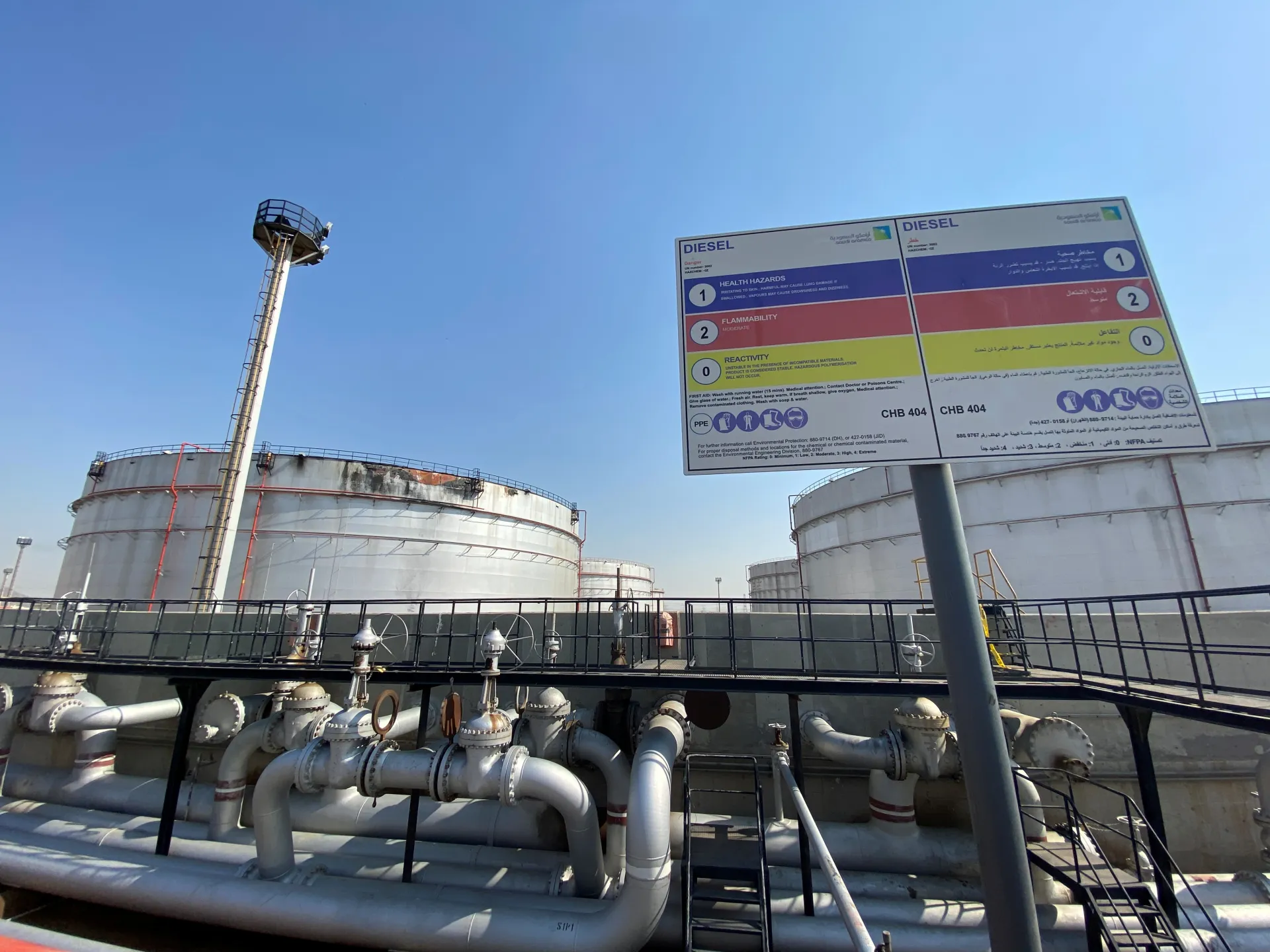
France is sending troops, radar equipment and defence systems to protect Saudi Arabia’s key oil terminal at Yanbu as Houthi attacks intensify, while Pakistan and Türkiye prepare military talks with Riyadh under a mutual defence agreement.
French President Emmanuel Macron said the deployment was intended to protect the Red Sea facility rather than draw France into the conflict. “Not to involve ourselves in any conflict, but to protect the site,” he told French broadcasters.
Yanbu contains major oil storage and refining facilities and is linked to the East-West Pipeline, which can carry up to seven million barrels of oil a day.
The Houthis, also known as Ansar Allah, said on Thursday that they had attacked facilities belonging to Saudi state oil company Aramco in Yanbu, as well as a “sensitive target” in Riyadh. Saudi forces said they had intercepted six ballistic missiles, although authorities have not confirmed any damage.
Saudi allies discuss military response
The foreign ministers of Saudi Arabia, Pakistan and Türkiye agreed to arrange an urgent meeting of their military chiefs of staff, according to the Saudi foreign ministry.
The discussions will take place under the Mecca Joint Defence Agreement, which treats an attack on one member as an attack on all. The ministers condemned Houthi attacks they said had targeted Mecca and other civilian sites.
It remains unclear what action Pakistan and Türkiye might take. The pact has not been officially triggered, while both countries are involved in efforts to mediate an end to conflicts across the Middle East.
Saudi Arabia’s grand mufti has called on the country’s soldiers to be prepared to give their lives fighting the Houthis, according to Saudi state media.
The Iran-aligned group has fought Yemen’s Saudi-backed government for more than a decade. The conflict has been reignited amid Israel’s wars against Hamas in Gaza and Hezbollah in Lebanon, as well as the United States war on Iran.
Attacks put pressure on oil exports
The latest alleged strike on Yanbu has added to pressure on Saudi oil shipments. Earlier this month, the Houthis seized the Yemeni port of Mocha and several Red Sea islands, giving them significant control over the Bab al-Mandeb strait.
The strait normally handles about 12 per cent of global oil trade. Houthi attacks have also disrupted the East-West Pipeline, which Riyadh had been using to send crude to export routes while the Strait of Hormuz was restricted amid the Iran-US war.
Saudi Arabia has since been forced to switch some exports back to the Strait of Hormuz. Brent crude rose by more than 3 per cent on Thursday, briefly passing 108 dollars a barrel, before easing to 105.77 dollars on Friday morning.
At the United Nations General Assembly in New York, Yemen’s Vice-President Abdullah Abdulkader al-Alimi-Bawzer accused the Houthis of using shipping security “as a tool for blackmail”.
“It is taking hostage the entire global economy,” he said.
The United States has not resumed military involvement, but Saudi Foreign Minister Prince Faisal bin Farhan Al Saud said the kingdom was “continuing to work with our partners in the US”.
