


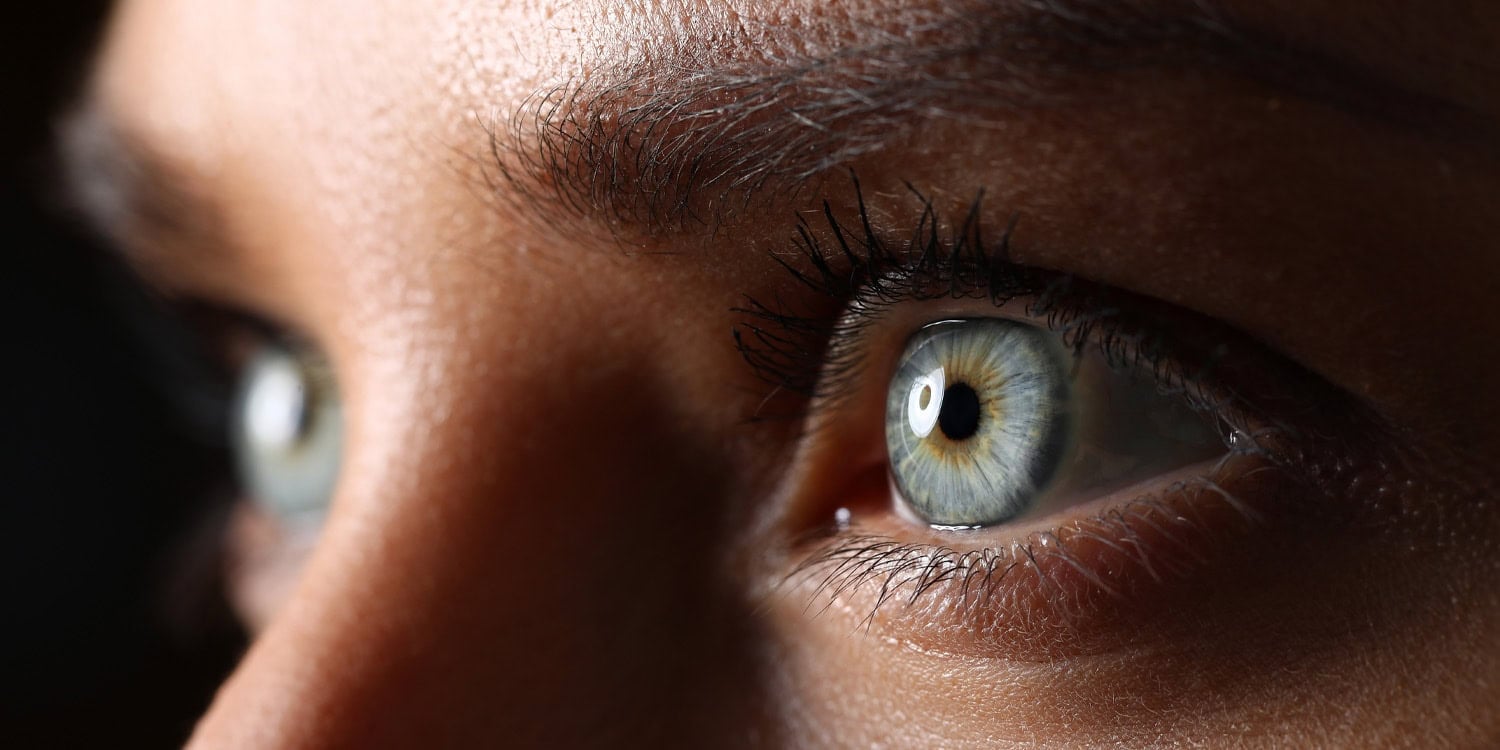
A new eye-tracking study suggests that followers who rate themselves as conscientious use gaze strategically when speaking to a leader, directing their eyes at the leader’s features to bolster their own arguments. The researchers say this behaviour can make such followers appear more conscientious to observers, indicating eye contact may signal reliability in workplace settings. The findings were published in the Journal of Applied Social Psychology.
Eye gaze is widely recognised as a powerful form of nonverbal communication, capable of attracting attention, increasing engagement and influencing the course of social interactions. While avoiding eye contact can sometimes be taken as a sign of dishonesty, experts note that gaze conveys a range of social meanings depending on context.
In organisational environments, leaders often use eye contact to project confidence and involvement. Conversely, followers can use their gaze to communicate personal qualities. Conscientiousness—a trait linked to reliability, persistence and effective performance—is of particular relevance, and the study suggests gaze may act as a subtle signal of these attributes to leaders and colleagues.
The researchers, led by Simon Liegl, hypothesised that more conscientious followers direct their gaze at their leader’s eyes more frequently to support their arguments, thereby mediating how a person’s self-perceived conscientiousness translates into observers’ perceptions.
The study involved 39 university students, 21 of whom were men, with an average age of 24. All participants were required to have normal or corrected-to-normal vision using soft contact lenses.
During the experiment, participants completed a negotiation task while their eye movements were recorded with mobile eye-tracking glasses. The researchers mapped each gaze point frame by frame onto a static image of the other people in the room to determine precisely where attention was directed at any moment.
In the negotiation task, the real participant interacted with three research assistants who acted as fellow participants. One assistant consistently played the leader, while the real participant and the other two assistants served as followers. Although the participants were told roles were random, the assistants followed standardised behaviours to ensure any interaction differences predominantly reflected the real participant’s choices.
The followers argued for one preferred form of compensation—such as higher pay or more vacation—while opposing the alternatives preferred by others. The discussion unfolded over four rounds, with the leader making offers and each follower presenting arguments in turn. The eye-tracking glasses measured gaze patterns during both listening and speaking.
Participants also completed standardised questionnaires assessing self-perceived charisma and personality traits, including the Big Five. In addition, observers rated the participants’ charisma and personality based on their in-room behaviour.
The results showed that participants who described themselves as more conscientious tended to look at their leader’s eyes more often, particularly when they were speaking. Moreover, those who directed more of their gaze at the leader and other negotiators—both while listening and while speaking—were more likely to be rated as conscientious by observers, suggesting gaze is interpreted as a reliability signal.
Interestingly, openness to experience—reflecting curiosity and receptiveness to novelty—was linked to making less eye contact when speaking.
“Importantly, more conscientious followers appear to specifically instrumentalize their gaze when speaking and direct it at the leader to support their own arguments. Thus, this study underscores the importance of investigating followers’ signaling of their traits and abilities, identifies eye-directed gaze as a potential signal of conscientiousness, and further emphasizes the significance of gaze behavior as a particularly potent social cue in the organizational context,” the study authors concluded.
The research adds to the understanding of nonverbal communication in social interactions within organisational settings. However, the authors note the study’s relatively small sample, cautioning that results may differ in larger or more diverse groups.
The paper, “Eyes on the Leader: Gaze Behavior as a Cue for Follower Conscientiousness,” was authored by Simon Liegl, Thomas Maran, Marco Furtner, and Pierre Sachse.
