


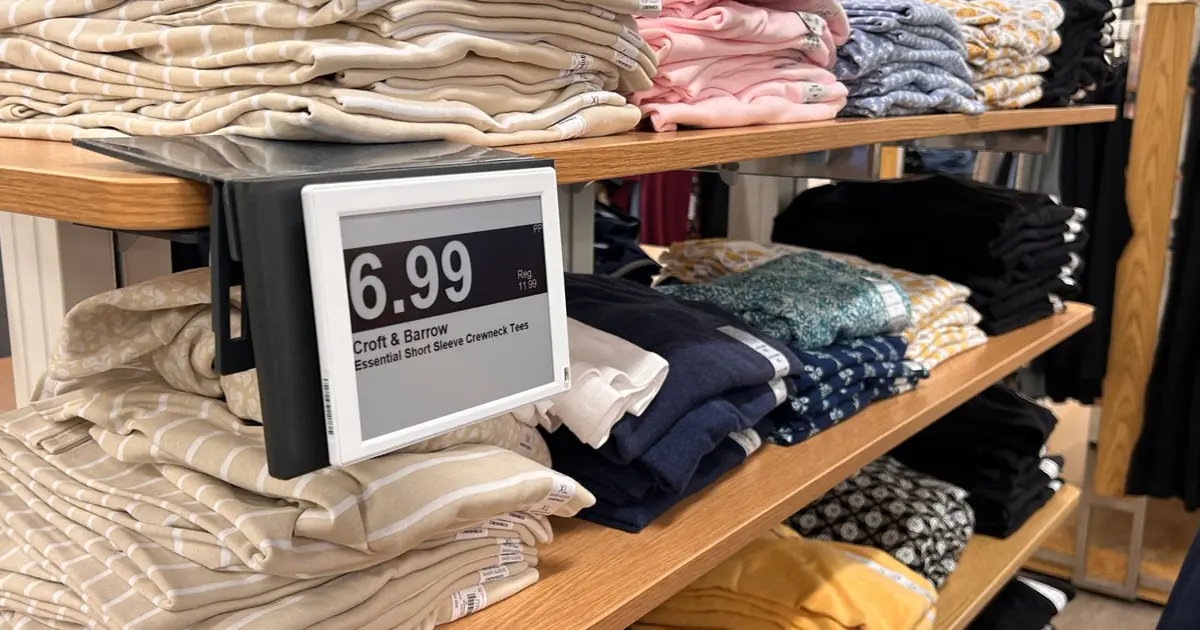
US shoppers are facing growing concern over the spread of digital shelf labels, algorithmic pricing and the possibility that personal data could influence what they pay in shops, restaurants and online.
The technology is being adopted by retailers across the country as businesses seek to update prices more quickly, respond to demand and reduce the amount of manual work involved in replacing paper labels. But the shift has fuelled questions about whether different customers could eventually be shown different prices for the same product.
Digital shelf labels are already appearing in grocery stores and department stores, allowing prices to be changed centrally within minutes. Retailers say the displays can keep shelf prices aligned with tills and make it easier to apply discounts or markdowns when stock is not selling.
The wider debate centres on the difference between dynamic pricing and surveillance pricing. Dynamic pricing adjusts the cost of a product or service according to factors such as supply, demand, stock levels, time or location. Customers may already encounter it when booking flights and hotels, using ride-hailing services or buying goods during clearance sales.
Surveillance pricing, also known as personalised pricing, involves using information about individual customers or groups of customers to determine the prices or offers they see. Data can include a person’s location, browsing and purchase history, demographic information, the products left in an online basket and even movements made with a computer mouse.
Federal Trade Commission research has found that third-party pricing companies can provide retailers with tools capable of using such information to tailor prices and promotions. The agency said in January 2025 that some firms it examined could use detailed consumer data to show different offers, or more expensive products, to people based on their behaviour.
The FTC issued a proposed enforcement policy in August 2026 warning that businesses which personalise prices should clearly explain that they are doing so, as well as identifying the data used to make the calculation. The commission said failing to provide that information could amount to an unfair or deceptive practice where customers would reasonably expect everyone to see the same price.
However, the agency has also acknowledged that it does not have the power to prohibit personalised pricing in every circumstance. Its work in the area remains focused on understanding how the market operates and whether existing consumer protection laws have been breached.
Retailers defend digital pricing systems
Walmart has become a particular focus of online speculation after announcing plans to expand the use of electronic shelf labels. False claims circulated on social media that the labels could scan shoppers’ faces or phones and use the information to set individual prices.
Walmart has rejected those claims. Its chief executive, John Furner, said the labels do not contain cameras, microphones or facial-recognition technology, and that all customers see the same price on a particular shelf.
“We price the product, not the person,” Mr Furner said in a letter to customers in September. He said prices could rise when the retailer’s costs increased or fall when savings could be passed on, but insisted that income, shopping history or a customer’s urgency would not be used to charge them more.
The company says the labels simply replace paper displays and help staff update thousands of prices more efficiently. Walmart has also said its digital shelf labels are designed to ensure that the amount shown on the shelf matches the price at the checkout.
The National Retail Federation, which represents retailers of different sizes, has argued that algorithmic pricing is largely an updated version of practices businesses have used for years. But consumer behaviour experts say the lack of clear information about how prices are determined is helping to drive public suspicion.
“There are major tensions happening right now between who’s really going to have the power with some of these algorithms and usage of bots and AI: the companies or the shopper,” said Katie Thomas, who leads a consumer behaviour think tank at the consultancy Kearney.
She said a lack of transparency had encouraged speculation, including inaccurate claims about the capabilities of electronic shelf labels. The uncertainty has also made it harder for customers to distinguish between ordinary price changes caused by supply and demand and pricing based on personal information.
In one previous case, California authorities alleged that Target’s app displayed lower prices until shoppers entered a store, after which some prices rose. Target agreed to a $5 million settlement and to stop using geofencing to increase prices, while maintaining that the app’s pricing differences were intended to reflect variations between stores and sales channels.
The issue is now attracting attention from state lawmakers. The National Conference of State Legislatures said at least 30 states, as well as Washington DC and Puerto Rico, were considering legislation in 2026 covering pricing transparency, algorithmic pricing, personalised offers and so-called surveillance pricing.
Proposals include measures affecting digital coupons, restaurant charges, event tickets and online retail. Some bills would require companies to disclose when a price had been generated using personal data, while others seek to restrict the use of location or device information altogether.
For shoppers, the central question is whether new technology will simply make prices easier to update or gradually undermine the expectation that the same product carries the same price for everyone in the same place.
