


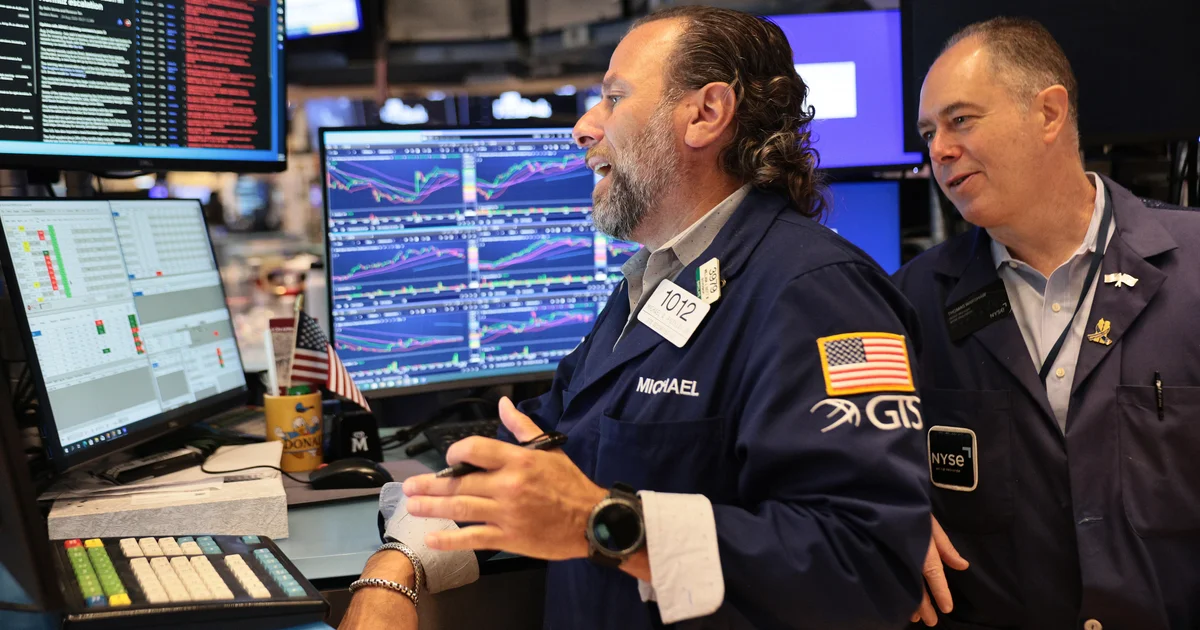
A global technology stock sell-off gathered pace on Monday after calls for a more cautious approach to artificial intelligence development raised concerns about the sustainability of the vast spending that has driven markets to record highs.
The tech-heavy Nasdaq Composite fell by about 1% in early trading, while the S&P 500 declined 0.6% and the Dow Jones Industrial Average was down by the same amount.
Companies supplying the infrastructure and resources used by the AI industry were among those worst affected, according to Adam Crisafulli, head of investment advisory firm Vital Knowledge.
“Markets are trying to figure out what the pace [of AI development] is, and there will be winners and losers depending on what that pace is,” said David Royal, chief financial and investment officer at financial services provider Thrivent.
“I’m not too alarmed by what we’re seeing today, but you are seeing some individual names in the chip space that are getting hit pretty hard,” he added.
The latest market reaction followed warnings from senior figures in the AI industry that development should proceed more carefully because of the potential risks. Dario Amodei, chief executive of Anthropic, intensified those concerns in an essay published over the weekend in which he called on the industry to “pace the frontier”.
“For too long the industry lied” about AI risks, Mr Amodei said in an interview. Elon Musk, the chief executive of SpaceX, which owns xAI, and OpenAI chief executive Sam Altman have also backed calls for a slowdown.
Concerns over the AI investment boom
Investment in AI has become a major engine of stock market growth, helping indices achieve a succession of records. Investors are now questioning whether billions of dollars in capital spending will outstrip the profits generated by companies, increasing the risk of a broader downturn.
Market performance has become increasingly concentrated among a small group of technology companies. A substantial sell-off in the sector could therefore affect investors and put pressure on Americans’ 401(k) retirement plans.
Some analysts believe the AI-led rally could continue in the short term, while warning of greater risks over a longer period. Capital Economics forecasts that the S&P 500 could reach 8,250 by the end of the year, but expects the AI bubble to burst next year, followed by a fall of more than 20% in the index by the end of 2027.
Mr Crisafulli said the pace of AI spending was a concern, although a sharp slowdown in capital expenditure would not necessarily trigger a complete market decline.
“I think it’s more nuanced than just bubble, no bubble,” he said. “This pace of spending is absolutely not sustainable. But that doesn’t mean everything that is associated with AI has to suffer as a result.”
