


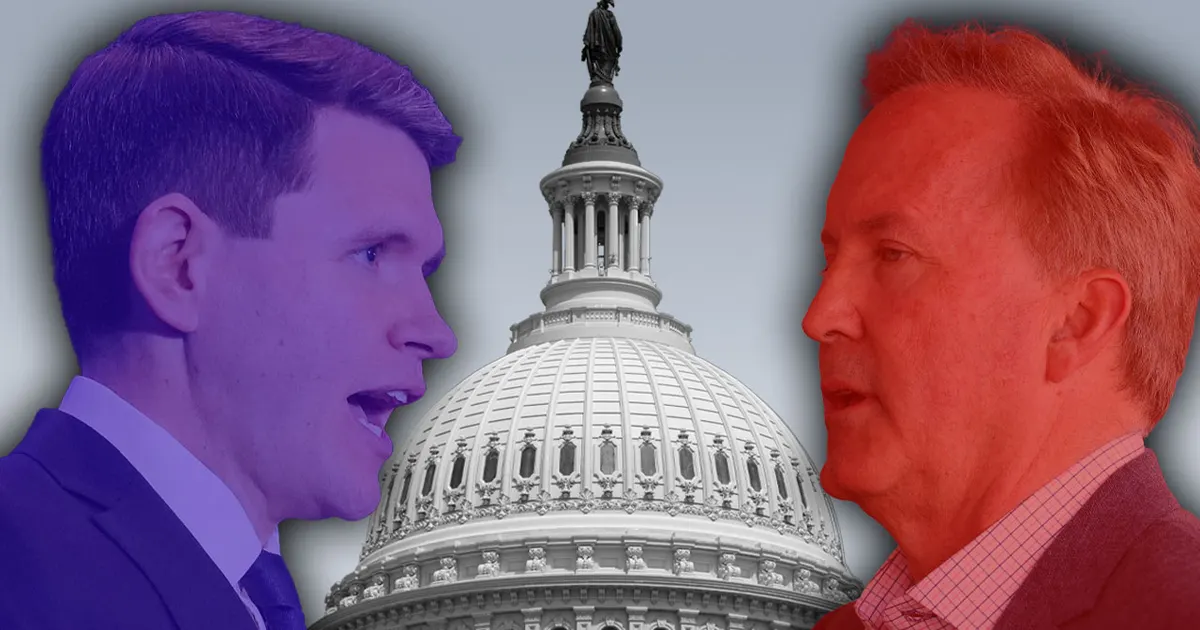
Texas voters remain firmly Republican-leaning as the state’s 2026 election approaches, but a new poll has found the US Senate race between Republican Ken Paxton and Democrat James Talarico effectively deadlocked. The survey also recorded strong opposition to new data centres and Flock-style automatic number-plate recognition cameras.
Paxton was backed by 43.4 per cent of likely voters, compared with 44 per cent for Talarico, according to the Overton Insights poll of 1,167 Texans conducted between August 24 and 26.
Once voters who said they were leaning towards a candidate were included, the Senate contest became an exact tie, underlining the potential for a closely fought campaign in a state where Republicans have dominated statewide elections for more than two decades.
Mark Cunningham, Overton’s polling director, said the result was favourable for Mr Paxton despite his narrow deficit.
“It is pretty clear the Texas Senate race is going to come down to the wire,” he said, adding that the Republican was within the poll’s margin of error and level with Mr Talarico when leaners were included.
The survey had a margin of error of 2.9 percentage points and was sponsored by the Texas Public Policy Foundation, a conservative think tank. Overton Insights was launched by the libertarian Libertas Network.
Texas governor’s race also within polling margin
The poll found a similarly tight contest in the race for governor, although Republican incumbent Greg Abbott held a slight advantage over Democrat Gina Hinojosa.
Mr Abbott received 46.9 per cent support, against 45.8 per cent for Ms Hinojosa, while 7.3 per cent of voters remained undecided. When respondents who were leaning towards one of the candidates were counted, Mr Abbott’s lead widened to 58.5 per cent against 41.5 per cent.
Ms Hinojosa said the figures reflected growing support for her campaign and attacked the governor over education, household costs, data centres and surveillance cameras.
“Our campaign is only getting stronger as more voters get to know me,” she said, arguing that Texans would reject Mr Abbott in November.
Mr Cunningham said the closeness of the governor’s race was more unexpected than the Senate result, suggesting that national dissatisfaction with Republicans and Donald Trump could be affecting Mr Abbott’s standing.
Texans reject data centres and number-plate cameras
The poll also found that opposition to data centres has become a significant political issue in Texas, with 54.7 per cent of voters supporting a local ban and 37 per cent opposing one.
Support for new facilities remained low even when safeguards were proposed. Some 54.2 per cent said they would oppose data centres with protections in place, while 37.9 per cent supported them.
Data centres have become a source of tension across Texas because of concerns over their demands on water supplies and the electricity grid. The issue has also featured prominently in the governor’s race, with Ms Hinojosa accusing Mr Abbott of allowing companies to use public resources without paying their full share.
Automatic licence-plate readers received even less support. Only 28.1 per cent of voters backed the use of systems such as those operated by Flock Safety.
The cameras photograph passing vehicles and use artificial intelligence to record details including registration plates, vehicle type, colour and identifying features. Police forces can then search information held across participating camera networks.
The findings come as several Texas communities reconsider their agreements with Flock. Wylie and Pflugerville recently ended their contracts, while officials in Liberty Hill are due to decide by the end of October whether to continue using the system.
Mr Abbott has also ordered Texas agencies to pause funding for new Flock cameras amid mounting concerns about privacy and civil liberties. His press secretary, Andrew Mahaleris, said most funding for the systems in Texas came from the federal government, while state agencies were clarifying that their money could not be used for the cameras.
Mr Abbott has said residents deserve clarity over how the technology is used and insisted that privacy and Fourth Amendment rights must be protected. Flock Safety has defended the cameras as a public-safety tool used to solve serious crimes, find missing people and recover stolen vehicles.
