


Donald Trump’s anti-communist rhetoric is being undercut by an economic agenda that includes state ownership of private companies, tariffs and attempts to influence interest rates.
The president has repeatedly branded Democrats as “communists” while presenting himself as a defender of free markets. Yet his administration has announced equity stakes in more than 30 private companies and taken a series of unorthodox steps to direct the economy.
Trump has also proposed giving every adult in the United States $5,000, provided Republicans win control of both the House of Representatives and the Senate in November.
The idea, first raised at the Republican midterm convention, prompted scepticism from some of his conservative allies. Michael Duncan, co-host of the Ruthless podcast, said the policy might be politically effective but suggested that “the better policy might be to instead ‘just cut taxes by $5,000’”.
“We don’t need helicopter money,” he added.
Josh Holmes, Duncan’s co-host, questioned whether voters should receive a government cheque, while the conservative satire site Babylon Bee mocked the proposal as an “equal redistribution of wealth from the government”.
Trump’s economic interventionism
Scott Lincicome, vice-president of general economics at the libertarian Cato Institute, described the administration’s approach as “transactional interventionism”.
He said Mr Trump did not appear to be following a fixed economic philosophy, but instead pursued individual outcomes through measures such as tariffs aimed at particular industries or foreign countries, and proposals designed to reward voters.
“He is very transactional,” Mr Lincicome said. “It’s not free market or socialist. It just is.”
The White House defended the president’s record. Spokesman Kush Desai said Mr Trump was “implementing traditional free market policies that do work — like deregulation and tax cuts — while rectifying longtime America-Last policies that have left Americans behind”.
The government’s investments in private businesses have attracted particular attention. The US has taken corporate stakes in the past, including during the financial crisis when it intervened to support banks and car manufacturers.
Jonathan Hillman, a senior fellow for geoeconomics at the Council on Foreign Relations, said the scale of the current activity was different. He has counted 39 deals and questioned what crisis justified such a volume of intervention.
Mr Hillman said some supply chains, including critical minerals, might require support, but added that the level of deal-making was notable and could increase further.
Communist rhetoric and political alliances
At the Republican convention, Mr Trump said: “We will defeat the communists, and that’s what they are. They’re not socialists, they’re not democrats, they’re communists.”
A television advert aired last week carried a similar message, with Mr Trump declaring: “Together we will defeat communism, socialism, and Marxism in America.” The advert stated that it had been funded by the federal government, and an ethics group has filed a lawsuit challenging the use of taxpayers’ money for what it described as an overtly political broadcast.
But the president’s own public engagements have complicated that message. At an appearance with Zohran Mamdani, the New York City mayor who is a democratic socialist, Mr Trump said he wanted him to be a “great mayor” and that he had “great potential”.
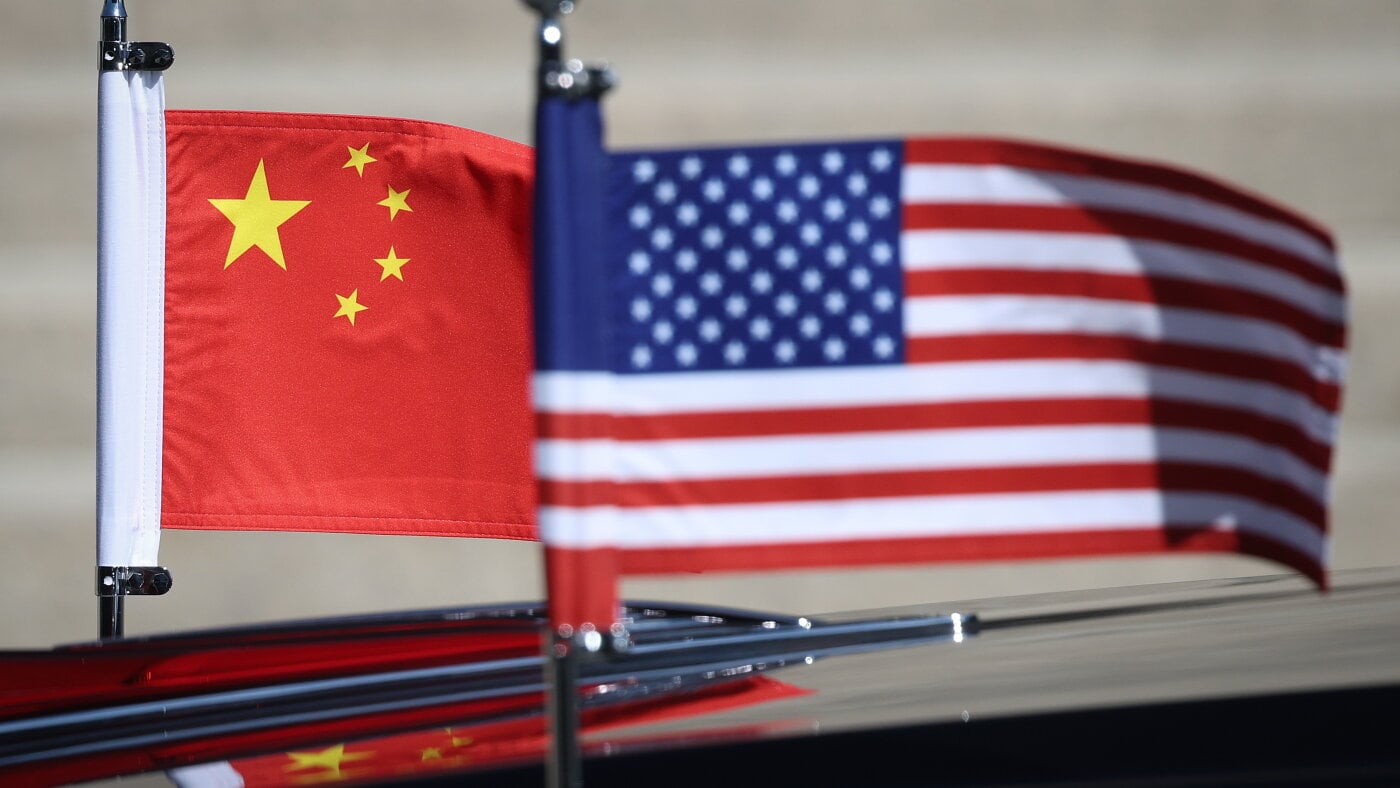
Days later, Mr Trump welcomed China’s communist president, Xi Jinping, to the White House and described him as “strong, vibrant, and fit”. He has also praised Mr Xi as “tough”, “smart” and a “great leader”, despite repeatedly portraying China as a rival the United States must defeat.
Sheri Berman, a professor of political science at Columbia University, said Americans understood the terms socialism and communism in different ways. Policies supporting a more interventionist government and publicly provided healthcare or education, she said, amounted to social democracy rather than communism.
She added that people with family ties to countries such as Cuba, the former Soviet Union or Venezuela could associate communism with a more specific and personal experience of authoritarian rule. The term could also resonate with Americans old enough to remember the Cold War.
Mr Lincicome said the president’s actions could leave the next administration with significantly expanded powers. A future government could choose to retain the existing equity stakes or acquire more, he said, leaving the country operating in “this gray area of expansive new power”.
With just over two years remaining in Mr Trump’s term, debate about who will lead the next administration is expected to intensify after the midterm elections.
