


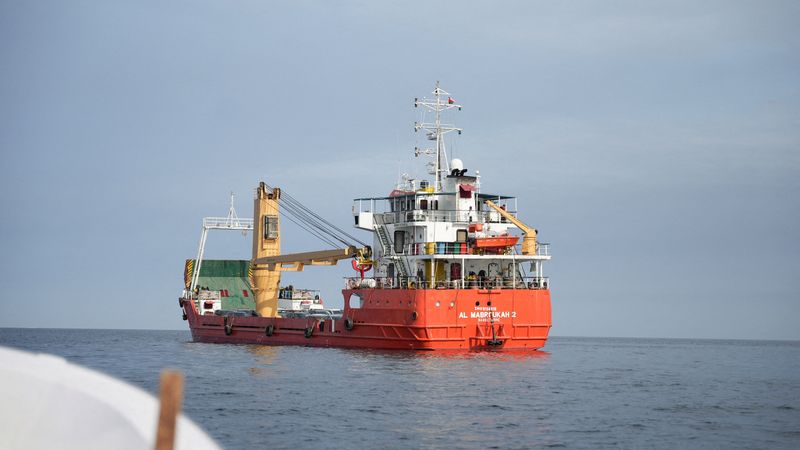
Iran’s oil blockade leverage is weakening as the United States helps Gulf producers keep crude moving through and around the Strait of Hormuz, limiting Tehran’s ability to trigger the global energy shock it had hoped to create.
A US naval blockade has prevented Iran from shipping oil from the Persian Gulf since July. At the same time, American forces have supported Gulf Arab states in moving cargoes through the strategic waterway despite Iranian missile and drone attacks.
About five million barrels of crude a day passed through the strait during the latest 28-day period, according to tanker-tracking data cited by the Wall Street Journal. Almost none of the oil was Iranian. A further 2.5 million barrels a day moved through Gulf of Oman ports, including Fujairah in the United Arab Emirates.
Together, the flows represent more than 40 per cent of the region’s pre-war oil shipments. Crude prices have remained below $100 a barrel, helped in part by China drawing on domestic reserves and cutting imports.
The Strait of Hormuz normally carries roughly a fifth of global crude supplies, making it one of the world’s most important energy chokepoints. But the partial restoration of Gulf exports has reduced Iran’s ability to use the waterway to impose wider economic costs.
The Associated Press reported that US forces have been providing limited protection for commercial vessels, using aircraft, autonomous vehicles and drone escorts near the southern part of the strait. Kpler, the commodities data firm, estimated that about 96 million barrels of non-Iranian crude had left the region since early May, including shipments through the strait and alternative Gulf of Oman routes.
Oil flows remain well below pre-war levels, and shipping companies continue to face the risk of attack. Some tankers have travelled with tracking systems switched off, while ship-to-ship transfers have been used to obscure the origin of Gulf crude, according to maritime tracking specialists cited by the Associated Press.
Washington’s efforts have not, however, forced Iran to reopen the waterway or altered its wider conduct. Tehran has continued attacks on tankers and US military facilities, while avoiding larger strikes against Saudi Arabia and the United Arab Emirates.
Economic pressure inside Iran is increasing. The rial has fallen, inflation has risen and petrol shortages have become widespread. President Masoud Pezeshkian has said the country’s trade has declined by between 25 and 35 per cent.
Other Gulf economies are also suffering as shipments of liquefied natural gas, fertiliser and other commodities remain restricted, particularly in countries without alternative routes to international markets.
Tehran now faces a choice between returning to negotiations and escalating its military campaign in an effort to restore pressure on Washington. The prospect of renewed disruption around Hormuz continues to leave global oil markets exposed, even as the US-backed flow of Gulf crude weakens Iran’s most effective source of leverage.
