


Robotics data start-up XDOF is in late-stage talks to raise a Series B round at a valuation of about $1.2 billion, less than three months after emerging from stealth, according to people familiar with the discussions.
The funding is expected to be led by venture capital firm 8VC, although the size of the round and whether the reported valuation includes the new investment have not been established. The terms remain subject to change.
XDOF was founded in 2024 by UC Berkeley researchers Philipp Wu, its chief executive, and Fred Shentu, its chief technology officer. The company raised $70 million in a Series A round in June from investors including Thrive Capital, Andreessen Horowitz, Lux and Spark Capital.
The start-up had not intended to seek further funding so soon, but its rapid growth prompted approaches from investors, the people said. Its annualised revenue is now approaching $50 million.
XDOF and 8VC did not respond to requests for comment.
Robot training data
The company provides data-collection tools, pipelines and annotation systems for robotics firms and advanced artificial intelligence laboratories. Its aim is to supply the real-world training data needed to develop general-purpose robots, an area where data remains a significant constraint.
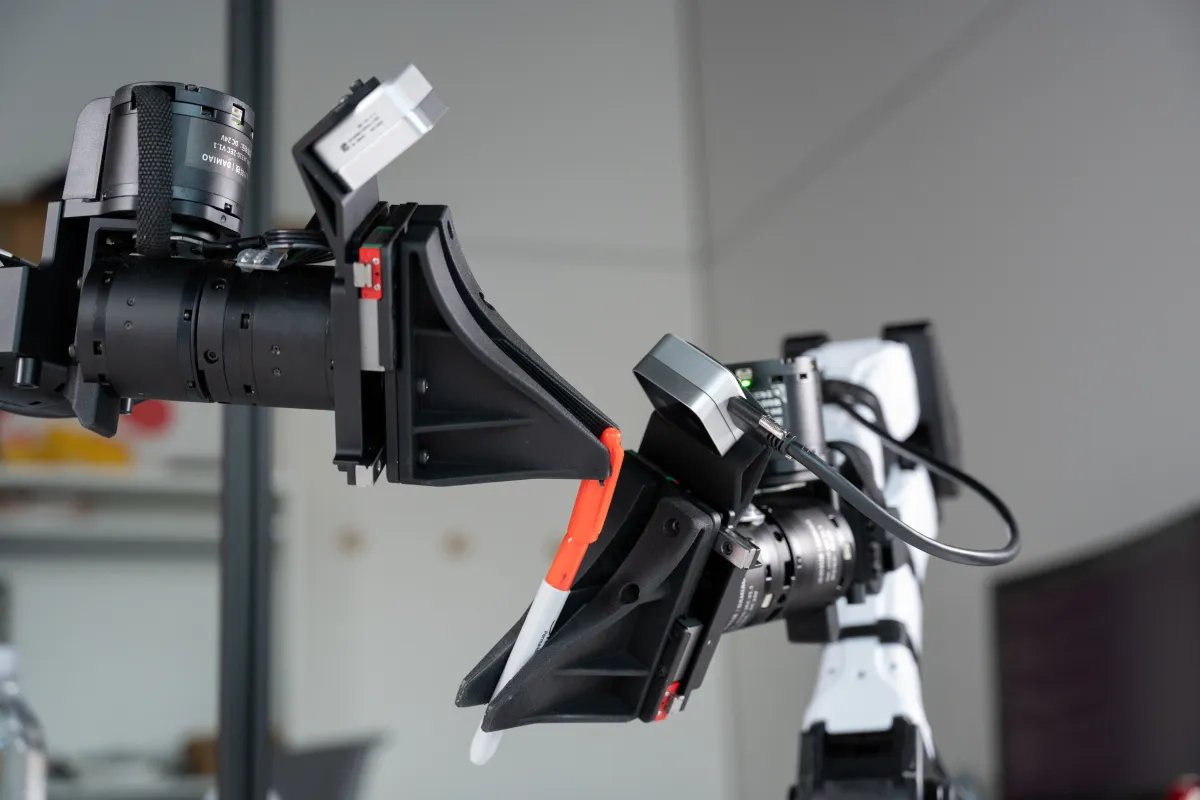
Wu began working on the problem during his PhD studies, when he encountered a shortage of large datasets for teaching robots how to perform tasks. He and Shentu subsequently developed GELLO, a lower-cost teleoperation system that allows a person to control a robotic arm remotely while generating training data.
That research became the basis for XDOF. The company is now working with UC Berkeley’s AI Research lab on ABC, a project intended to create what it describes as the largest collection of high-quality robot training data assembled to date.
Its approach combines remote operation of robots with human data collectors wearing sensors. They record movements while carrying out everyday activities such as folding clothes and flattening cardboard boxes.
XDOF plans to build and train collection teams internationally, including teleoperators who control machines from a distance and “egocentric” operators who use body sensors to capture movement data from their own perspective.
The company has previously said it was working with 20 customers, including several advanced AI laboratories. Other businesses pursuing similar work include Mecka AI, while data companies such as Scale AI and Micro1 are also expanding into datasets for physical robots.
