


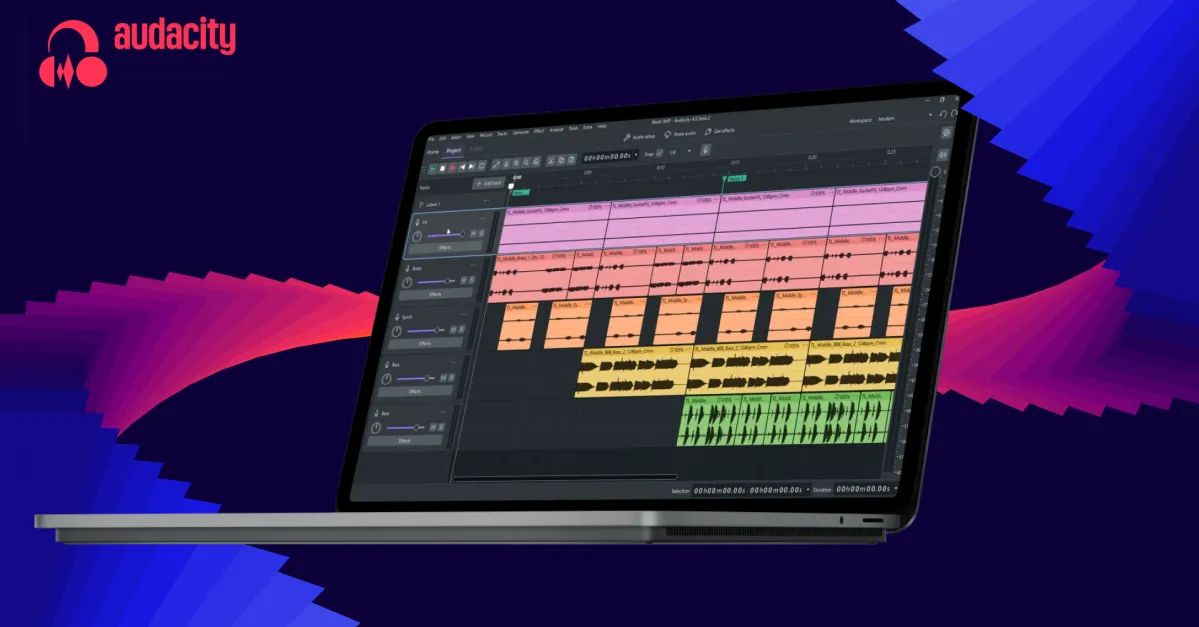
Audacity 4 has arrived with a major overhaul designed to turn the long-standing free audio editor into a more flexible modern digital audio workstation. The update’s central change is non-destructive editing, allowing users to alter clips without permanently removing the original audio.
Trimming a recording no longer means losing the cut section. Users can drag the edge of a clip back out to restore audio, making it easier to experiment with edits and change arrangements later.
The revised workflow also allows clips to overlap on the timeline. Audio can be pasted into a crowded section or dragged beyond another clip, with the arrangement adjusted afterwards rather than being blocked by existing material.
Clips can now be split for easier rearrangement, while clip envelopes and built-in effects have also been refreshed. The changes are intended to make Audacity more suitable for assembling and refining recordings, rather than simply cutting and joining files.
The update introduces a new home screen and improved project organisation, alongside a redesigned interface. Customisable themes bring Audacity visually closer to other products from its parent company, Muse Group, including MuseScore and Audio.com.
Audacity, which first appeared in 2000, has retained much of its original layout as new features were added over the years. Audacity 4 represents the most substantial attempt yet to modernise the application while preserving its position as a free tool for audio recording and editing.
