


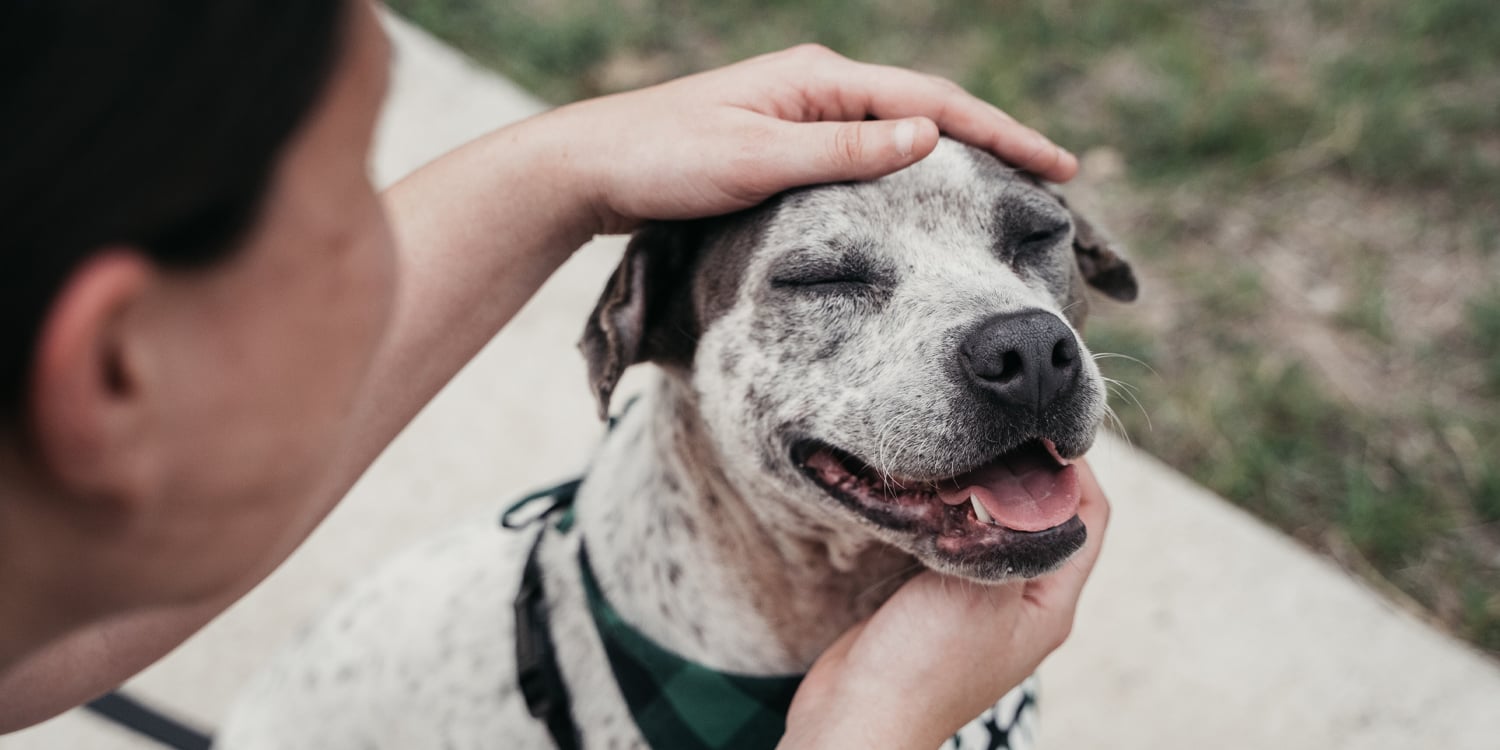
A new study suggests that patting a pet dog after a high-pressure mental task may not eliminate the immediate physiological strain, but it appears to prime the body to cope more calmly with a subsequent stressor. The research, conducted in an Austrian university laboratory, found that owners who physically petted their dogs during a five-minute recovery period showed dampened brain and heart responses during a second stress test conducted soon after.
Petting a dog as a stress buffer
In human psychology, stress buffering describes how supportive social contact can soften physical and emotional reactions to difficult situations. Affectionate touch is a well-established driver of this protection in relationships, with past experiments showing, for example, that a brief neck and shoulder massage can blunt heart-rate increases and cortisol rises during public speaking.
Scientists have long questioned whether companion animals can provide similar biological protection. A study cited by PsyPost in August 2025 reported that people accompanied by their dogs during a laboratory stress test exhibited smaller cortisol spikes and more balanced nervous system responses than those tested alone.
Isolating physical touch as the mechanism behind these benefits has been challenging, because owners typically pet, look at, and talk to their animals at once. In a 2019 randomised trial of university students, ten minutes of petting cats and dogs lowered salivary stress hormones more than simply sitting nearby and watching others interact with the animals. Yet trials testing touch during an active stressor have yielded mixed results, such as a 2021 study of adolescents that found touching an unfamiliar therapy dog did not reduce anxiety or physiological arousal more than talking to the dog without touching.
Another line of evidence suggests that animal contact might act as a protective shield before a challenge arrives. Building on a 2017 study with undergraduates, which showed diminished sweat responses during a fast-paced maths test after interacting with a therapy dog, the Austrian team sought to isolate physical touch with one’s own dog and track both immediate recovery and resilience to a second stressor.
“Interactions with pets have a long history as therapeutic interventions and a lot of research suggests that they can indeed be good for us,” said Vanessa Kaufmann and Annett Schirmer of the University of Innsbruck, alongside Xiaoqin Cheng. “However, little work has been done to uncover potential factors or mechanisms that make human-animal interactions beneficial. Hence, we were interested in the ‘how,’ i.e., what is it about these interactions that might actually produce positive outcomes for the human?”
“Touch seemed like a particularly interesting candidate because physical contact emerges very naturally between people and their pets, and research on human touch has already shown that touch can buffer stress,” they added. “Therefore, we wanted to examine whether touch with a pet could have a similar effect.”
The researchers recruited 66 dog owners and their pets to visit a university laboratory in Austria. After excluding two participants, the final sample comprised 64 White European adults (51 women and 13 men) with an average age of 34. All dogs were healthy, over two years old, and comfortable in unfamiliar rooms.
Participants completed two experimental blocks following the same five-step sequence: a five-minute resting baseline, a 10-minute stress test, a one-minute post-stress rest, a five-minute recovery period with their dog, and a five-minute post-recovery rest. During the stress test, participants answered rapid-fire general knowledge questions within five seconds and counted backward in fixed steps to the beat of a flashing red dot. To induce social-evaluative stress, they were told their performance would be reviewed later and were monitored on a video call by staff providing only critical feedback.
The two blocks differed only during the five-minute recovery phase in a separate room. In the touch block, the dog roamed freely so the owner could spontaneously pet or hold it. In the no-touch block, the dog was kept on a short leash out of reach, preventing physical contact while still allowing eye contact and conversation. Thirty-one participants completed the touch block first, while 33 did the no-touch block first.
Brain activity was recorded with a 64-sensor EEG cap during rest and stress, capturing alpha waves linked to a relaxed mind and beta waves linked to alertness and mental effort. Forearm sensors measured heart rate and heart-rate variability (HRV). Self-report mood scales and video analyses captured recovery behaviours.
Across both blocks, the stress task reliably triggered a multisystem response: a drop in calming alpha brainwaves, a rise in alert beta waves, faster heart rate, and lower HRV, with beta elevations persisting into the one-minute post-stress rest. The brain and heart changes during stress were broadly synchronized, with stronger beta increases aligning with faster heart rate and reduced HRV.
Self-reported mood shifts—feeling more negative, tense and less in control—were evident after the stress task, but these subjective states showed little statistical link to the physiological measures. Only higher HRV showed a modest association with feeling calmer.
During the five-minute recovery phase, owners who could touch their dogs spent about 64 percent of the time in physical contact (roughly three minutes and 12 seconds), mainly stroking fur. In contrast, those in the no-touch condition spent more time looking at their dog, increasing direct eye contact by more than 53 seconds on average during the recovery period compared with the touch condition.
“One notable aspect of the study is that participants were not instructed to touch their dogs,” Kaufmann and Schirmer noted. “When physical contact was possible, it emerged naturally, and participants spent about two thirds of the recovery period touching their pet. This highlights how central touch is to the way people naturally interact with their dogs.”
“Touch was very prominent in all the human-pet interactions we recorded, sometimes even when the pet wasn’t really into it,” the researchers added. “It seemed participants had a strong need to be in physical contact. Moreover, when this contact was not possible or allowed in the experiment, participants increased gazing at the dog, possibly as another way to connect.”
Contrary to the researchers’ initial prediction, touching the dog did not speed up immediate recovery: by the post-recovery rest, brainwaves, heart rates, and mood had returned toward baseline at similar rates whether or not the dog had been petted. The authors suggest the recovery setup may help explain why no immediate effect appeared. Reaching out to stroke a moving dog can raise heart rate slightly, and the extra eye contact in the no-touch condition may have offered its own calming effect via bonding hormones such as oxytocin.
Instead, the benefits of touch emerged as a protective buffer when participants faced a second stress test. Participants who petted their dogs during the first recovery showed a dampened biological reaction during the second stress test compared with the first. Specifically, after recovering with touch, they exhibited less suppression of calming alpha brainwaves during the second session, along with a slower heart rate and higher HRV during the second challenge, and a greater sense of control. Among those who touched their dog first, the standardized effect sizes were about 0.36 for alpha, 0.40 for HRV, and 0.72 for heart rate.
Participants who were prevented from touching their dogs in the first recovery did not display these protective biological shifts during the second stress test; the differences in alpha activity, heart rate and HRV between the two stress sessions were not statistically significant. Although this group reported feeling less tense after the second test, their beta brainwaves suggested ongoing tension, and self-reports did not align consistently with physiological measures. Additional statistical analyses indicated that the results were not due to the dog’s fur length, barking or owner anxiety about the pet.
“Our findings suggest that physical contact with a pet may reduce how strongly the body reacts to a subsequent stressful situation,” Kaufmann and Schirmer said. “Interestingly, there was no difference in how stressed participants reported feeling, suggesting that physiological buffering can occur without us necessarily being consciously aware of it.”
“While the effects were moderate in magnitude, we saw a consistent pattern across several physiological measures,” the researchers explained. “Brain activity, heart rate, and heart-rate variability all pointed toward a less pronounced physiological response to the subsequent stressor after participants had touched their dog. However, it remains unclear how effects observed in such a controlled laboratory setting translate to stressful situations in everyday life.”
The brainwave findings align with earlier work noted by PsyPost in 2024, which found hands-on activities with dogs boosted relaxing alpha activity, though that study measured immediate brain activity during calm interactions rather than buffering against a laboratory stressor. The team speculates that stroking a dog’s coat may stimulate specialized nerve fibres in human skin that respond to gentle, slow touch, sending soothing signals to the brain. These receptors are sparse on the hairless palms, and video data showed owners mostly ran their fingers through their dogs’ fur, particularly on the sides and back of the fingers where these receptors reside.
As with all research, caveats apply. The preregistered prediction — that touch would speed up recovery immediately after the first stress test — was not supported. The second-test protective effect arose from an exploratory analysis and requires replication in a study explicitly designed to test it. The researchers note they cannot entirely rule out the possibility that touching the dog altered how much mental effort participants expended during the second test, which could also reduce physiological responses.
Participants spoke aloud during the stress test but remained silent during rest. Because speaking changes breathing patterns and thus heart rhythms, some cardiac changes during the stress task could reflect speaking or task effort rather than pure emotional stress, especially since a secondary respiration-linked measure of HRV did not replicate the main touch effect.
“Our findings provide causal evidence for a stress-buffering effect of touch under controlled laboratory conditions and as such support prior correlational observations that pet owners who engage in more physical contact with their pets report greater wellbeing,” Kaufmann and Schirmer concluded. “However, real-life stress is varied and complex and it remains unclear whether different types of stress may differently benefit from touch. We also studied people interacting with their own dogs, so we cannot assume that the same effects would occur when interacting with an unfamiliar animal.”
The researchers stressed that the animal’s comfort is as important as the human’s: “Lastly, we would like to highlight the wellbeing of the animal who may or may not seek touch. Physical contact with another being should always be mutually wanted and positive.”
Sample demographics are worth noting, with around 80 per cent of participants women and all identified as White Europeans. The researchers emphasised the need for broader diversity in future work, and for testing whether the findings hold in different samples, stressors and home settings compared with interacting with one’s own pet versus an unfamiliar animal.
Looking ahead, the team intends to probe what exactly in physical contact with an animal drives these effects, examining both bottom-up sensory signals and top-down factors such as the relationship with the animal, expectations and meaning of the interaction. They plan to analyse how different styles of touch, particularly finger-focused contact, may be more pleasurable due to denser innervation by mechanoreceptors.
The study, titled Pet-induced stress buffering depends on touch: Evidence from brain and cardiac measures, was authored by Vanessa Kaufmann, Xiaoqin Cheng, and Annett Schirmer.
