


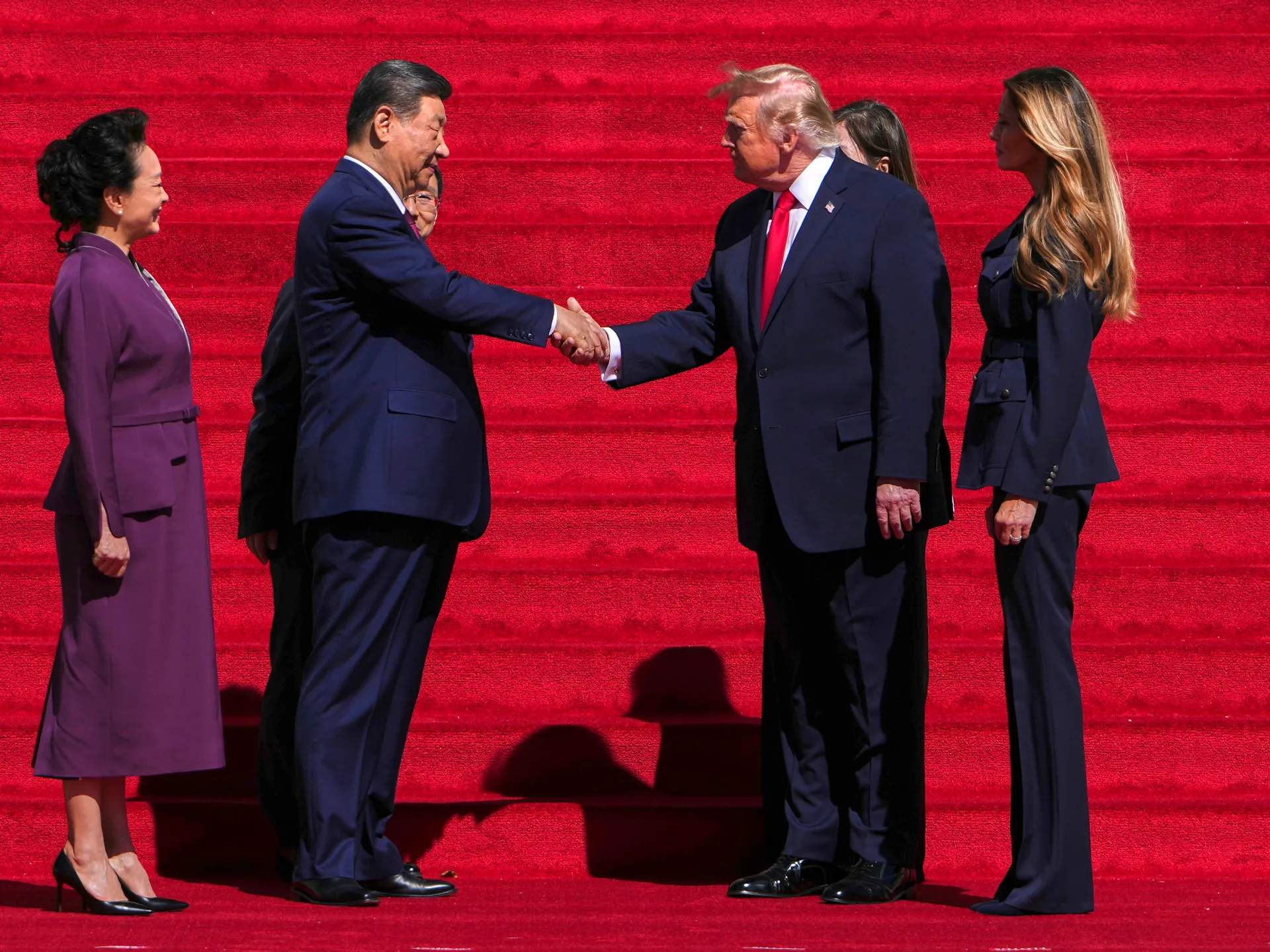
The United States and China have announced goods recommended for tariff cuts after Donald Trump and Xi Jinping agreed to work towards reducing duties on $60 billion (£44.5 billion) of trade.
The proposed arrangement covers $30 billion of imports from each country, with 77 Chinese products and more than 1,600 US goods identified for potentially more favourable treatment.
Items from China include microwave ovens, fish hooks, artificial flowers and weighing scales. The US list includes poultry, dairy products, noodles, eggs, peanuts, canned tomatoes, pure-breed breeding horses and silk.
US Trade Representative Jamieson Greer said the agreement would improve market access for about 30 per cent of American exports to China and benefit consumers.
“The Trump Administration will continue to pursue fair, balanced, and reciprocal trade with China by ensuring compliance with commitments on agricultural and energy purchases, pursuing balanced trade in non-sensitive goods, and securing market access for American farmers, manufacturers, businesses, and workers,” Mr Greer said.
US-China tariff cuts and the next steps
China’s Ministry of Commerce confirmed the list on Monday, shortly after the White House announcement. It said the two sides would discuss “a reciprocal tariff reduction framework of $30 billion for $30 billion, aiming to reach a consensus”.
“This arrangement will help stabilize China-US trade, create better conditions for Chinese exports of relevant products to the US, meet domestic market demand, and strengthen trade cooperation in agricultural products, energy, manufactured goods, and consumer goods,” the ministry said.
The announcement followed a summit between Mr Trump and Mr Xi which ended on Friday with few concrete announcements on the wider disputes between the two countries, including trade, artificial intelligence and Taiwan.
The presidents have held three face-to-face summits since last October and are expected to meet again at the Asia-Pacific Economic Cooperation summit in Shenzhen, China, in November, and at the Group of 20 gathering in Miami, Florida, in December.
Two-way trade between the world’s two largest economies fell to $495 billion in 2025, a 25 per cent decline from the previous year, according to the US Trade Representative.
Deborah Elms, head of trade policy at the Hinrich Foundation in Singapore, said the latest announcement did not indicate a major shift in US-China trade.
“Instead, both sides have largely listed goods that do not move the needle on overall trade flows,” Ms Elms said.
She said the measures could lower some prices for US consumers, but were unlikely to have a dramatic effect on inflation or provide significant relief for most buyers. She added that many of the agricultural products on China’s list were either not exported to the country or were traded only in small quantities.
