


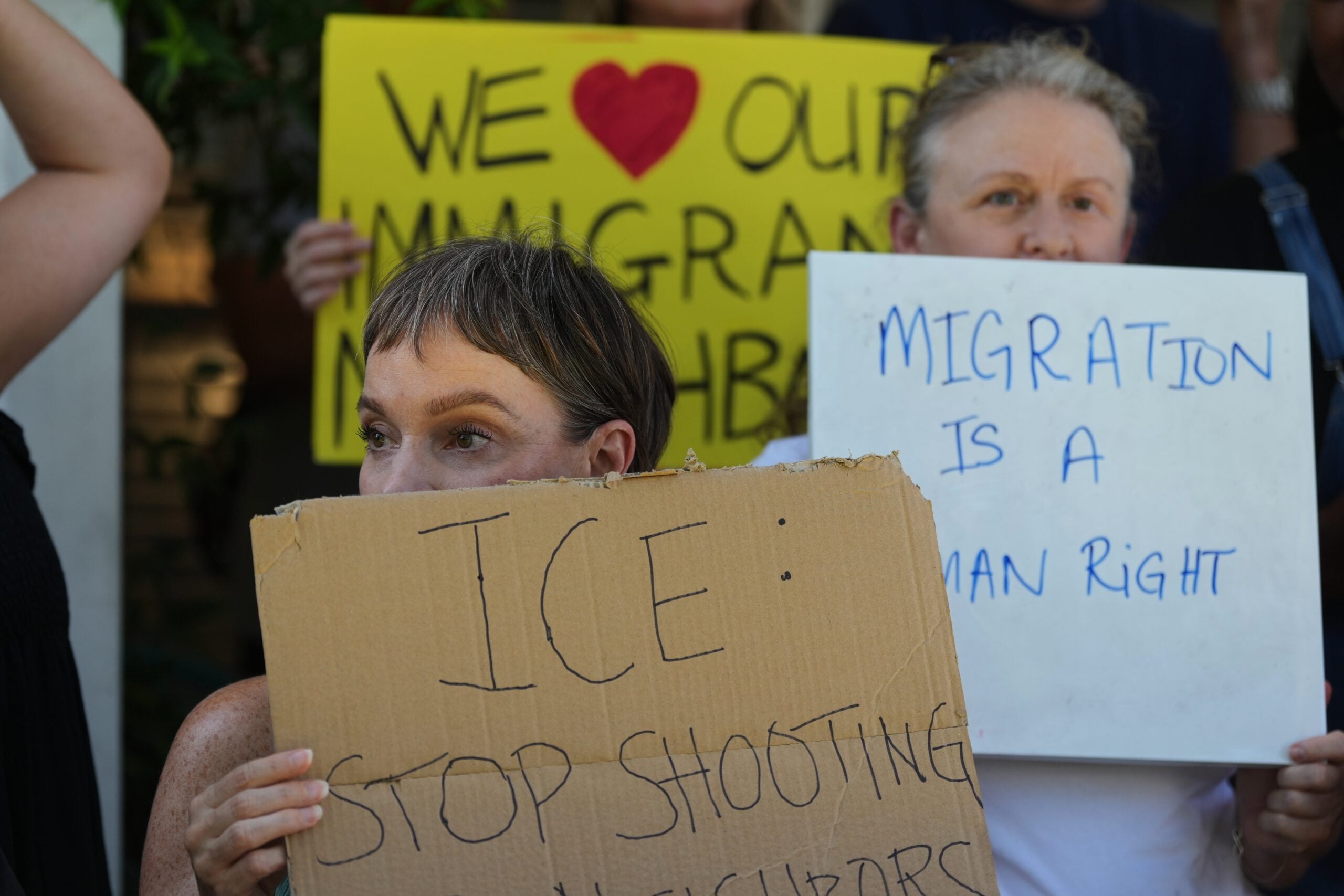
Republican candidates in closely fought US elections are facing growing political pressure over the Trump administration’s mass deportations campaign, as Immigration and Customs Enforcement (ICE) operations disrupt communities and dominate local headlines.
In Kansas, activity across four rural towns prompted businesses to close temporarily and schools to ask families to identify who could collect children if their parents were detained.
Senator Roger Marshall, a strong supporter of Donald Trump facing a tougher-than-expected re-election contest, said he was “closely following” the situation and had spoken to Homeland Security Secretary Markwayne Mullin. He criticised ICE for failing to work more closely with local law enforcement, saying the lack of communication had caused “mass disruptions to local communities and businesses”.
“We must keep our communities safe, but it has to be done in a responsible and secure manner,” Mr Marshall said.
Scott Fischer, the Republican chair in Ford County, one of the areas where activity was reported, said: “It does cause quite a disruption in the community. We don’t want our community disrupted.”
The incidents have created a fresh opening for Democrats in Kansas, where they are seeking to win a US Senate seat for the first time in nearly a century. Democratic nominee Adam Hamilton said: “This is not how Washington should be treating Kansans.”
Matt Teagarden, chief executive of the Kansas Livestock Association, said enforcement was affecting the workforce and supply chain. His organisation joined a statement warning of a “massive chilling effect” on legal, documented workers in the beef industry.
“We’re all for getting the bad actors out of our communities,” Mr Teagarden said. “The method by which they do that has an impact. We’ve seen it.”
Mr Mullin said ICE was not carrying out worksite operations in Kansas, but was targeting “heinous criminals including murderers, rapists, and drug traffickers and illegal aliens with final orders of removal”.
ICE operations become an election issue
The backlash is spreading across several battleground states. In Florida, officials have warned about the effect of raids on businesses, while Republican congresswoman Maria Elvira Salazar has released an advert in English and Spanish accusing the administration of going “too far” on immigration.
Ms Salazar said in the advert that half of those detained in July had no criminal record and that Hispanic voters who supported Mr Trump in 2024 felt “betrayed”. Liliam López, president of two Hispanic business organisations, said communities in South Florida were “really, really hurting”.
In Texas, where one in five ICE arrests nationwide this year has taken place, Republican congresswoman Monica De La Cruz has also sought to distance herself from parts of the crackdown. She said enforcement should focus on criminals and cartels, rather than “hardworking immigrants that are navigating the immigration process”.
Her Democratic opponent, Bobby Pulido, said his campaign had received more than 80 requests for help with immigration cases from South Texans and was referring them to lawyers working without charge.
“Every single day we’re having people reach out. And it’s very frustrating, because we can’t help everybody,” Mr Pulido said. “I’m not a congressman.”
The political pressure has intensified after a non-fatal shooting involving ICE in Austin last week. Texas senator John Cornyn said border security was critical but suggested the administration had “miscalculated a little bit”, adding that immigration enforcement would be among the issues voters considered at the election.
In Michigan, Democrats are calling for an investigation after a man crashed and died while fleeing ICE. In Maine, the fatal shooting of Duran Guerrero, a 25-year-old from Colombia, remains a major issue in Republican senator Susan Collins’ re-election campaign.
Maine Democrat Troy Jackson has held a town hall in the city where Mr Guerrero was killed and criticised Ms Collins for voting to fund the Department of Homeland Security. Ms Collins has said she supports safeguards for ICE officers, including body cameras and de-escalation training.
Questions have also been raised about the reported absence of body-camera footage in the Austin shooting. Republican senator Thom Tillis said that, if reports were accurate, it was “unacceptable” and urged Mr Mullin to ensure officers used the equipment provided to them.
The Department of Homeland Security has defended the policy, saying it is delivering the “most HISTORIC mass deportation campaign in American history” as promised by Mr Trump.
“The men and women of ICE are enforcing the laws passed by Congress,” the department said. “We do not pick and choose which laws to enforce or where to enforce them.”
But a new poll found that 49 per cent of US adults considered the mass deportations campaign “too aggressive”. Twenty-six per cent said it was “about right”, while 14 per cent believed it was not aggressive enough.
The enforcement drive is also becoming an economic issue as raids affect workers in industries including construction in Texas and meatpacking in Kansas. Republican officials are increasingly having to balance support for tougher immigration enforcement with concerns about disruption among constituents and businesses.
Mr Mullin took over the Homeland Security Department in March after the administration sought to make enforcement less visible. The department later shifted its messaging to highlight rising deportations and reassure immigration hardliners after criticism from Mr Trump’s supporters.
Sofia Kinzinger, a former Homeland Security deputy assistant secretary, said voters were increasingly concerned about government overreach and alleged abuse of power.
“Either you speak firmly against it, or you try to justify, which right now is the opposite of what people need,” she said.
