


Democrats won control of both chambers of Congress in Tuesday’s election, in a rare nationwide reversal that saw Republican incumbents defeated from Maine to Texas.
The result marked only the third time in the past 50 years that control of the House and Senate changed hands in the same election. Republicans also lost four governorships, with Democrats taking Texas, Georgia, Ohio and Iowa.
Nearly half of voters said they viewed the election as an opportunity to rebuke President Donald Trump. An exit poll found that 38% approved of his performance, while 62% disapproved, as the Republican Party’s unfavourable rating rose from 52% in 2022 to 59%.
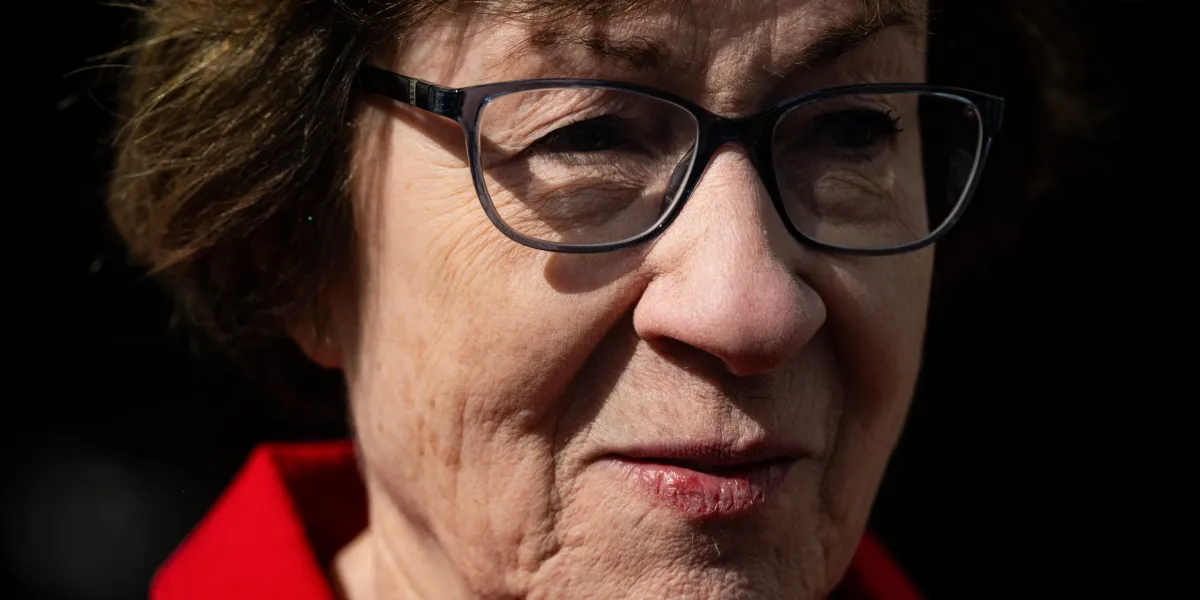
In Maine, six-term senator Susan Collins conceded to Democrat Troy Jackson after holding the seat since 1997. Collins had defeated every Democratic challenger she faced, including in 2020, but Jackson led by 52.4% to 47.5% in the count reported on election night.
Texas governor Greg Abbott lost his attempt to secure a fourth term to Democrat Gina Hinojosa, ending Republican control of the state’s governorship that had lasted since 1995. A voter poll found that 52% of respondents viewed Mr Abbott unfavourably.
Mr Trump had endorsed Mr Abbott, but criticised him after the result. Writing on Truth Social, the president said Mr Abbott would not have lost if he “hadn’t become a RINO in the last six months of his Political Life”. RINO stands for “Republican in name only”.
Why Republican incumbents lost
The economy was another major factor. Republicans had relied on the issue for two years, but voters instead ranked the cost of living and government corruption as their two leading concerns.
Rising prices and fuel costs created openings for Democratic challengers even in traditionally Republican areas. In Ohio, Democrat Sherrod Brown won after campaigning against the impact of Mr Trump’s tariffs, the trade war with Canada and the Iran war, which had pushed up fuel prices.
Mr Trump placed himself at the centre of several contests and personally backed candidates including Darline Graham in South Carolina and Jon Husted in Ohio. Both had entered the Senate through appointments in the past two years and lost their first elections for the seats.
Mr Husted, appointed in January 2025 after JD Vance became vice-president, was defeated by Mr Brown, a former three-term senator. Ms Graham, appointed in July after the death of her brother, Senator Lindsey Graham, lost to Democrat Annie Andrews in a state Mr Trump had won by 18 points.
Ms Graham’s defeat handed Democrats a seat that had been held by Republicans since Strom Thurmond switched parties in 1964. The losses showed the risks faced by candidates closely associated with Mr Trump, whose backing was described by an NBC analyst as having backfired in some races.
Turnout added to the pressure. Early voting reached 40.5% of registered voters in Texas, the highest modern midterm rate recorded in the state, while early ballots in North Carolina rose by 31% compared with 2022.
Republican losses contrasted with 2022
The scale of the defeats contrasted sharply with the previous midterm election. In 2022, only six House Democrats lost re-election among more than 365 districts where an incumbent was standing, while no sitting senator had lost when the figures were reported.
Republicans suffered the heaviest damage in this year’s general election, with seven House incumbents defeated compared with four Democrats. Among those losing were New Jersey representative Tom Kean Jr, Virginia representative Jen Kiggans and Colorado Republican Gabe Evans, whose seat was won by Democrat Manny Rutinel.
The backlash had already been visible during the primaries. Thirteen senators and 60 House members retired or sought other offices, while 13 incumbents lost their primaries. Texas representative Dan Crenshaw was defeated in March by a challenger who accused him of being insufficiently loyal to Mr Trump’s agenda.
Democrats held their Senate seats, including Georgia senator Jon Ossoff, who had been regarded as one of the most vulnerable Democratic incumbents. His Republican opponent, representative Mike Collins, conceded, while Democratic representatives in Florida retained seats Republicans had redrawn in an effort to win them.
