


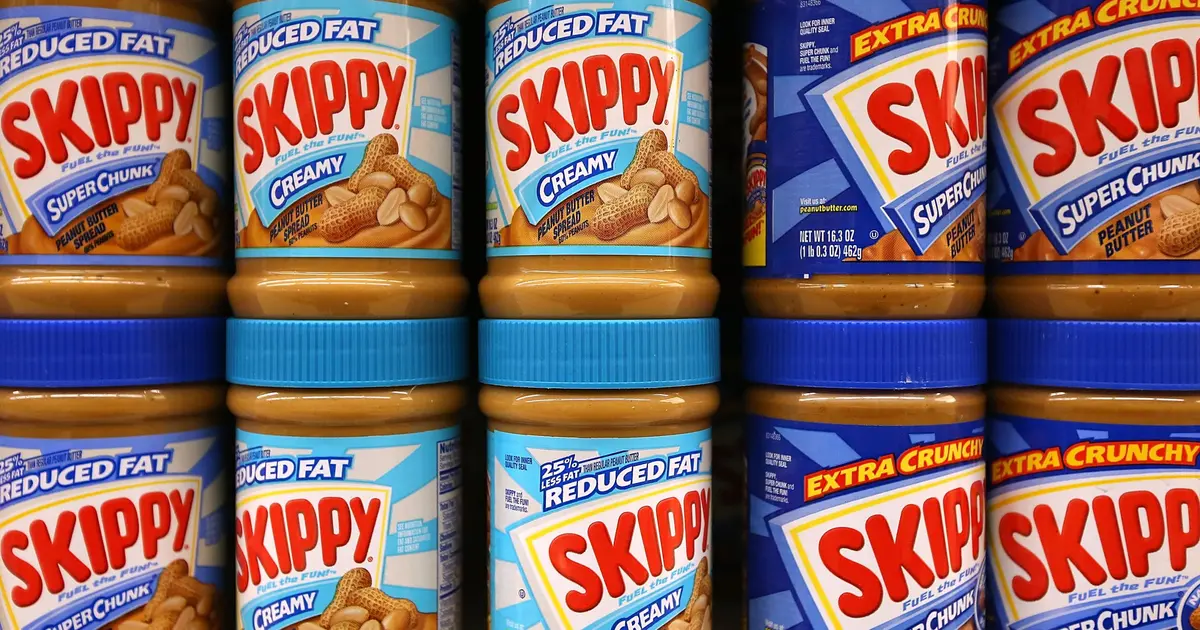
A familiar jar on American supermarket shelves cannot legally be labelled “peanut butter” because of one added ingredient: palm oil.
Skippy’s Natural Peanut Butter Spread is made with roasted peanuts, sugar, palm oil and salt. The company’s parent, Hormel Foods, describes the product as a spread rather than peanut butter because its recipe falls outside the US Food and Drug Administration’s legal standard for the name. ([hormelfoods.com](https://www.hormelfoods.com/inspired/story/less-is-more/?utm_source=openai))
Under FDA rules, peanut butter must be made primarily from ground roasted peanuts, with seasoning and stabilising ingredients accounting for no more than 10 per cent of the finished product. Its fat content must also not exceed 55 per cent. ([govinfo.gov](https://www.govinfo.gov/content/pkg/CFR-2021-title21-vol2/pdf/CFR-2021-title21-vol2-part165.pdf?utm_source=openai))
That means products containing ingredients such as palm oil may still be sold as peanut-based spreads, but manufacturers cannot market them simply as “peanut butter” if they do not meet the prescribed standard.
Why peanut butter has a legal definition
The rules were introduced after the FDA found that some manufacturers had reduced the amount of peanuts in their products by substituting cheaper hydrogenated or vegetable oils.
In a 1959 release, the agency said some products labelled peanut butter had cut their peanut content by as much as 20 per cent. Regulators later proposed a standard that would protect the name while allowing products to remain easy to spread and lightly sweetened. ([fda.gov](https://www.fda.gov/about-fda/histories-product-regulation/food-standard-innovations-peanut-butters-sticky-standard?utm_source=openai))
After a lengthy dispute involving Skippy, Jif and Peter Pan, the US Appeals Court upheld a requirement that peanut butter contain at least 90 per cent peanuts and no more than 55 per cent fat. ([fda.gov](https://www.fda.gov/about-fda/histories-product-regulation/food-standard-innovations-peanut-butters-sticky-standard?utm_source=openai))
The FDA’s current standard permits certain seasoning and stabilising ingredients, but specifies that oil used as an optional stabiliser must be hydrogenated vegetable oil. Palm oil is not included in that provision, which is why products using it are commonly labelled “peanut butter spread”. ([govinfo.gov](https://www.govinfo.gov/content/pkg/CFR-2021-title21-vol2/pdf/CFR-2021-title21-vol2-part165.pdf?utm_source=openai))
Hormel has said the Skippy natural spread contains only four ingredients and is intended to offer a shorter, more recognisable ingredients list. The label, however, reflects a regulatory distinction that dates back decades rather than a difference in how consumers might use the product.
Shoppers comparing jars can therefore find both “peanut butter” and “peanut butter spread” beside one another, with the wording offering a clue to the recipe inside.
