


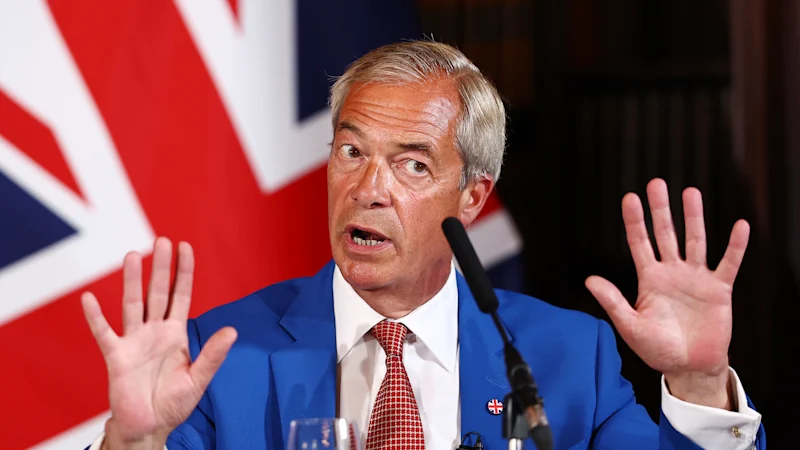
A man accused of murdering former minister Ann Widdecombe has been charged with preparing terrorist acts, including actions relating to Reform UK leader Nigel Farage, British police and prosecutors have said.
Joshua Kerry, 28, from Rotherham, is alleged to have engaged in conduct in preparation for terrorist acts between May 2024 and July. Authorities have not released further details about the allegations involving Mr Farage.
Kerry is due to appear at Westminster Magistrates’ Court in London on Wednesday. He is already facing a charge of murdering Ms Widdecombe, a prominent Reform UK figure.
Ms Widdecombe, 78, was found dead at her home in rural south-west England on July 9, having been attacked the previous day. Prosecutors allege she was struck 21 times with a hammer.
Vicki Evans, the senior national coordinator for Counter Terrorism Policing, said the latest charge followed a “hugely intensive and complex investigation”.
“The charge announced today is a result of the tireless work of investigators across the counterterrorism policing network,” she said.
The alleged murder of Ms Widdecombe has caused shock in British political circles and renewed concerns about the security of politicians. Richard Tice, a Reform MP, said the terrorism charge showed why Mr Farage needed money for protection.
“Terrifying. Widdecombe alleged murderer charged with acts of terrorism against Nigel Farage over 2 years,” Mr Tice wrote on X. “This is why he needs money for security.”
Mr Farage has said a £5 million gift from a billionaire cryptocurrency investor was needed to provide him with security. He is facing a parliamentary investigation into whether the gift should have been declared.
A Reform UK source said the latest charge was “exactly why Nigel needed £5m to protect his security for life”.
Home Secretary Shabana Mahmood said the allegations were extremely concerning and expressed sympathy for Mr Farage and his family.
“Let no one make any mistake: an attack on anyone in politics is an attack on us all,” she said. “This case raises serious questions about the security of those in public life.”
