


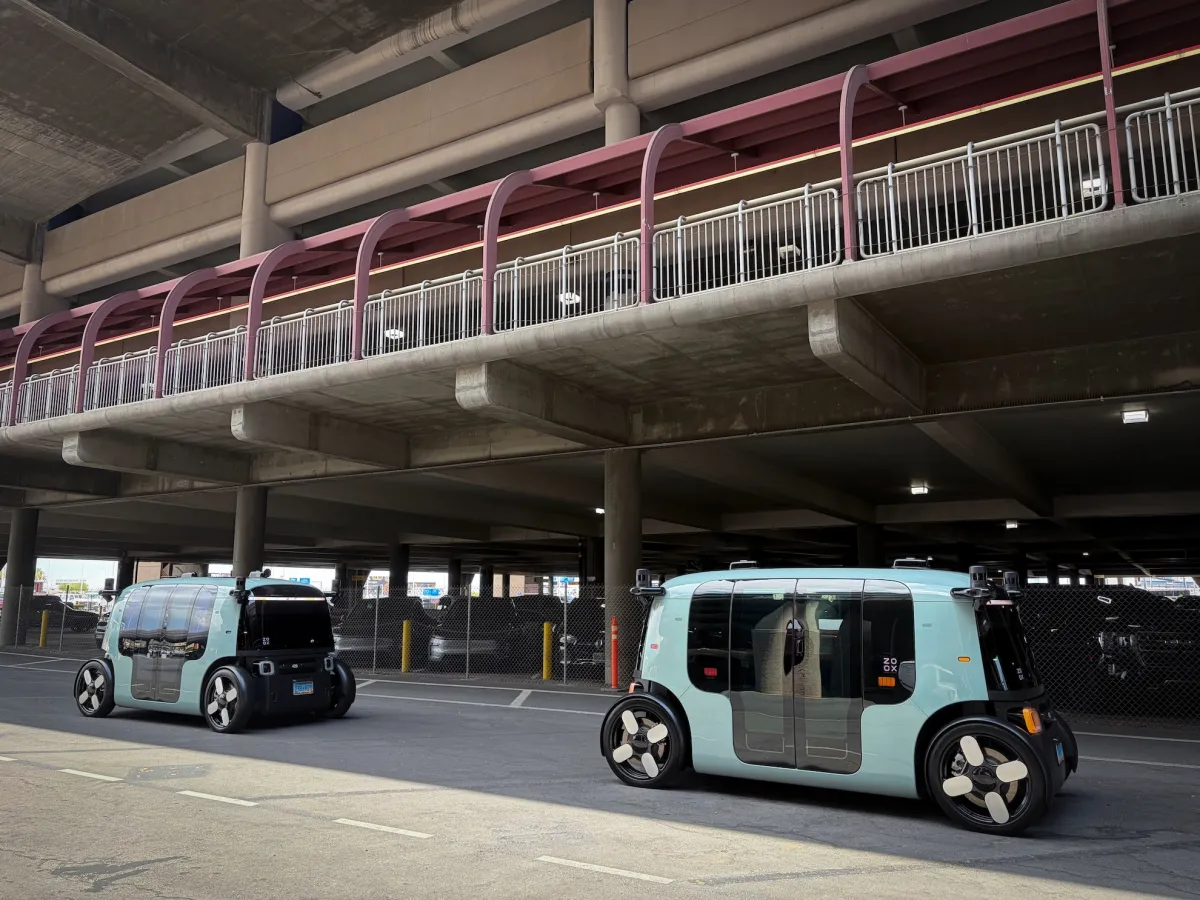
Zoox has expanded its commercial robotaxi service in Las Vegas to Harry Reid International Airport, allowing passengers to book autonomous rides to and from the city’s main airport from Thursday.
The Amazon-owned company’s vehicles will collect and drop off passengers at both airport terminals, close to the baggage-claim areas. The move gives Zoox access to one of the most important destinations in the ride-hailing market as it begins charging customers for journeys in the Nevada city.
Zoox said its robotaxis can be requested for airport trips through its service. The vehicles are purpose-built and do not have conventional driving controls, including a steering wheel or pedals.
Zoox robotaxis gain access to Las Vegas airport
The airport expansion follows a decision by US federal safety regulators in August to grant Zoox a temporary exemption from parts of the country’s motor vehicle safety rules.
The two-year exemption covers eight safety standards, including requirements relating to windscreen defrosting and light-vehicle braking systems. It permits the company to deploy as many as 2,500 vehicles under the commercial arrangement.
Zoox began charging for rides on August 10, after providing free or pilot journeys in Las Vegas for about a year. It has also announced plans to begin testing its autonomous vehicles in San Diego and Houston, alongside the publication of its safety framework.
The airport service could give Zoox a practical advantage over established ride-hailing operators when passengers arrive in Las Vegas. Uber and Lyft can drop passengers at the terminal kerb, but their airport pick-up point is around five to 10 minutes from baggage claim on an upper level of a nearby parking garage.
Zoox is currently the only robotaxi operator providing a service to Harry Reid International Airport. Competition is expected to increase, however, after Tesla, Uber and Waymo received permits from the Nevada Transportation Authority to run commercial robotaxi services in Clark County, which includes Las Vegas.
Uber plans to operate vehicles through partnerships with Hyundai-owned Motional and Zoox. The permits issued to the companies could allow up to 8,000 robotaxis to be deployed across Clark County over the next 12 months.
