


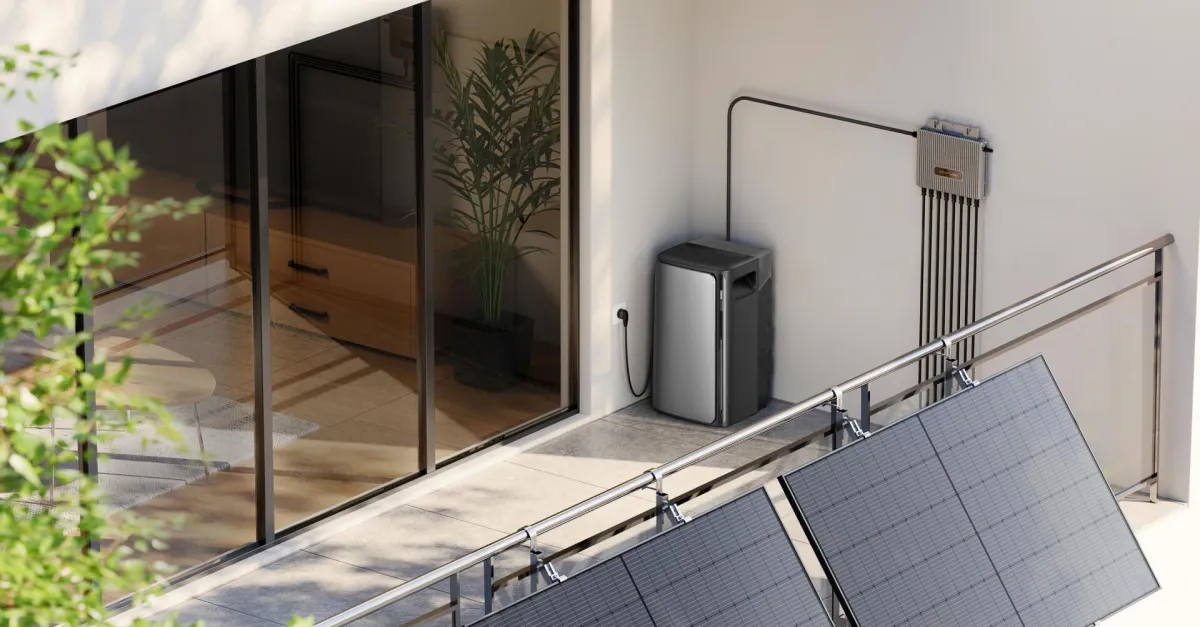
Plug-in solar systems became legal across Great Britain on 27 August, allowing households to generate electricity from small panels connected directly to a domestic socket without installing a conventional rooftop array.
The systems, often marketed as balcony solar, are being sold by retailers including Lidl, B&Q, Argos, Currys and Amazon. They are designed to offer a lower-cost alternative to full solar installations, which typically require professional fitting, planning checks and approval from an energy supplier or network operator.
A basic kit consists of one or more solar panels and a microinverter. The inverter converts the panels’ output into electricity for use by appliances in the home, reducing the amount of power drawn from the grid.
However, Britain’s rules differ from those in much of Europe. Battery-integrated plug-in systems are prohibited under the current arrangements, although their inclusion is being examined for possible future changes.
How plug-in solar works
Unlike a standard rooftop installation, the panels can be placed on a balcony, terrace, garden or against a wall, provided the equipment is used in line with the relevant safety requirements. The small scale of the systems is intended to make solar power available to renters and households unable to commit to a major home improvement project.
The equipment must also be capable of shutting down during a power cut. That safeguard prevents electricity being fed into the network while engineers may be working on fallen or damaged lines.
Plug-in solar has already become established in parts of Europe. Germany is estimated to have about 1.5 million such systems, while the devices are available through mainstream retailers including Ikea, which sells products supplied by energy technology companies.
Interest has grown as households have faced higher energy costs and the prices of solar panels and batteries have fallen. A conventional solar installation can cost about £15,000 or more, while smaller plug-in kits are available at a fraction of that price, although the savings depend on the system’s output, the property’s electricity consumption and local sunlight.
In one test of a 400-watt system installed in the Netherlands, the panels generated 709 kilowatt-hours over 21 months and saved about €225. Larger systems in sunnier locations can recover their cost more quickly, although the financial return will vary significantly between homes.
The new rules are expected to widen the market in Britain, with companies such as EcoFlow, Bluetti and Anker developing modular systems that can begin with a small panel array and be expanded later. Some products can support additional generation, but under the British rules surplus power cannot currently be directed into an attached battery.
Plug-in solar is not intended to replace large rooftop installations or utility-scale solar farms. Its appeal lies instead in giving people with limited space, smaller budgets or rented accommodation a way to produce a modest amount of their own electricity.
