


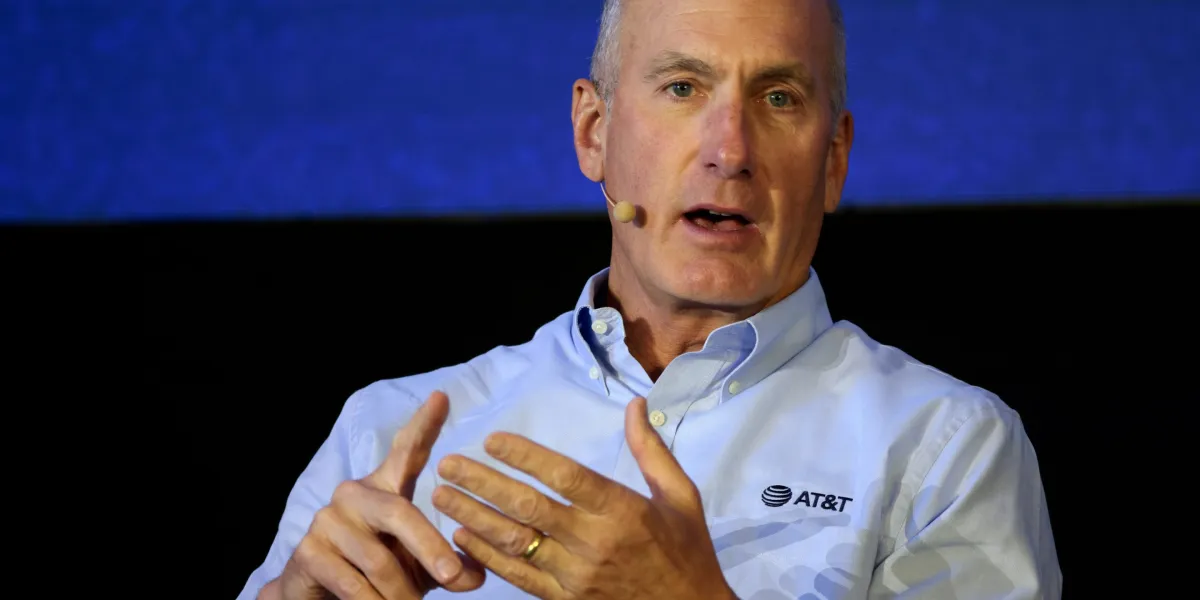
AT&T chief executive John Stankey has urged employees to arrive at meetings ready to challenge ideas and contribute informed views, rather than simply listen in silence.
Speaking alongside JPMorgan Chase chief executive Jamie Dimon in a LinkedIn interview recorded at the bank’s headquarters in Manhattan, Stankey said productive discussion depended on people doing their preparation beforehand.
The conversation was held to mark the 125-year relationship between AT&T and JPMorgan Chase, with LinkedIn editor-in-chief Daniel Roth moderating.
“I love discourse,” Stankey said, arguing that employees should not attend meetings as passive observers. Any opinion offered, he said, should be grounded in “facts, information, and data”.
Stankey added that if people had no constructive contribution to make, it raised questions about whether they were the right participants in the first place.
Dimon shared the emphasis on preparation, but also stressed that meetings should be held only when they served a clear purpose. Leaders, he said, should make it acceptable for employees to disagree and to raise difficult issues rather than discuss them privately afterwards.
“I am never upset when someone says I’m wrong about something,” Dimon said. “I just want to do the best I can for our clients, our country, our company.”
His approach echoes guidance he has given previously about workplace discipline. Dimon has said he completes the pre-reading before meetings and gives them his full attention, while arguing that gatherings which are unnecessary or unproductive should be scrapped.
AI is changing how executives prepare for meetings
Both executives said the arrival of artificial intelligence was beginning to change the way they absorb information before a meeting, although neither suggested that preparation itself was becoming less important.
Stankey said he was questioning whether conventional reading was always the most efficient method, because a directed conversation with an AI system could help him work through information more quickly.
Dimon said he used Google’s Gemini and other Google tools to conduct rapid research and complete his previews before meetings. The underlying expectation remained the same: participants should arrive informed and ready to engage.
The contrast between the two leaders’ styles was illustrated by Dimon’s recollection of his early career. As a young Harvard MBA working as an assistant to American Express president Sanford “Sandy” Weill, he said his first priority had been to learn and wait until he could add something useful.
That cautious approach might not satisfy Stankey, whose preference is for people in the room to arrive with a considered point of view and the confidence to defend it.
