


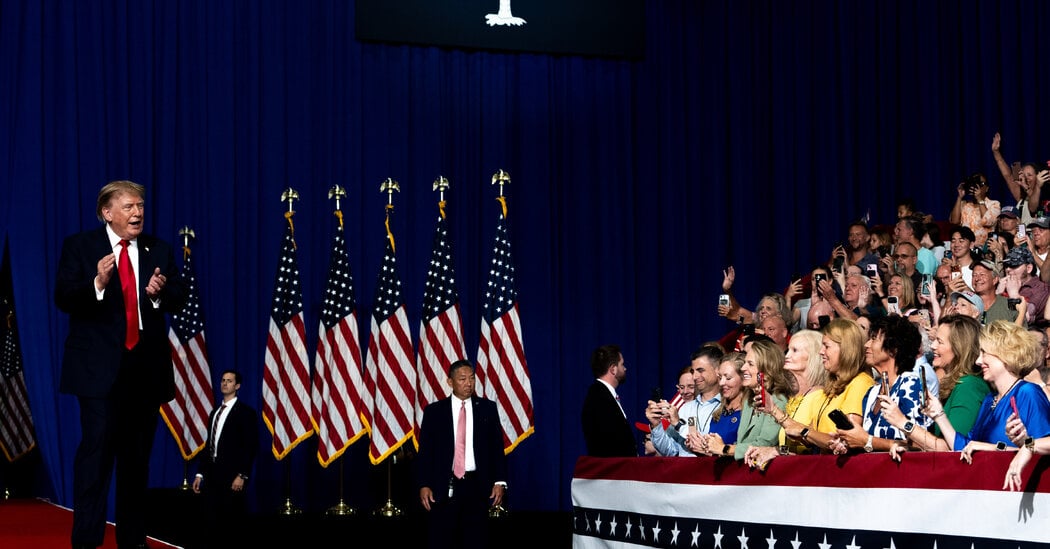
Donald Trump is turning the 2026 midterm elections into a test of his own political standing, leaving vulnerable Republicans caught between relying on the president’s money and turnout operation and trying to keep their campaigns from becoming a referendum on him.
At a dinner for endangered House Republicans in the White House Rose Garden on Wednesday, September 2, Mr Trump pledged to campaign in 35 key districts and promised to remain “100 per cent — all the way until November” behind the party’s candidates.
His intervention comes as Republicans prepare to defend narrow majorities in Congress amid concerns about the president’s popularity, the economy and the political impact of his decisions on tariffs, spending and the war in Iran.
The tension will be on display in Dallas this week, where the Republican National Committee will hold its first midterm convention. The two-day event, at the American Airlines Center on September 9 and 10, is being presented by the party as a national showcase for Mr Trump and Republican candidates.
Mr Trump is expected to headline the opening night, with Vice-President JD Vance due to speak on the second evening. Speaker Mike Johnson and other senior Republicans are also scheduled to appear, although several candidates facing difficult races are choosing to remain in their states and districts instead.
The convention was created at Mr Trump’s urging. Mr Johnson recalled the president telling him: “Mike, we gotta do a midterm convention.” When the Speaker replied that such an event was not customary, Mr Trump’s answer was reportedly: “Make it a thing.”
Republicans need Trump – but fear the backlash
For Republican candidates, the gathering presents a dilemma. Mr Trump remains the party’s dominant fundraiser and his supporters are regarded as essential to Republican turnout. Yet candidates in competitive suburban and Midwestern districts are increasingly concerned that his low approval ratings could drive away swing voters.
Representative Don Bacon, a moderate Republican from Nebraska who is not seeking re-election, said the president’s standing could become “a ball and chain” for the party.
“I’m worried that we’ve lost a lot of our swing voters,” Mr Bacon said, pointing to opposition to tariffs, unease over the war in Iran and frustration with what he described as Mr Trump’s treatment of America’s allies. “Nebraskans don’t like chaos and all the name calling and treating our allies bad.”
Republicans have nevertheless given themselves little room to break with the president after a decade of aligning themselves with him. Many candidates have endorsed his claims about elections and have avoided challenging him directly on major issues including tariffs, spending cuts and foreign policy.
Some are now attempting a more careful separation. Representative Mike Lawler of New York has aired an advert featuring Mr Trump calling him a “pain in the ass” over his campaign to restore the full state and local tax deduction. Representative Tom Barrett of Michigan has promoted his votes to restrict the president’s war powers.
But both men remain linked to Mr Trump. Mr Lawler is expected to attend the Dallas convention, while Mr Trump appeared at a rally in Mr Barrett’s district and brought him on stage in July.
Other Republicans have removed photographs of Mr Trump or references to his endorsement from campaign websites. Strategists remain sceptical that such measures will persuade voters that the candidates are independent of a president who continues to dominate the party.
“The idea that you can run away from him is silly,” said Corry Bliss, who ran the House Republican super PAC during the 2018 midterms. He said candidates needed to explain what they had achieved in office, warning that those unable to do so would be vulnerable.
Trump’s political war chest
Republicans are also waiting for Mr Trump to deploy the huge financial reserves accumulated by his political operation. MAGA Inc, his main super PAC, has held back most of its funds despite growing anxiety in party circles over races in states including North Carolina and Georgia.
Mr Trump said on Friday that he controlled the money and could spend between $400 million and $500 million on Republicans he considered deserving. His operation has now made its first major investment in a general election contest, committing $10 million to television and digital advertising in Texas.
The spending is aimed at supporting Ken Paxton, the Republican nominee for the Senate, against James Talarico, a Democratic state representative. The race was once viewed as a safe Republican hold but has attracted growing attention after Mr Talarico emerged as a strong challenger.
Mr Trump backed Mr Paxton in the Republican primary, helping him defeat Senator John Cornyn. The president has also defended the candidate’s public record and attempted to dismiss criticism of his presentation on television and on the campaign trail.
Republican leaders have pressed Mr Trump to spend more of his own funds in the races that will determine control of Congress. His advisers have been discussing how best to use the money with party officials, but candidates have received little detail about when further advertising or direct support will arrive.
The president’s first television advert for the midterm cycle underlined the awkward balance. The 30-second film described Mr Trump as “the toughest, most resilient person” but did not mention Democrats, the congressional elections or individual Republican candidates.
Mr Trump has argued that voters should treat the election as if he were on the ballot, despite not being a candidate. At the Rose Garden dinner, he urged Republicans to promote his record and insisted they had a winning message.
“All you have to do is talk about it, and you’re going to win and you’re going to win big,” he said.
Republicans are instead seeking to make the contest a choice between themselves and what they describe as an extreme Democratic Party. Mr Johnson has warned voters about “insurgent, Marxist Democrats” taking control of Congress and claimed they would seek to impeach the president immediately.
That strategy may help consolidate the Republican base, but it also risks reinforcing the central problem facing candidates in marginal seats: the more prominently Mr Trump features in the campaign, the harder it becomes for them to present themselves as independent voices focused on local concerns.
The Dallas convention will offer the clearest early test of whether Mr Trump’s personal appeal can energise the Republican coalition – or whether his attempt to place himself at the centre of the midterms will expose the divisions and vulnerabilities that his candidates are trying to avoid.
