


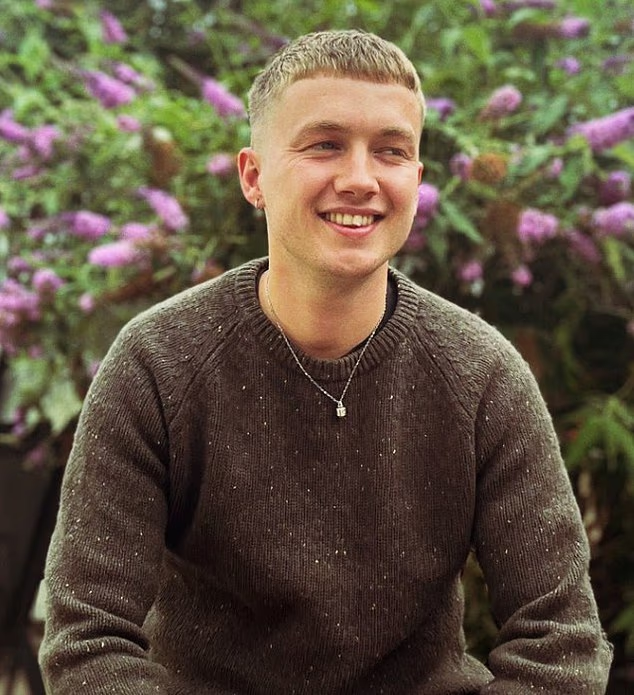
A graphic designer from a wealthy family with historic links to the British establishment has been identified as one of the figures behind an anti-Gail’s campaign in Brixton.
Marlo Swann McNair Plowden, 28, helped run the campaign through an underground organisation called Strapline, which put up posters near the bakery’s new south-west London branch.
The posters urged residents to “avoid Gail’s” and showed a loaf of bread strapped to what appeared to be an explosive device. They described the chain as “a rising threat” and linked it to what activists called “the genocidal state of Israel”.
Other messages accused the company of aggressive corporate expansion and claimed its arrival represented “the current wave of what can only be described as late-stage gentrification” in Brixton. The posters were swiftly removed.
Strapline shared a video on Instagram showing the material being put up near Brixton Market and Brixton Tube station. In an accompanying post, the group referred to Gail’s prices and alleged that its owner, Bain Capital, had “significant investments in the State of Isr*el”.
The organisation also said: “Either way, late-stage gentrification has hit Brixton, or maybe it already had. It’s easy to lose track.”
The anti-Gail’s campaign
Mr Plowden describes himself as an illustrator working “for positive social change”. He has said that art and design can be used to examine language and influence collective action, and has previously worked on what he calls “infographic guerilla campaigns”.
He studied graphic design at Manchester Metropolitan University, graduating with a first-class degree, after completing a foundation year at the University of the Arts London. His work has included projects with Sky, Channel 4, Glastonbury and climate activist group Extinction Rebellion.
He has attended pro-Palestinian marches, including one at which he was photographed in front of a Workers Revolutionary Party and Young Socialists banner calling for a general strike to stop Government support for Israel.
He has also joined protests unrelated to Israel, including a demonstration against the previous Conservative government’s Rwanda scheme for migrants.
Much of Mr Plowden’s social media presence was removed after he was approached about the campaign. His father later shared a picture of the Brixton posters on Facebook, writing: “Looks like that Strapline has been at it again.”
Mr Plowden grew up in a home valued at £1.5 million less than a mile from the new bakery. His grandfather, the Honourable William Julius Lowthian Plowden, was educated at Eton and Cambridge and served as a Conservative government adviser and under-secretary at the Department of Industry.
His great-grandfather, Edwin Plowden, was a Scottish industrialist and senior public servant who worked in the Treasury and later helped plan Nato’s defence of Western Europe. He also worked before the Second World War for commodity dealers involved in the extraction and sale of Palestinian potash from the Dead Sea.
Mr Plowden’s mother is an artist and artisanal blacksmith who helped create steampunk-inspired vehicles for the 2012 Paralympic Games closing ceremony. His father is a sculptor who has described himself as a member of a guerrilla art group.
Gail’s branches targeted
The Brixton protests followed earlier opposition to the bakery chain, initially focused on concerns that new outlets would drive out independent traders and contribute to gentrification.
The first protest took place after a Gail’s opened in Walthamstow Village in October 2024. A petition opposing the store argued that local alternatives could be forced to close and that the area might lose its character.
Israel was not part of the original dispute, but anti-Israel activists later added their names to the petition. One signatory said she “loved local independent bakeries and hated Zionist moguls”, while another made allegations about “Zionist moguls” and said: “We do not want them in our borough.”
In February, a newly opened Gail’s in Archway, north London, had its windows smashed and red anti-Zionist graffiti daubed on it twice within a week. “Boycott” was painted above the bakery’s logo, alongside an anarchist symbol, and the Metropolitan Police investigated the incidents as hate crimes.
Other protesters have accused the chain of “funding Israel”, although Gail’s denies links to any country outside the UK. Campaigners against antisemitism have said that associating the bakery with Jews, Israel and “rapacious capitalism” is “a classic trope”.
Gail’s was founded by baker Gail Mejia in the 1990s as a wholesale craft bakery in Hendon, north London. The business supplied artisan bread to chefs and high-end restaurants before its first branded shop opened on Hampstead High Street in 2005.
American investor Tom Molnar and Israeli businessman Ran Avidan bought half of the business in 2003. Ms Mejia and Mr Avidan are no longer involved, while Bain Capital has been the chain’s majority owner since 2021.
What began as a bakery known for sourdough, cinnamon buns, specialist coffee and pistachio, lemon and rose cakes has since become the focus of disputes over gentrification, ownership and Israel-related activism.
