


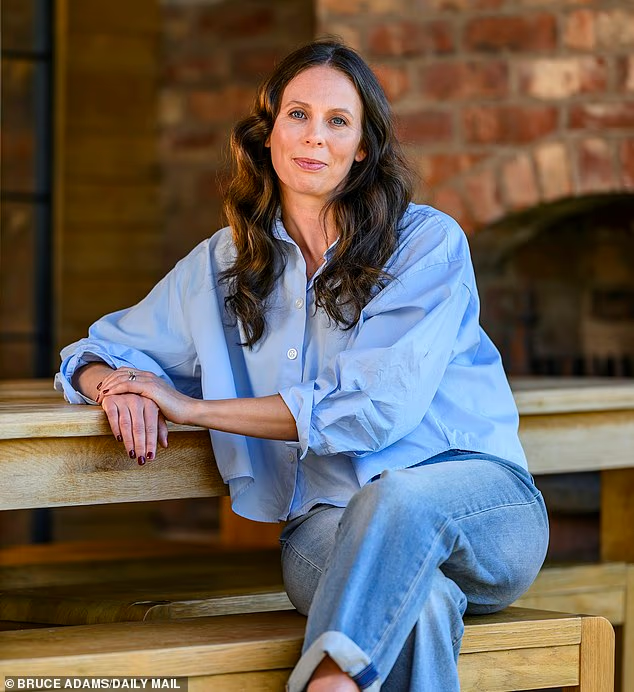
Author Sarah Close says the trauma of two dangerous pregnancies and what she describes as negligent maternity care led her husband, Matt, to have a vasectomy despite her long-held wish for a third child.
Close, who has written about her experiences in a forthcoming book, said she and her husband were left fearing that another pregnancy could cost her life or result in serious harm to a baby.
She described being passed between around 30 midwives during her pregnancies, with little continuity of care and, she claims, frequent dismissiveness and a lack of empathy.
“I am incredibly lucky to be alive – and to have healthy children who are, too,” she said.
‘I’m on my way to get a cup of tea’
Close said her first pregnancy, conceived in 2019 after fertility treatment, was marked by concerns about high blood pressure, an unusually hard bump and uncertainty over whether her baby was positioned head first.
At 41 weeks, she said, a midwife carried out a sweep after acknowledging the chaotic nature of her appointments. Close was told that if she went to hospital and was less than 4cm dilated, she would be sent home.
When labour began the following day, she said the pain became severe within hours and contractions were close together. But on arriving at hospital, Close claims a midwife refused to examine her, saying she was not in enough pain to be in labour.
“Look I’ve just delivered twins, I’m exhausted and I’m on my way to get a cup of tea – so come back in a bit when your contractions get stronger,” Close recalled the midwife saying.
Back at home, her waters broke. Close said she could see what she initially thought was a small hand, before her husband realised it was a foot.
The hospital told her to adopt a position with her hands and feet on the floor while staff feared a prolapsed umbilical cord, which can restrict a baby’s blood supply. Close said her baby had stopped moving.
She was taken to hospital by ambulance and found to be fully dilated, with both feet visible. Her daughter was delivered by emergency caesarean section.
Close said she later learned the baby had been in a rare and dangerous footling breech position. She also believes the hardness of her bump may have indicated excess amniotic fluid, allowing the baby to turn late in the pregnancy.
She claims her postnatal care was equally distressing. After suffering a haemorrhage, she said she was left for hours on a mattress covered in blood and received no pain relief, despite repeatedly asking for it.
Close said she was unable to move properly after the operation and was left to care for her newborn alone. Less than 24 hours after the caesarean, she asked to leave hospital because she felt safer at home.
“That’s how bad the care was – and how much I felt my baby and I had to get out of there,” she said.
She acknowledged that her first birth took place during Covid, when the health service was under severe pressure, but said maternity care had not improved sufficiently since.
A second pregnancy and a uterine rupture
More than a year later, Close became pregnant again. She said she was keen to avoid another caesarean because of her previous experience and was given several leaflets about vaginal birth after a caesarean.
Close said she became increasingly anxious about the risk of uterine rupture, particularly after developing pain around her previous scar near the end of the pregnancy.
She recalled raising her concerns with a midwife, who responded: “Well, don’t. I’m not sure what uterus rupture is, but you don’t need to worry because in labour we can hook you up to all the machines and bits of stuff. I’ve never dealt with one, it probably won’t happen.”
During labour in May 2022, Close said her baby became stuck in a back-to-back position and that she experienced severe pain through her caesarean scar.
After more than three hours of pushing, she asked for a caesarean. She said a consultant told her that the available operating theatre was occupied and there was no second anaesthetist.
“If they couldn’t operate, we would both die,” Close said.
Another anaesthetist eventually arrived. Close said her son was found to be stuck in the birth canal and that she had suffered a tear in her uterus, which was repaired during the operation.
She left hospital as soon as she could, this time having brought her own painkillers.
Calls for safer maternity care
Close said the experiences left her husband determined that she should not become pregnant again. Matt underwent a vasectomy in January 2024, when he was 34.
She said she initially resisted because she had always wanted three children, but eventually accepted his decision because she too was frightened by the risks of another pregnancy.
Close said she recognised the pressures faced by midwives, including low pay, staffing shortages and underfunded maternity wards. But she argued that those conditions could not excuse the treatment she described.
“I can accept things go wrong and mistakes are made. But I cannot process the callousness,” she said.
Her account comes amid renewed scrutiny of maternity services. A report by expert midwife Donna Ockenden in June found that more than 500 mothers and babies had suffered potentially avoidable harm or died at Nottingham University Hospitals NHS Trust, which it linked to a “toxic bullying culture”.
A 2024 parliamentary inquiry into birth trauma also found that some women had been treated in degrading ways, including being berated after their babies died.
Close said the findings had not brought the relief she expected.
“How many more reports are needed to understand that vulnerable women and newborn babies are dying unnecessarily – and in the place where they should be the safest?” she said.
Despite what she describes as traumatic care, Close said both of her children were healthy. She is now calling for greater attention to the needs of mothers and newborn babies, arguing that they require better care as urgently as any other group.
