


Oil prices climbed and Wall Street fell after US forces struck Iranian rocket launchers on Larak Island in the Strait of Hormuz, raising fears of further disruption to one of the world’s most important energy routes.
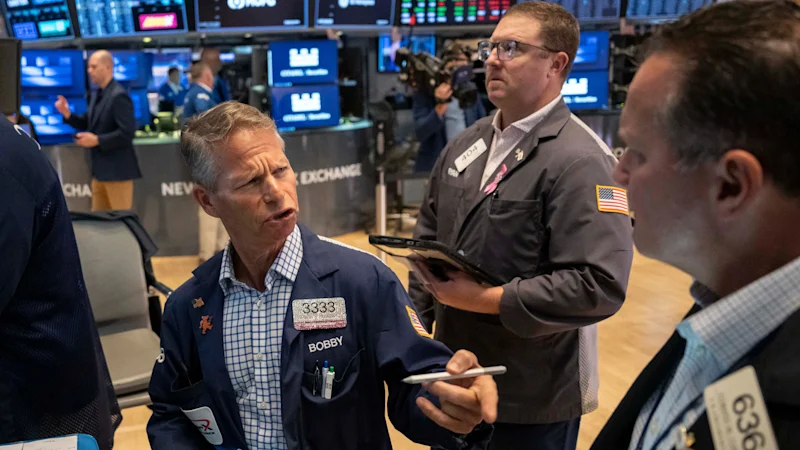
The S&P 500 slipped 0.5 per cent, while the Dow Jones Industrial Average lost 333 points, or 0.6 per cent. The Nasdaq fell 0.4 per cent.
Australian sharemarket futures were pointing to a weaker opening, with the ASX 200 expected to fall by about 31 points, or 0.3 per cent. The index closed 0.2 per cent lower on Monday, while the Australian dollar was trading at US71.64 cents.
The US operation was the first known American strike on Iran since late July. US Central Command said Iranian Revolutionary Guard forces had been preparing to launch rockets and lay sea mines in the strait.
Iran said the attack killed and wounded soldiers and civilians and vowed a response. Iranian forces later launched missiles at US bases in Jordan, while Jordan’s military said it had intercepted eight missiles that entered its airspace.
The renewed confrontation also came after the United Arab Emirates said it had intercepted an Iranian drone over its waters. A British military maritime agency said a tanker had been hit by an unidentified projectile north of Khasab, Oman, although no casualties or environmental damage were reported.
Oil rises as Strait of Hormuz traffic falls
Brent crude, the international benchmark, rose 2.8 per cent to US$90.59 a barrel. Prices had moved between roughly US$72 and US$102 during August as traders weighed shifting hopes of a deal to end the six-month-old conflict.
The Strait of Hormuz normally handles about a fifth of the world’s oil shipments. Shipping data showed visible commodity traffic had fallen to about five vessels a day over the weekend, underscoring the caution among operators concerned about attacks.
US officials described the strike as a limited action intended to protect commercial shipping. The American military has said that international shipping routes have been cleared of mines, but traffic through the waterway remains at sharply reduced levels.
Higher energy costs have added to inflationary pressure in the United States. The national average petrol price remained above US$4 a gallon throughout August, making it the most expensive August on record, according to the AAA.
That has complicated the Federal Reserve’s interest-rate decisions. Inflation remains above 3 per cent, well above the central bank’s 2 per cent target, while financial markets are pricing in a strong possibility of a rate increase at the Fed’s September meeting.
The yield on the two-year US Treasury note, which is particularly sensitive to interest-rate expectations, rose to 4.35 per cent from 4.34 per cent on Friday. The ten-year yield increased to 4.75 per cent from 4.73 per cent.
Investors are also awaiting the latest US employment figures later this week. Hiring unexpectedly stalled in July, when employers cut 23,000 jobs, while government revisions removed a further 103,000 jobs from the May and June figures.
Energy shares were among the few gainers on Wall Street, with Exxon Mobil rising 1.7 per cent and Chevron adding 1.5 per cent. Edison International fell 23.8 per cent and PG&E dropped 18.8 per cent amid reports of possible California legislation that could allow insurers to sue utilities over wildfire-related claims.
GameStop shares rose 3.4 per cent after the retailer issued a preliminary second-quarter earnings outlook above the previous year’s result. Aon fell 7.6 per cent after announcing a US$17 billion deal, including debt, to buy insurance broker USI Insurance Services from private equity group KKR.
