


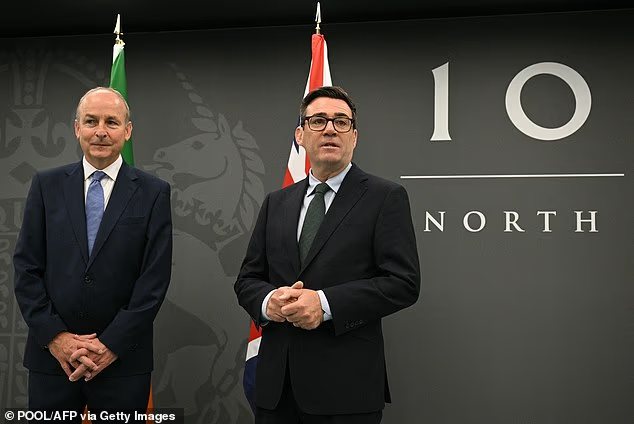
Andy Burnham has sought to revive the Government’s EU reset during talks with Irish Taoiseach Micheál Martin, as negotiations over closer ties continue to face disputes about trade, European rules and free movement.
The Prime Minister met Mr Martin at the Government’s base in Manchester, with the delayed UK-EU summit also on the agenda. Mr Burnham said he expected the meeting to take place “later this year”, despite speculation that it could be pushed back until 2027.
He said he wanted to “take further steps to deepen the relationship with Europe”, while insisting that the UK-Ireland relationship was important at every level.
Mr Martin said the meeting offered an opportunity to “inject further momentum” into relations between the two governments. Discussions were also expected to cover the legacy of the Troubles, the Good Friday Agreement, Ukraine, Gaza and the wider Middle East.
Welcoming the Taoiseach, Mr Burnham said: “Close to home, as co-custodians of the Good Friday Agreement, we are working together to uphold its principles as we approach the 30th anniversary next year.”
He added that, with Ireland holding the presidency of the Council of the EU, the two countries were looking forward to the UK-EU summit and to deepening ties with Europe.
However, efforts to improve the relationship have encountered obstacles similar to those faced under Keir Starmer. Brussels has insisted that Britain would need to accept EU rules and make financial contributions to reduce friction at the border.
There are also disagreements over a proposed youth free-movement scheme and demands that European students should receive discounted tuition fees in England. The Government has so far maintained that it will not cross its red lines on rejoining the single market or customs union, despite pressure from trade unions and Labour MPs.
Chancellor presses for access to EU procurement scheme
Chancellor John Healey was due to meet EU finance ministers in Dublin, where he planned to argue that Britain should not be excluded from the bloc’s “Made in Europe” procurement drive.
The scheme is designed to protect European manufacturing from global competition, particularly from China. Mr Healey was expected to warn that it should not “erect new barriers” for UK businesses.
He was also due to tell ministers that lessons should be learned from the collapse of talks over possible British participation in the EU’s Safe defence loans scheme.
Mr Healey said: “The next chapter of Britain’s growth story will be written in more places. To me, closer ties with the EU means British businesses – wherever they are based across the UK – get better access to both the supply chains and the customers they need to grow.”
Mr Burnham previously told French President Emmanuel Macron that the “buy European” programme could pose “significant challenges” for British industries, including steel.
