


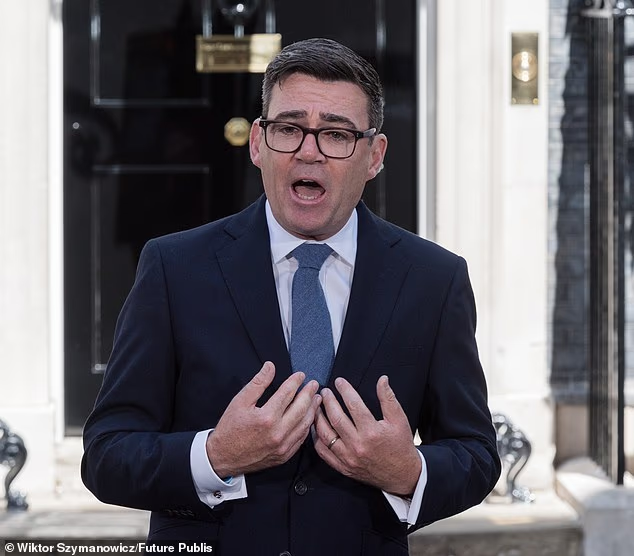
Andy Burnham is reportedly considering calling an early general election to secure a fresh mandate for tax rises, amid warnings that the Treasury’s financial headroom has fallen sharply.
Labour sources claim the Prime Minister could go to the country within the next six months, despite inheriting a parliamentary term that runs until 2029. Such a move would free the Government from commitments in the 2024 manifesto not to increase income tax, VAT or National Insurance.
Chancellor John Healey is examining measures intended to raise between £10 billion and £15 billion at next month’s Budget. Options under consideration are said to include increases to capital gains and corporation tax, windfall taxes on banks and oil companies, and an extension of the mansion tax.
A rise in income tax is regarded as the simplest way to raise funds, but would breach Labour’s manifesto. Each additional penny on the basic rate is estimated to bring in about £7 billion for the Treasury.
The pressure has intensified as the Government’s so-called fiscal headroom has reportedly shrunk from £23 billion to £5 billion. Rising borrowing costs, together with the impact of the Iran conflict on energy prices and inflation, have contributed to the deterioration.
One source claimed: “They are having a meltdown in there [the Treasury]. The numbers are getting worse by the day. The markets like to see a ‘2’ in front of the headroom figure, and that seems a long way off. And the easiest way to sort it is off the table.”
The same source said Rachel Reeves, Mr Healey’s predecessor, had wanted to increase income tax to reassure financial markets, but that it had been judged politically impossible.
Tax measures under consideration
Among the proposals being examined is an “exit tax” charging people who move to a lower-tax country 20 per cent on their business assets. A further measure could impose an annual two per cent levy on assets worth more than £10 million.
The proposed levy would be modelled on France’s former wealth tax, which applied progressive rates of between 0.5 per cent and 1.5 per cent to net personal wealth above €1.3 million.
Treasury officials have warned that measures aimed at the wealthiest could reduce revenues over time. They argue that moving money and homes overseas, or transferring assets to children, could eventually outweigh the initial gain to the Exchequer.
Labour is also considering extending the mansion tax to properties valued at more than £1.5 million. The proposal would affect nearly 300,000 homes.
An early election would be a significant gamble, with households facing rising costs. Oil prices have passed $100 a barrel, four interest-rate increases are expected by the middle of next year, and the average energy bill is forecast to rise by 24 per cent in January to more than £2,000.
Mr Burnham has denied plans to call an early election, saying he will “work to the 2024 manifesto”.
