


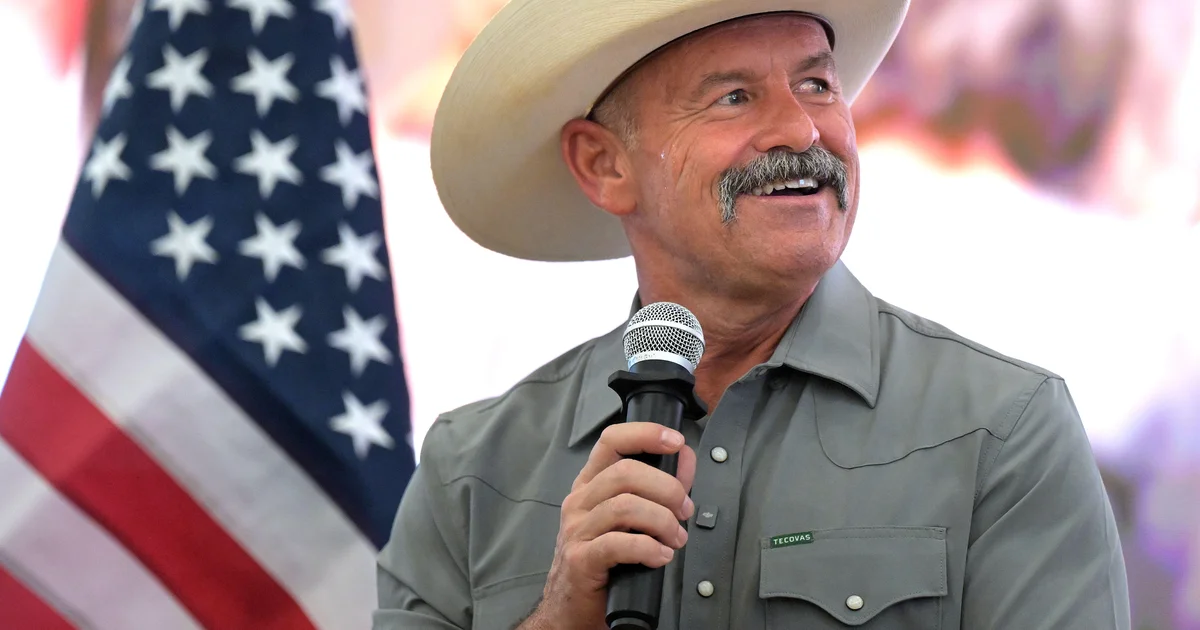
California’s Supreme Court has ruled that Riverside County Sheriff Chad Bianco broke election law by ordering deputies to seize more than 650,000 ballots linked to the Proposition 50 special election.
In two unanimous decisions, the justices found that Mr Bianco unlawfully took custody of the ballots and disregarded instructions from state Attorney General Rob Bonta to suspend his investigation.
The court ordered the sheriff to end the inquiry into alleged election fraud and return the ballots to county officials. It also directed him not to handle them further, except where necessary to comply with the order.
The justices said state law required voted ballots to remain in the custody of election officials. “In short, Bianco’s arguments fail to persuade us that we should interpret section 15551 in a manner inconsistent with its plain text,” they wrote.
The case arose after Mr Bianco’s office seized ballots from a special election in which voters approved a redistricting measure that shifted five Republican-held US House seats towards Democrats in this year’s midterm elections.
The sheriff said he was investigating a complaint from a local group that alleged about 45,800 more votes had been reported to California’s Secretary of State than had been counted. He described the inquiry as a “fact-finding mission”.
Riverside County election officials disputed that claim, saying the machine count and the final count submitted to the state differed by about 100 votes.
California Supreme Court backs attorney general’s authority
The court also ruled that Mr Bianco had ignored Mr Bonta’s instruction to pause the investigation. Mr Bonta said the ruling reaffirmed his authority to supervise county sheriffs.
“I take my responsibility to exercise that authority in the public interest seriously,” the attorney general said. “This was an extraordinary situation that required extraordinary action.”
Mr Bianco said the ruling was not about whether his investigation was lawful, but whether the attorney general could stop what he described as a lawful criminal inquiry.
“I will obey the writs. I will not obey the message behind them — that local law enforcement works for Sacramento, not for the people who elected us,” he wrote in an advertisement for his 2028 re-election campaign.
He accused the court of giving the Attorney General’s Office “unchecked power over any investigation in the state of California” and said the evidence had been placed beyond his office’s reach.
The investigation prompted legal challenges from Mr Bonta, UCLA’s Voting Rights Project and Riverside leaders who sought the return of the ballots. The ballots were held at an undisclosed location during the legal proceedings, according to Riverside City Council member Clarissa Cervantes.
Mr Bianco said in late March that he would pause the inquiry because of what he called politically motivated lawsuits and court filings. The state Supreme Court later issued a formal order halting the investigation in April.
In a statement responding to the ruling, California Governor Gavin Newsom said a package of bills he signed over the weekend would prevent anyone from seizing ballots.
“People deserve to know their ballot is counted and secure, and in California we will do everything we can to protect that constitutional right — this year, and beyond,” Mr Newsom said.
