


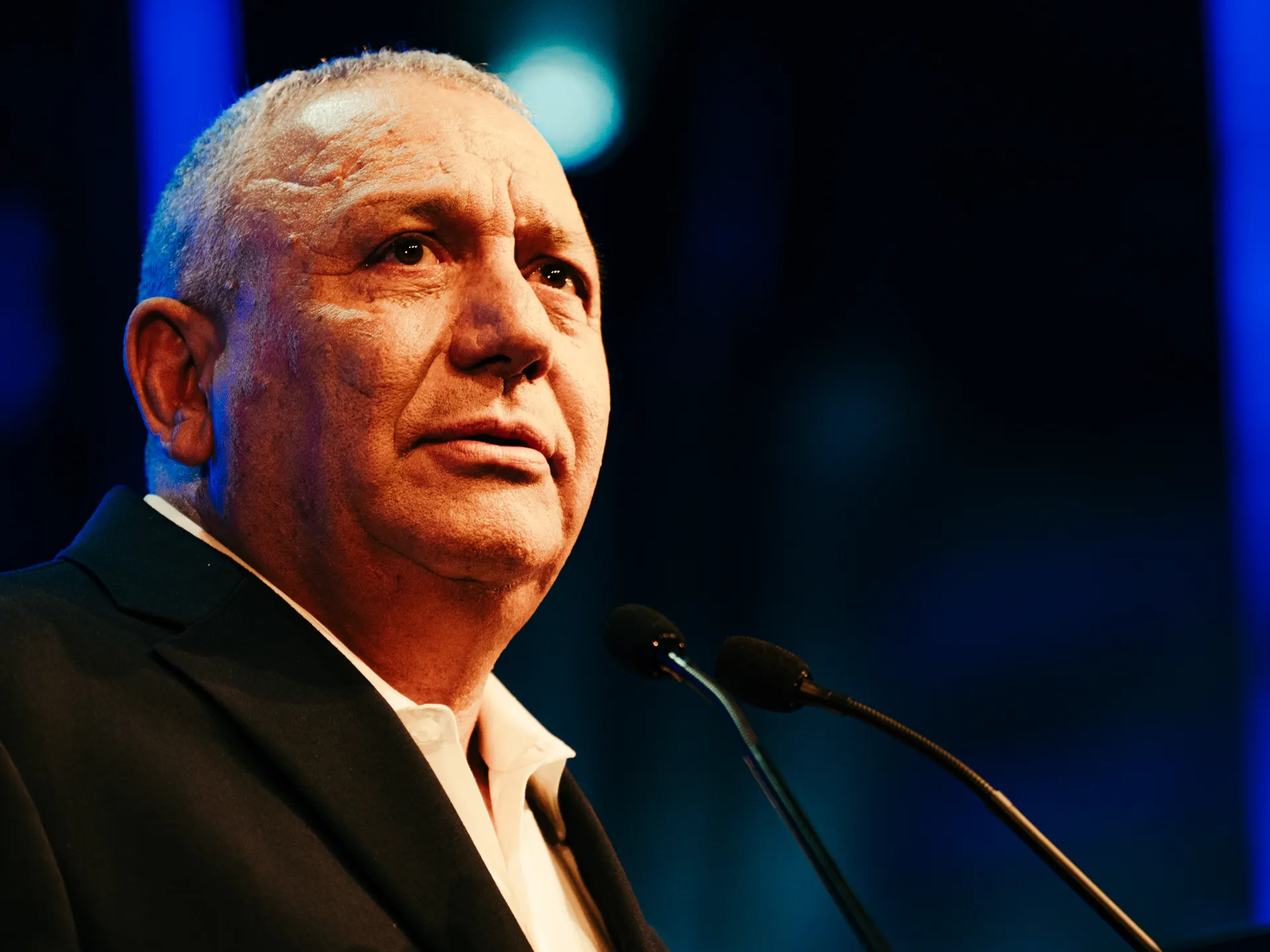
Gadi Eisenkot has been tasked with forming Israel’s next government after elections failed to produce a political alliance with a majority in the Knesset, placing the former military chief of staff at the centre of efforts to end Benjamin Netanyahu’s long tenure in power.
President Isaac Herzog has given Mr Eisenkot 28 days to assemble a coalition, with the option of a further 14-day extension. If he fails, Mr Netanyahu is expected to be given the opportunity to try, before fresh elections are called if no government can be formed.
Mr Eisenkot’s Yashar, or “Straight”, party leads a volatile opposition bloc, but it is not currently clear how he could secure the numbers required to govern. He may need the backing of at least one of the two ultra-Orthodox parties that have traditionally supported Mr Netanyahu, while also winning support from right-wing opposition figures and Arab parties outside the government.
Gadi Eisenkot faces difficult coalition talks
One possible coalition partner is United Torah Judaism, which broke with its traditional ally Shas by declining to endorse Mr Netanyahu. Its support is likely to depend on preserving the de facto protection given to ultra-Orthodox men who refuse military service, according to the source material.
Support from parties representing Palestinian citizens of Israel could come at a price. They are expected to seek meaningful action against violent crime in Palestinian communities, as well as an end to attacks by Israeli settlers in the occupied West Bank which they say have been encouraged by government partners Itamar Ben-Gvir and Bezalel Smotrich.
Aida Touma-Sliman, a Knesset member from the left-wing Hadash party and part of the Palestinian-led Joint List, said recent developments suggested Mr Eisenkot was reluctant to depend on Arab support.
“He appears much more willing to compromise with the ultra-Orthodox religious parties, particularly over the law governing military conscription, than risk being seen to depend on Arab support,” she said.
Mr Eisenkot became leader of the opposition alliance only days before the October 27 election. Its public messaging was subsequently described as confused and contradictory, with no obvious central figure coordinating the coalition.
The anti-Netanyahu candidate
For many voters, Mr Eisenkot’s appeal lies partly in the contrast he presents with Mr Netanyahu. Born in Tiberias to parents from Marrakesh and Casablanca, he grew up in Eilat and joined the army at 18 before rising to become chief of staff.
He later entered politics, serving in the national unity government Mr Netanyahu formed after the Hamas-led attacks on southern Israel on October 7 2023. Allies and opponents have described him as both “menschy”, meaning decent, and “schlumpy”, or unkempt.
His personal experience of the conflict has also shaped his public image. His son Gal was killed in Jabalia, northern Gaza, in December 2023 while taking part in the war, followed the next day by his nephew Maor. Another nephew, Yogev Pazy, was killed in Gaza in November 2024.
Yossi Mekelberg, a senior fellow at Chatham House, said Mr Eisenkot appeared to offer voters stability after years of political upheaval.
“He seems very military in his bearing, very steady and a man you don’t always know what he’s thinking,” he said. “I think he’s offering what Israel needs above all else right now: a sense of normalcy and the understanding that there are rules that apply equally and to everyone, including the government.”
Mr Eisenkot is said to have resented sitting alongside far-right ministers including Mr Ben-Gvir and Mr Smotrich during his eight months in the national unity government. However, his record in the military is likely to draw scrutiny as he attempts to present himself as an alternative to Mr Netanyahu.
Military record and US relations
As chief of staff, Mr Eisenkot oversaw Israeli operations against Palestinians in Gaza and the West Bank, as well as air strikes against Iranian targets and the arming of rebels in Syria.
He is credited with devising the so-called Dahiyeh Doctrine, which advocates disproportionate force and widespread destruction against communities resisting Israeli military action. During the 2006 war in Lebanon, when the doctrine was developed, Israel killed 1,109 people, about 860 of them civilians, according to figures in the source material.
United Nations figures record about 650 Palestinians killed by Israeli forces or in conflict-related incidents between 2015 and 2018, including 295 in 2018. A UN commission later said there were reasonable grounds to believe Israeli forces under Mr Eisenkot’s command had committed serious violations of international law, some potentially amounting to war crimes or crimes against humanity.
His appointment would also come as Israel’s relationship with the United States faces a major test. Israel’s reputation among the American public has fallen sharply amid the war in Gaza and the US-Israel war on Iran, which Mr Netanyahu has been accused of persuading President Donald Trump to begin.
On the eve of midterm elections that proved disastrous for Mr Trump, the US President announced an end to the annual 3.8 billion dollar military aid package to Israel. Republican losses followed, with senior officials including Vice President JD Vance blaming the war on Iran.
Aaron David Miller, a senior fellow at the Carnegie Endowment, said Mr Eisenkot would face an exceptionally difficult task in repairing Israel’s standing in Washington. He also noted the Israeli politician’s discomfort on the public stage and reluctance to speak in English.
“Perceptions of Israel are fairly entrenched. Essentially, the public’s been watching the region in split screen since 2023. On one screen, there’s the carnage inflicted by Hamas on October 7 [2023], and on the other, there’s the death and destruction unleashed by Israel in response,” Mr Miller said.
“In the eyes of many, Israel is no longer David but Goliath,” he added. “Ahead of Eisenkot may be the toughest US landscape any Israeli prime minister has to navigate.”
Mr Eisenkot’s immediate challenge, however, is closer to home: finding a coalition that can unite secular, right-wing, ultra-Orthodox and Arab lawmakers without surrendering the policies that brought his opposition bloc to power. If he cannot do so, the effort to replace Mr Netanyahu will return to the prime minister himself or lead Israel back to the ballot box.
