


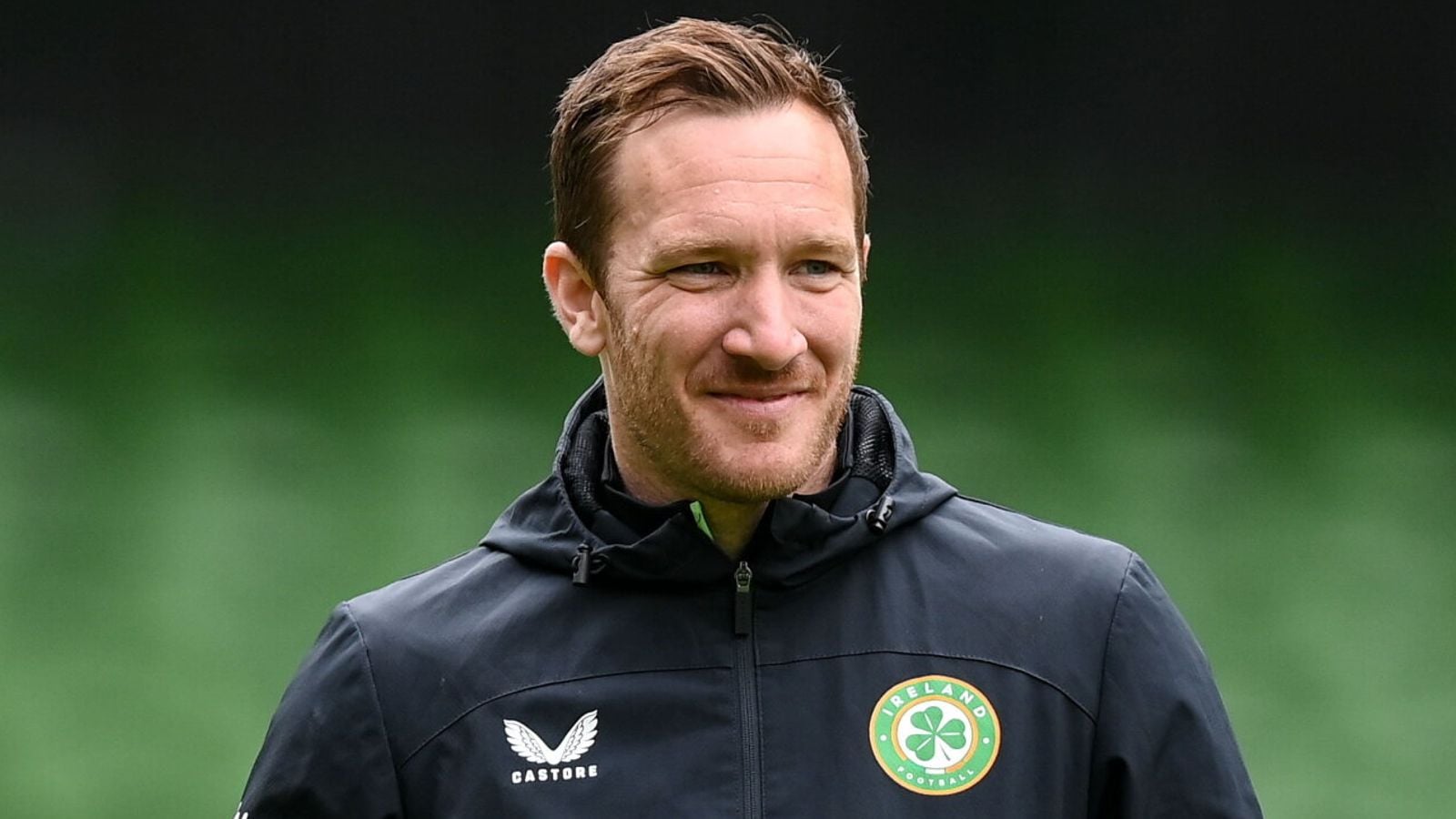
Rhys Carr is determined to secure his first permanent head-coach role after his brief spell in charge of Coventry City convinced him that he is ready for the next step.
The 39-year-old former Coventry assistant manager has spent much of his career developing players, but believes the experience of leading the Sky Blues for three demanding matches has made him “even hungrier” to run a team of his own.
“I want to be a head coach,” Carr said. “It has made me even hungrier.”
Carr was handed caretaker responsibility after Mark Robins’ seven-year tenure at Coventry came to an end. He oversaw a draw at Sunderland, another against Sheffield United and a defeat at Burnley — three opponents who were challenging near the top of the Championship.
Although the circumstances were difficult, Carr regards the experience as invaluable. He wanted to remain faithful to the principles he had helped implement under Robins rather than make wholesale changes simply because he had taken temporary charge.
“I wanted to be really authentic,” he said. “I would hate to have been the type of coach who had been supporting Mark and then did something totally different when it was my turn.”
Frank Lampard subsequently arrived with his own coaching staff, leaving Carr to move on without rancour. He admitted it was personally frustrating, but said such decisions were part of the football business.
Coventry’s promotion to the Premier League has nevertheless left Carr wondering what might have been. He sent Lampard a message after the achievement and believes the squad contained top-flight qualities which had yet to be fully realised.
“Would I have loved to have still been a part of that? Yes, of course,” Carr said. “There were so many Premier League attributes there just waiting to be unleashed.”
Among the players he worked with were Jack Rudoni, Milan van Ewijk and Bobby Thomas, while he also singled out Victor Torp as a player with an exceptionally high ceiling.
The development of individuals has been central to Carr’s work at Bristol City, Wolverhampton Wanderers, Sheffield United and Coventry. He was an individual coach at a time when the role was still relatively unusual, and believes that detailed support should not disappear when players reach senior football.
“You do not want to create robots, you want to give them solutions,” he said. “We look at their super strengths. Why were they signed?”
Carr points to his work with Rudoni as an example of the process. The midfielder had previously been accustomed to dropping deep to find possession, but was encouraged to hold his position for longer in the knowledge that better players would find him.
That allowed Rudoni to receive the ball in more dangerous areas, where he could create chances, score and bring others into play. Carr said the focus was on producing more opportunities for a player’s individual qualities to influence matches.
One of his most satisfying moments came with Swedish winger Niclas Eliasson. Carr identified that an opposing full-back was prone to lunging into challenges, and Eliasson worked on exploiting the small gap that appeared when the defender committed himself.
When the opportunity arrived in a match, Eliasson created the extra half-yard and scored, sliding towards the dugout after executing the move they had rehearsed the previous day.
“The action might only come up once in six games but it did and he nailed it,” Carr said.
His experience extends beyond individual coaching. Carr has worked as assistant manager of the Republic of Ireland women’s team, completed the League Managers’ Association diploma in football management and continues to organise coaching conferences featuring leading figures from the game.
He also believes those experiences have broadened his understanding of communication and leadership. In total, he estimates he has spent almost 500 matches in the technical area of senior teams.
Carr does not expect his next opportunity to involve an immediate relegation battle or a short-term rescue mission. His preference is to build a team, develop players and establish a clear playing identity — an approach he has already set out in a 50-page document.
“I don’t have the reputation for that project,” he said of firefighting appointments. “But developing players? That is my skillset.”
With his coaching career entering a new phase, Carr says he is ready to return to the dugout and finally take charge on a permanent basis.
“I am just itching to get going again.”
