


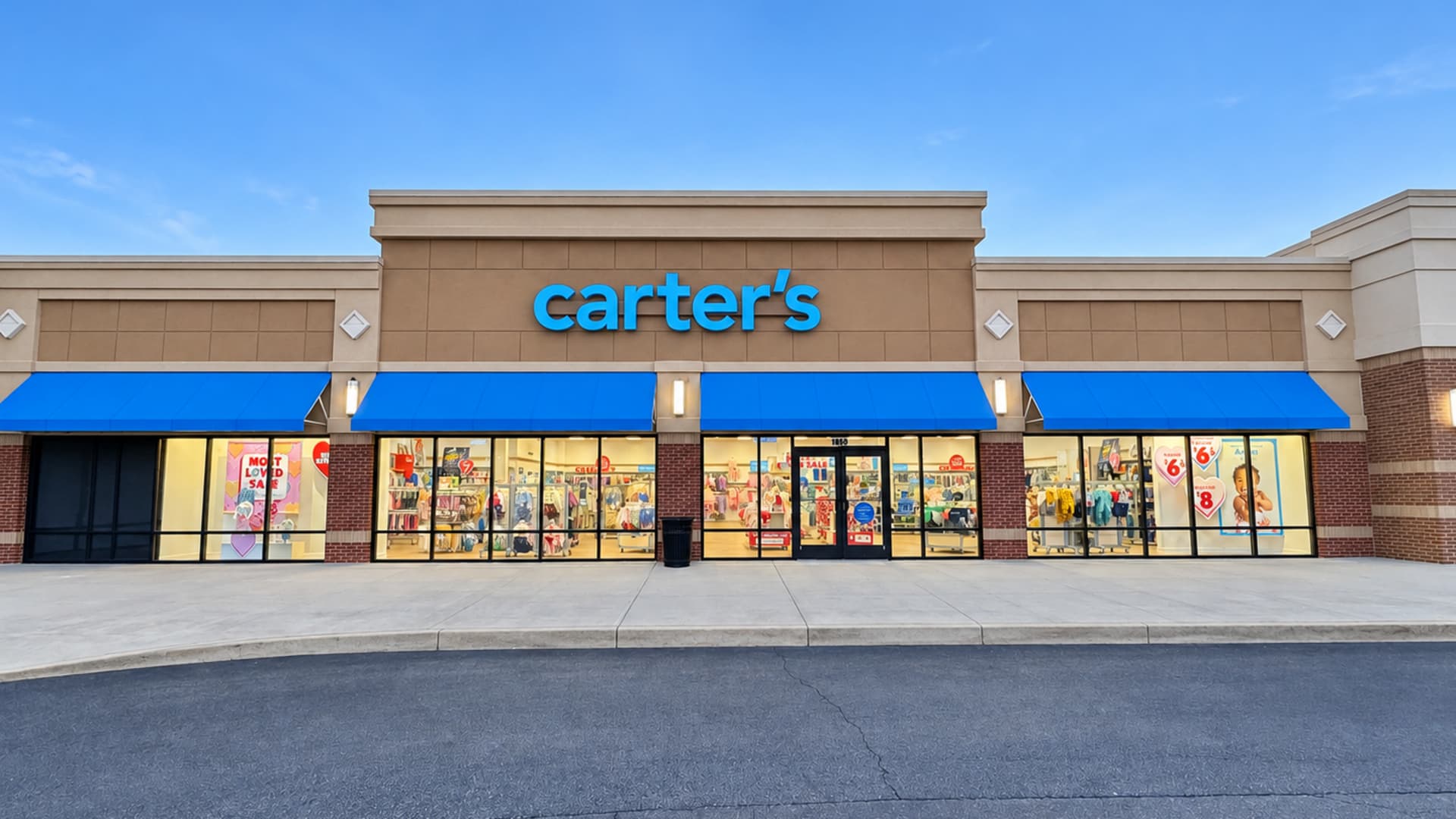
Children’s clothing retailer Carter’s is launching a major rebrand, including a new logo and marketing campaign, as the 161-year-old company seeks to reconnect with a changing generation of parents and recover from several difficult years.
The revamp of the US brand is designed to reflect the values and shopping habits of today’s families, according to chief marketing officer Sarah Crockett. It will be introduced across Carter’s channels during 2026, with further changes to retail locations and packaging planned for 2027.
“We recognize that the market difference of our parents in the communities that we’re serving is significant,” Ms Crockett said. “We had an opportunity to really tap into the values that parents are bringing into the household.”
Carter’s, whose brands include OshKosh B’gosh, sells through its own stores as well as retailers including Walmart, Target and Amazon. The company has reduced its shop estate and cut corporate jobs as it attempts to reposition the business in an increasingly competitive baby and children’s clothing market.
Its adjusted net income fell to 126.1 million US dollars (£93.4 million) in the 2025 financial year, from 210.7 million dollars the previous year. The company has said higher product costs, tariffs and additional investment weighed heavily on profitability.
Last October, Carter’s announced plans to eliminate 15% of its corporate workforce and close 150 North American stores as their leases expired. Its shares have fallen by more than half over the past three years, leaving the company with a market value of about one billion dollars.
Carter’s rebrand follows signs of recovery
Recent trading has provided some encouragement. US comparable sales rose by 10.5% in the first quarter of 2026, while net sales increased by 8.1%.
Shortly before those results were released, Carter’s appointed Sharon Price John, the former chief executive of Build-A-Bear Workshop, to lead the company. Wells Fargo analysts subsequently upgraded the stock from underweight to hold, saying the retailer’s changes were driving fundamental improvements.
Ms Price John described the changes to Carter’s store network as a normal stage in the company’s development rather than evidence that it had lost touch with its customers.
“Like any company at our scale, you’re going to have a pretty standard process of evolving your retail footprint, and in many ways that’s just exactly what the company’s doing, which is the right thing to do,” she said.
She added: “That is just running a business,” while saying she did not believe Carter’s had lost its connection with parents who buy its clothes.
The company said its newer customer base, including Generation Z shoppers, grew by a mid-teens percentage during the second quarter. Carter’s expects full-year net sales to rise by between 2% and 3% and has received about 128 million dollars in tariff refunds after import duties became a significant cost in the previous year.
Ms Price John said there was still “more to be done”, but the rebrand is intended to build on the recent progress.
Carter’s said Gen Z is expected to make up a substantial share of new parents in the coming years. Ms Crockett said younger parents were more likely to let children make their own clothing choices, while also using social media to seek ideas and inform purchasing decisions.
“This provides a whole new set of tools for us to really leverage in connecting with today’s parents and caregivers, and this is a large mission, a large brand promise that we will always be in pursuit of,” she said.
Ms Price John said the changes were necessary for the brand to remain relevant. “This is time, because brands evolve. They have to. If they don’t evolve, they’re left behind,” she said.
