


A man has been sentenced to 50 years in prison for two cold-case murders in Washington state after detectives obtained his DNA from a piece of chewing gum during an undercover operation.
Mitchell Allen Gaff, who later changed his name to Sam Wise Price, pleaded guilty to killing Judy Weaver in 1984 and Susan Vesey in 1980. He was arrested after detectives linked DNA from both crime scenes to a fresh sample collected during a staged gum promotion.
Detective Susan Logothetti of Everett Police Department spent years investigating Weaver’s murder, which had remained unsolved for four decades.
Weaver, 42, was a divorced mother who managed the Bel-Nes Cafe, described as one of the roughest bars on Everett’s Hewitt Avenue. She was known for standing up to unruly customers and was remembered by her daughters as a hard-working and devoted mother.
On the evening of 1 June 1984, Weaver left the bar after celebrating the sale of the business with her fiancé, Bill Richards. She was too intoxicated to drive and walked the roughly half-mile journey to her home.
Investigators believe she was followed. A neighbour later saw smoke coming from the flat, where firefighters found Weaver tied up and dead in a smouldering bedroom.
She had been sexually assaulted and strangled. Her clothes had been cut in a straight line with a knife, while a bloodstained pillowcase found near her body appeared to have covered her head.
Richards, who had been suspected by Weaver’s daughters because of alleged violence in their relationship, became the main suspect. However, there was not enough evidence to charge him. He died in 1994 without the case being resolved.
DNA identifies suspect in 1984 murder
In January 2023, investigators submitted evidence for new DNA testing. The results produced a match, but not to Richards. The name returned was Mitchell Allen Gaff.
Logothetti had never heard of Gaff. A routine check showed he was a Level 3 registered sex offender and classified as a sexually violent predator.
Gaff had a history of violent sexual offences. In 1979, he attacked Jackie Brown, a young police officer, at her home after approaching her with a gun. Brown fought back and escaped after he slashed her hand with a knife.
Gaff was convicted of assault with a deadly weapon and received a sentence of one year on work release and five years’ probation. He was still on probation when Weaver was killed.
In August 1984, he attacked two teenage sisters, Angela and Myra, in their home. The sisters were tied up and sexually assaulted, and Gaff used a hairdryer cord to strangle Angela before Myra fought him off and Angela ran for help.
Gaff was arrested the following month and convicted of aggravated rape. He served ten years in prison before being sent to McNeil Island for therapeutic treatment and possible indefinite civil detention.
He was released in 2018 after spending 23 years in civil confinement and therapy. Investigators said he later became a Buddhist, married a man and adopted the name Sam Wise Price.
Although Gaff was living quietly and rarely left his home, detectives needed a fresh DNA sample to strengthen the case against him. Logothetti devised an unusual plan.
Detectives use chewing gum in undercover operation
On 17 January 2024, three detectives posing as representatives of a new energy-gum company knocked on Gaff’s door. They wore T-shirts bearing the name “Zolt Energy” and offered him unmarked pieces of gum in watermelon and tropical-fruit flavours.
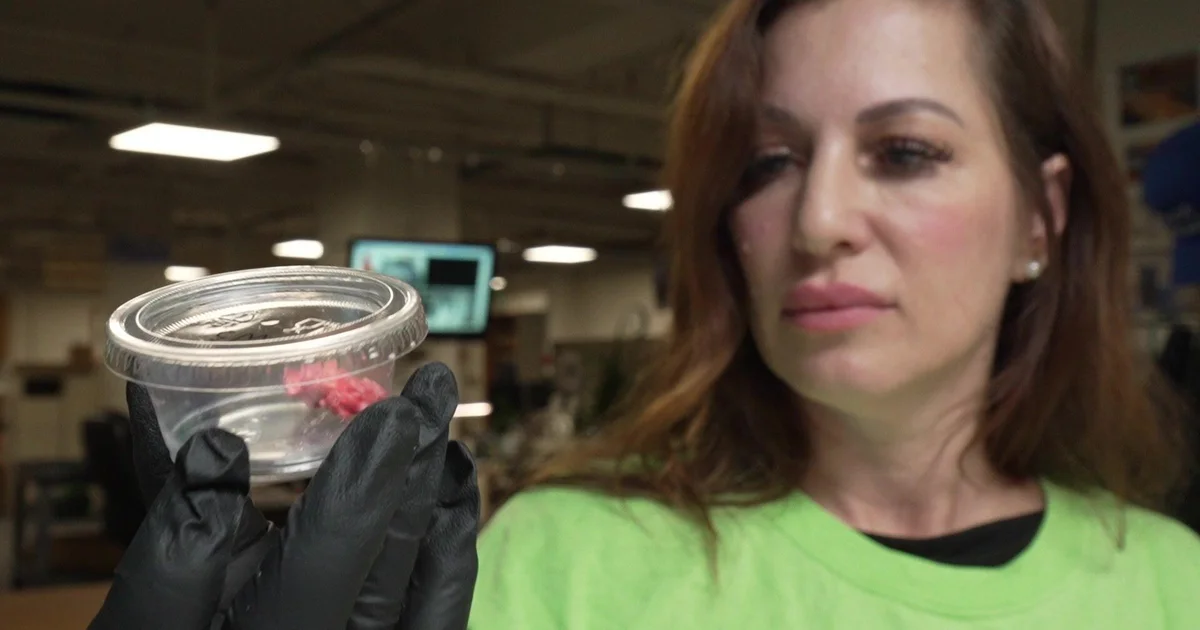
Gaff chewed the samples and discussed their flavours while one detective made notes. After each tasting, he spat the gum into a container held by another officer.
The saliva-covered gum was sent to a crime laboratory. Testing confirmed that Gaff’s DNA matched material recovered from Weaver’s vaginal swabs, shirt and ligatures.
Police arrested him at his favourite breakfast restaurant and took him to a sheriff’s office for questioning. During the interview, he initially denied killing anyone and said he did not recognise a photograph of Weaver.
When shown the arrest warrant, Gaff said it referred to “murder” and told detectives: “I didn’t kill anyone.” He later asked for legal advice and was arrested for Weaver’s murder.
DNA links Gaff to second murder
The investigation widened in January 2025 when Logothetti received a voicemail from Ken Vesey, whose wife Susan had been murdered in 1980.
Susan Vesey was 21 and had two young children when she was found hogtied, sexually assaulted and strangled in her bedroom. Her three-month-old son was found on the bed beside her body, while her two-year-old daughter was also alive inside the flat.
Electrical cords had been used as ligatures, and Vesey’s clothing had been cut. The similarities with the Weaver killing led Logothetti to submit evidence from the 1980 crime scene for comparison with Gaff’s DNA.
The results showed that Gaff’s DNA was present throughout the Vesey crime scene. Prosecutors then charged him with her murder as well.
Ken Vesey had been treated as a suspect by some detectives despite witnesses supporting his account that he had been working a night shift. He died on 12 July 2025, exactly 45 years after his wife was found dead.
Gaff was due to stand trial in September 2026, but pleaded guilty five months beforehand. Prosecutors sought a 61-year sentence, while his defence argued that his age and decades of therapy should be taken into account and asked for the statutory minimum of 20 years.
Judge Edirin Okoloko sentenced him to 50 years in prison, meaning he is expected to die behind bars.
At the sentencing hearing, relatives and survivors described the lasting impact of Gaff’s crimes. Jackie Brown said she still needed to hear every noise in her home and hoped the sentence would keep him imprisoned for the rest of his life.
Josh Vesey, who was a baby when his mother was killed, said he was grieving the fact that he had no memories of her or of a mother’s unconditional love.
Gaff told the court he took “full accountability” for the rapes and murders, but also referred to his struggles with drugs and alcohol and his years of Buddhist study and meditation.
After the sentence, Logothetti personally placed handcuffs on him. She said it was important that a woman should be the one to take a predator of women into custody and ensure he would not be free again.
