


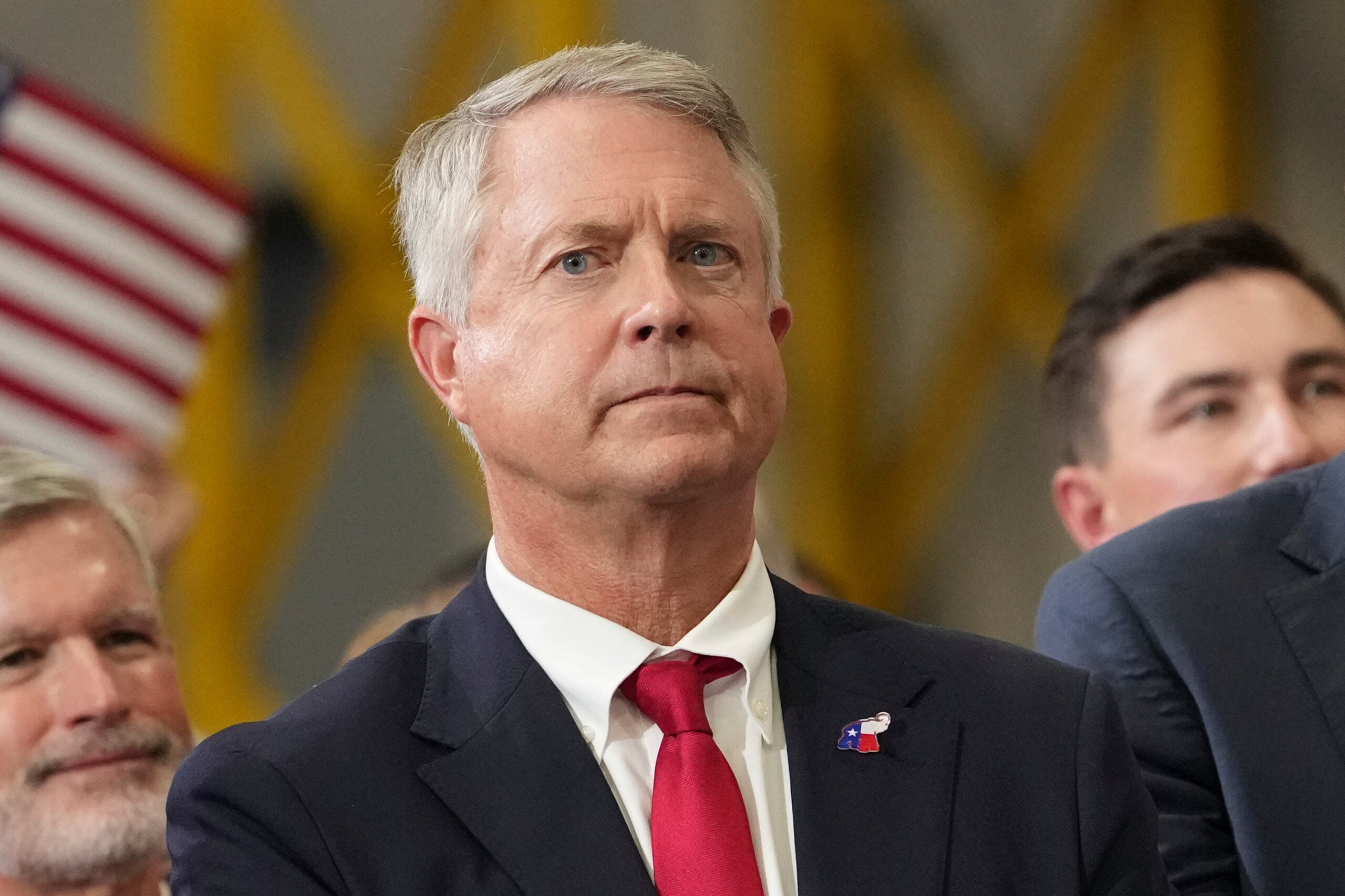
Roger Marshall’s Senate campaign is fighting to regain momentum in Kansas after Republicans poured millions of dollars into the race, amid concerns that the incumbent could lose to Democrat Adam Hamilton.
National Republicans have planned $11 million in additional spending to support Mr Marshall, while Mr Hamilton, a United Methodist pastor, raised $9.9 million in the latest quarter compared with $866,000 for the senator.
The contest has become unusually competitive in a state where Republicans have held the Senate seat for decades. Some Kansas Republicans privately believe Mr Marshall left his campaign too late and may now be relying on the strength of the wider ticket to survive.
Former Republican governor Mike Hayden, who previously supported Mr Marshall, is backing Mr Hamilton. He said the senator had “taken it way too much for granted” and had been “almost invisible, except on national television”.
National Republicans have repeatedly urged Mr Marshall to treat the contest more seriously, according to a person familiar with the conversations. A Republican strategist close to the White House described the race as an “uphill battle”, comparing the senator to an “old athlete” who had taken too long to prepare.
Mr Marshall’s campaign did not respond to requests for comment. His latest Federal Election Commission filing showed no apparent full-time payments to campaign staff.
Republican support under pressure in Kansas
The senator’s difficulties have been compounded by a series of damaging stories. His campaign used photographs of a Kansas campground without permission before editing an advert, faced accusations that it blurred the boundary between his official and campaign offices, and apologised after a local bakery said it had not been paid for six years.
Questions have also been raised about a Florida property owned by Mr Marshall and how much time he spends in Kansas. A New York Times report alleged that the obstetrician-gynaecologist had taken legal action against hundreds of patients who did not pay their medical bills.
Mr Marshall has rejected those claims, describing the report as a “hit job by left media” and saying he had “nothing else to do with the process” after patients’ accounts were sent to collections.
Mr Hamilton has made the allegations central to his attack. At a rally in Lawrence, he said Kansans deserved a senator who was not merely “showing up for photo ops” between “time with your family in Florida”.
His campaign also released an advert featuring a former patient who said she was arrested while eight months pregnant after missing a $50 payment to Mr Marshall’s office. The Marshall campaign responded with a cease-and-desist letter, saying the advert was “false in every material respect”, and released its own advert featuring a former patient praising the senator.
Chris Grant, a veteran of earlier Marshall campaigns and a prominent Trump-world operative, is expected to take on an expanded role with the senator’s team through election day.
The race has drawn comparisons with Republican senator Pat Roberts’s 2014 campaign, when he faced accusations that he did not maintain a Kansas residence and was campaigning poorly. Mr Roberts nevertheless won by 10 points in a strongly favourable year for Republicans; Mr Marshall won by 11 points in 2020.
This time, however, Kansas Republicans are confronting anger over policies associated with President Donald Trump’s second term. Tariffs and rising fuel prices have hurt row-crop farmers, a proposal to import cheaper foreign beef has angered ranchers, and threats to cut US sales of Bombardier planes have unsettled Wichita’s aviation industry.
Mr Marshall, usually a strong supporter of Mr Trump, has recently broken with the president over the beef proposal and a local immigration enforcement operation that unsettled agricultural communities.
Marshall campaigns on Democratic control of Senate
He is nevertheless seeking to make the election a referendum on the Democratic Party, portraying Mr Hamilton as a radical liberal who would support the party’s national leadership.
At rallies across central and western Kansas, Mr Marshall warned that his defeat could determine control of the Senate. He repeatedly told voters: “If my opponent were elected, it would give Chuck Schumer and AOC control of the Senate.”
But a campaign tour with other Republican candidates offered reminders that discontent is not confined to Democratic voters. In Dodge City, members of the crowd complained about fuel prices; in Newton, protesters called Republicans “fascists”; and in Garden City, local lawmakers criticised the handling of recent Immigration and Customs Enforcement activity.
“I think the frustration is still there,” said Republican state representative Jason Goetz, who represents some of the affected communities.
Some Republicans believe Ty Masterson, the Republican president of the Kansas Senate and a candidate for governor, could carry Mr Marshall over the line. Mr Masterson has polled a few points ahead of the senator in most surveys.
Tim Huelskamp, a Kansas Republican who lost a House primary to Mr Marshall in 2016, said Mr Masterson was “going to pull everybody across the line”, including the senator.
Patricia Woods, a Hutchinson resident, said she was “100% behind Masterson” but “kind of on the fence” about Mr Marshall. Asked about the Senate race, Mr Masterson replied: “It’s more complicated than mine.”
