


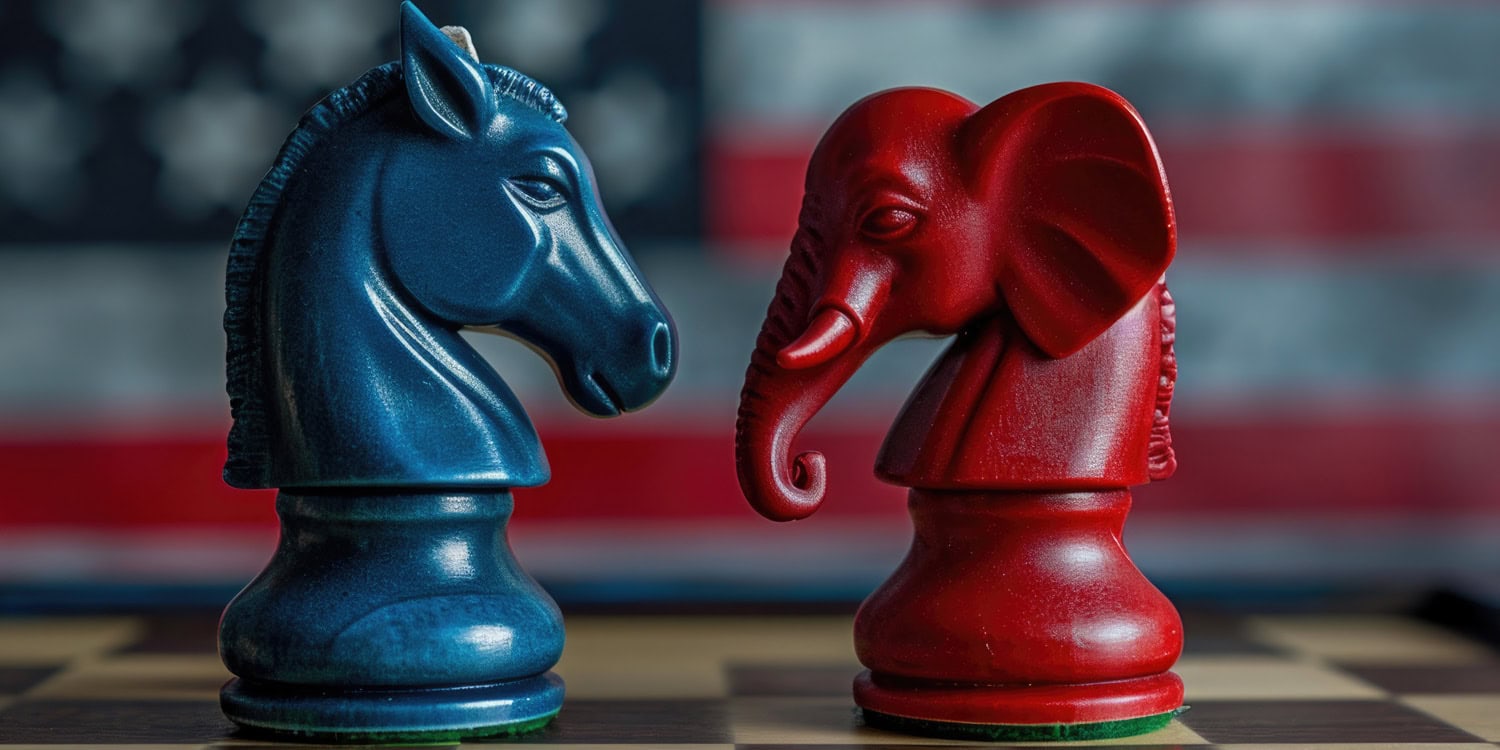
A new study in the Journal of Applied Social Psychology suggests that collective nostalgia for a political party’s past is linked to support for political violence in two opposite directions, depending on how deeply people identify with their party. Led by Jocelyn J. Bélanger, an associate teaching professor at Carnegie Mellon University in Qatar, and co-authored by others, the research surveyed 417 adult US partisans and found that obsessive passion strengthens the link between nostalgia and willingness to use violence, while harmonious passion weakens it.
The researchers distinguish between two forms of political commitment. Harmonious passion describes a freely chosen involvement that fits alongside family and hobbies, whereas obsessive passion is a more compulsive attachment in which politics becomes central to a person’s sense of self-worth and leaves little room for stepping away.
The study builds on earlier work showing divergent paths for these passions: obsessive passion has been linked to moral disengagement and support for political violence, while harmonious passion aligns with peaceful activism. Separately, researchers have explored collective nostalgia—the longing for the past of a group to which a person belongs—and how it can unite a group while increasing hostility toward outsiders.
Facing an open question about why nostalgia sometimes accompanies hostility and other times belonging, Bélanger and colleagues reasoned that collective nostalgia might widen the gap between obsessive and harmonious passion, amplifying the former’s link to violence and dampening the latter’s appeal to violence.
“Politicians on every side sell voters a golden age to reclaim, yet research on collective nostalgia had left a puzzle: longing for the group’s past sometimes breeds hostility and sometimes breeds belonging,” Bélanger told PsyPost. “We suspected the answer lay not in the nostalgia itself but in the kind of passion a person brings to their cause.”
The study recruited 417 adult partisans online in March 2022, split into 263 Democrats and 154 Republicans. Participants answered questions about their party, rating how much their involvement felt harmonious and how much it felt obsessive, and they were asked about their feelings of collective nostalgia—how often they longed for the “good old days” of their party or past presidents from their side of the aisle. They also reported their willingness to support or engage in hostile actions against the rival party, from hostility to severing friendships, while researchers controlled for overall ideological commitment.
Across both parties, obsessive passion correlated with greater support for political violence, while harmonious passion did not. On average, willingness to endorse violence was low, scoring about 1.7 to 1.8 on a seven-point scale.
When the researchers examined collective nostalgia, the two forms of passion diverged. For those high in obsessive passion, stronger nostalgia correlated with even greater support for political violence — an amplification pattern, though the authors emphasise that this describes a statistical relationship, not a proven cause-and-effect link.
Among participants high in harmonious passion, the pattern reversed. Nostalgia did not affect those with low harmonious passion, but for those with higher harmonious passion, elevated nostalgia was associated with reduced support for violence.
“We predicted it, but I was still struck by how cleanly nostalgia cut both ways: the same longing tracked greater openness to violence among obsessive partisans and less among harmonious ones,” Bélanger noted. “That crossover appeared among Democrats and Republicans alike, which tells me we are looking at the psychology of devotion rather than the psychology of one party.”
The researchers interpret nostalgia’s bittersweet nature to explain the divergence. For the obsessively passionate, longing for the past may feel like something stolen that must be reclaimed; for the harmoniously passionate, reflecting on a shared past might strengthen belonging and restraint.
“How you care about a cause matters more than how much you care,” Bélanger explained. “Among people whose politics is a freely chosen part of life they can set aside at the dinner table, longing for the group’s glory days went with less support for political violence; among people whose politics has swallowed their identity, the same longing went with more.”
As for the magnitudes, the effects are modest: the interplay between nostalgia and passion explains about 1 to 2 per cent of the variation in support for violence, Bélanger said, but the link between obsessive passion and violence was roughly twice as strong among highly nostalgic partisans as among less nostalgic ones. He cautioned that nostalgia should not be read as a driver of violence, especially since overall support was low.
The study’s findings align with earlier work by the same team, which also found obsessive passion linked to support for political violence, while harmonious passion did not.
Several caveats accompany the conclusions. The researchers emphasise that the study measured attitudes, not actual behaviour, and a direct causal link between nostalgia and violence remains unproven. They suggest that an underlying factor or the sense that a party has declined could influence both nostalgia and willingness to endorse aggression, though such questions were not directly measured in this study.
Looking ahead, Bélanger said the team plans laboratory experiments to induce nostalgia and test whether it causes shifts in attitudes. The aim is practical: to understand how to help people hold their convictions in a more harmonious way and potentially blunt political appeals that turn longing into rage.
“Nostalgia is among the oldest tools of political persuasion, and our findings suggest its effect depends less on the message than on who hears it,” Bélanger added. “The same appeal to a golden age that steadies a calm partisan may embolden a zealous one.”
The study, titled Collective Nostalgia Widens the Gap Between Obsessive and Harmonious Passion in Support for Political Violence, was authored by Jocelyn J. Bélanger, Daniel Snook, Danaiym Talantbekova and Jais Adam-Troian.
