


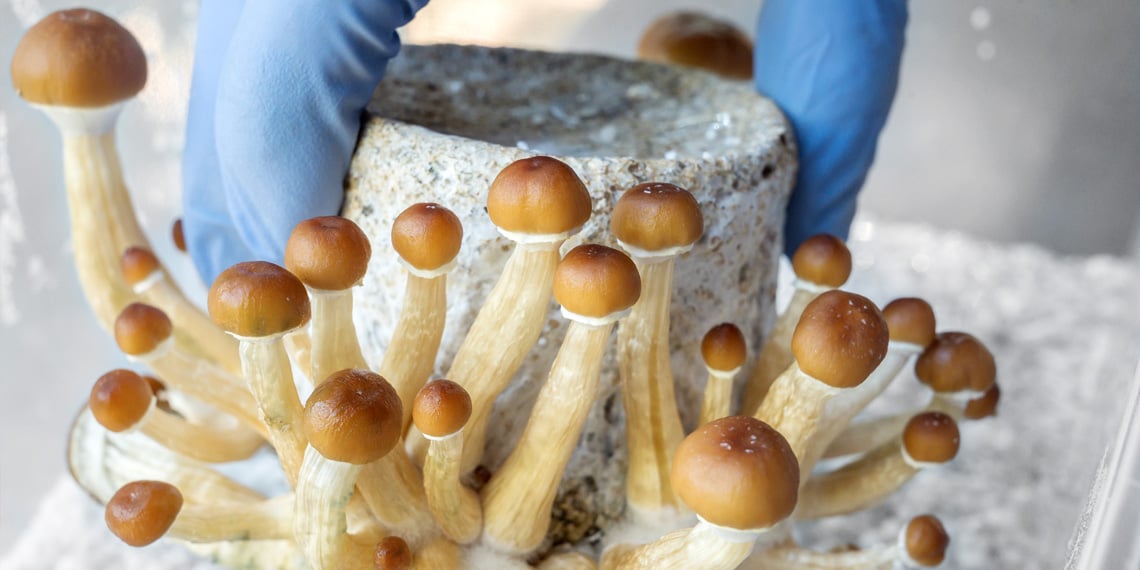
A small feasibility study conducted within Oregon’s state-regulated psilocybin programme suggests group psilocybin therapy is workable and tolerable for low‑income adults experiencing depression. Participants’ depression scores fell substantially after two group dosing sessions, though the absence of a control group means the specific role of psilocybin remains uncertain. The findings were published in the Journal of Psychedelic Studies.
Psilocybin is the primary psychoactive compound in certain fungi, commonly referred to as “magic mushrooms.” When supervised, it is used to induce an altered state of consciousness that can help individuals process difficult emotions. Major depressive disorder is characterised by persistent sadness, fatigue and a loss of interest in daily activities.
Interest in psilocybin as a treatment for depression has surged. A 2020 randomized clinical trial reported rapid and substantial reductions in depression when psilocybin was paired with psychotherapy. However, participants in many such trials have tended to be better off financially than the general population; a 2025 systematic review found that income was reported in only about one in eight psychedelic trials, with U.S. participants often more educated and wealthier.
Lead author Matthew Hicks, an adjunct faculty member and affiliate research investigator at the National University of Natural Medicine and the Helfgott Research Institute, said: “Much of the research up to this point has unintentionally skewed toward higher income earners and I felt that something ought to be done about that.”
In 2020, Oregon voters approved Measure 109, establishing a legal, state‑regulated framework for adults to access supervised psilocybin services. By mid‑2025, the programme had served more than 15,000 people, but a single session can cost around $2,000, placing it out of reach for many low‑income residents.
Health economists and clinicians have been exploring ways to trim costs. A 2023 study found that administering treatment in small groups rather than one‑on‑one reduced therapist costs by roughly a third. This economic rationale aligns with a PsyPost‑covered study from 2022, which suggested MDMA‑assisted therapy for severe PTSD could produce substantial healthcare savings compared with standard care.
“My motivation for doing the study is to start a longer series of studies aimed at demonstrating the potential cost‑effectiveness of psychedelic therapies, especially in groups, so that they might one day be covered by insurance,” Hicks explained.
To test whether a more affordable group model could work in a real‑world setting, Hicks and colleagues designed a trial specifically for low‑income patients. They emphasised this as the first clinical trial conducted within a state‑regulated psychedelic programme and the first to focus on a low‑income population.
The project was framed as a feasibility study, a small preliminary trial to assess whether a treatment can be delivered in practice, with attention to recruitment, retention, safety and acceptability. There was no control group, and neither participants nor researchers were blinded; changes in depression were examined as exploratory outcomes.
The researchers recruited adults in Oregon with income at or below 200 per cent of the Federal Poverty Line, who had a formal diagnosis of major depressive disorder, stable housing and ongoing psychotherapy outside the study.
Of 26 eligible volunteers, 20 began treatment and 19 completed the programme. Participants formed small cohorts of up to six. To reduce travel barriers, two online 90‑minute preparation sessions were held, followed by two in‑person psilocybin administration sessions scheduled one week apart. On enrolment, participants averaged 43 years old, with 12 women and 17 identifying as white.
During dosing sessions, participants gathered in a single room on floor mats and consumed a tea made from homogenised whole psilocybin mushrooms of the B+ strain. Within the legal limits, individuals were allowed to choose their own dose with guidance from facilitators. Those taking SSRI or SNRI antidepressants could have up to 50 milligrams, the maximum permitted under Oregon rules; others could take up to 35 milligrams. A common approach in the first session was to begin with about 18 to 20 milligrams, with an optional booster about an hour later.
Two facilitators oversaw the room, playing ambient music and offering separate one‑to‑one support in another space if needed. Two days after each administration session, the cohort met online for a 90‑minute integration session to process their experiences.
The study met its feasibility goals: 19 of 20 participants completed the programme and attendance at study sessions reached 98 per cent. Several participants highlighted online preparation and integration sessions as enabling participation from rural areas, and volunteers received $200 for completing the follow‑up interview. No severe adverse events were reported, and satisfaction averaged 4.8 out of 5, with no participant rating below four.
Common side effects included temporary nausea, headaches and a sense of unease. One participant experienced nausea and vomiting for around two days after consuming the blended mushrooms rather than the tea, while another reported worsening depression attributable to difficult life circumstances.
On the Hamilton Depression Rating Scale, a higher score indicates more severe depression, with participants’ average score falling from 22.21 at baseline to 8.79 two days after the second dosing session. At the three‑month follow‑up, the average rose modestly to 11.89 but remained roughly half of the starting level.
Participants also reported broad improvements across quality‑of‑life measures, with the largest gains in depression, fatigue and the ability to participate in social roles and activities. While some effects persisted at three months, they were somewhat smaller than at the two‑day post‑dose mark.
“One of the takeaways here is that low‑income earners can benefit from these therapies if they are able to access them,” Hicks said. “Given the huge financial burden of depression and other mental health issues on our healthcare system and economy generally, my hope is that we can reduce all that suffering while also saving money in the long run.”
The findings align with earlier PsyPost coverage of group‑based psilocybin therapy showing sustained reductions in depression, though the prior study involved cancer patients and used a different depression scale, whereas the Oregon trial used the Hamilton scale.
As with all research, limitations exist. The study involved only 20 participants and had no control group, so it cannot determine how outcomes compare with placebo or standard care. All participants continued regular psychotherapy and participated in preparation and integration sessions, and neither participants nor researchers were blinded, making it impossible to isolate the effect of psilocybin. Expectations were high among participants, with some reporting strong willingness to recommend the treatment to friends, which correlated with larger improvements. The two facilitators were among the study authors, and the follow‑up lasted only three months. The sample also lacked racial and ethnic diversity, with most participants identifying as white.
“The scope of my feasibility study was simply to demonstrate that it can be done with this population with these methods,” Hicks noted. “I hope it will provide sufficient justification to fund larger and more rigorous studies that can offer more definitive claims to persuade healthcare payers (like Medicaid and private insurance companies) to cover these services thus providing greater access.”
Future research with larger, more diverse groups and with rigorous comparison conditions will be needed to confirm these early results. Such trials could help determine whether group psilocybin therapy offers a cost‑effective alternative to standard mental healthcare.
The study, “Low-income group psilocybin assisted therapy for depression: An Oregon feasibility study,” was authored by Matthew Hicks, Olivia Hicks, Ryan Bradley, and Heather Zwickey.
