


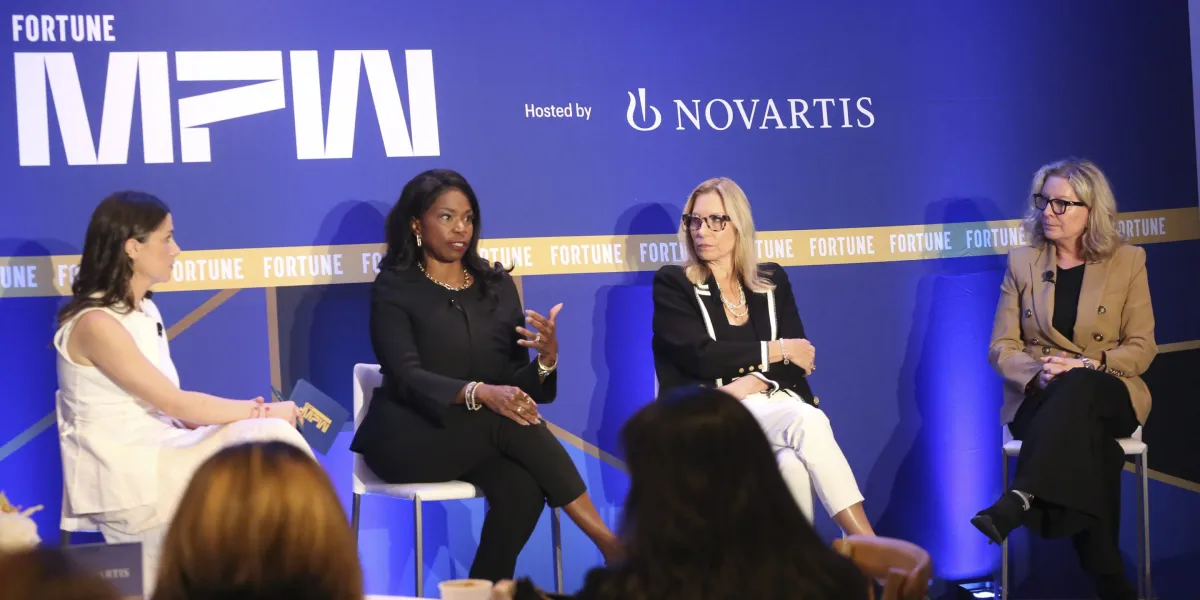
Artificial intelligence could help link menopause symptoms that are often treated separately, speakers at the Fortune Most Powerful Women Summit in Santa Barbara, California, have said.
Paula Schneider, chief executive of the Institute Advancing Women’s Health, said women entering perimenopause and menopause typically saw “five or six doctors to try and figure out all the little parts and pieces of what’s going on with your body”.
Symptoms including sleep problems, joint stiffness and hot flushes can lead patients between different specialists, she said, without a holistic approach to their care.
Reshema Kemps-Polanco, executive vice-president and chief commercial officer of Novartis US, said AI could help identify connections between symptoms earlier. “One of the greatest things I think that AI can do in health care is to help connect the dots and help connect the dots sooner,” she said.
Speaking during a Novartis-sponsored panel moderated by Fortune’s Ellie Austin, Ms Kemps-Polanco said healthcare problems were often tackled “in isolation”. AI could help companies work with governments, technology firms and the pharmaceutical industry to address gaps in care, she added.
Ms Schneider said limited training in women’s midlife health was part of the problem. Future obstetricians and gynaecologists received “about two hours, if that” of medical school education on the subject, she said.
Her institute is working with a medical certification company to develop continuing education for clinicians. The training will use AI to build evidence-based material, while the organisation is also helping women understand which questions to ask healthcare providers.
The difficulty of connecting symptoms extends beyond menopause, Ms Kemps-Polanco said. Women with autoimmune conditions may need to see several types of doctor, with each symptom treated separately. She said women could account for as much as 80% of patients in some autoimmune conditions, while people with Sjögren’s disease waited an average of four years for a diagnosis.
Patients may see a dermatologist, rheumatologist and primary care doctor, but their records are not always connected, she said. Ms Kemps-Polanco recalled using an AI tool while in an emergency department with symptoms she did not realise were linked.
“Now I don’t know how accurate it was, but it did help me have a conversation,” she said, adding that the experience made her consider how patients might reach screening, treatment and diagnosis sooner.
Wendy Barnes, president and chief executive of GoodRx, said people using new midlife health platforms should ensure there was a clinician involved. Care should be supported by clinical evidence and allow patients to “engage with an actual clinician, as opposed to it completely being AI enabled”, she said.
