


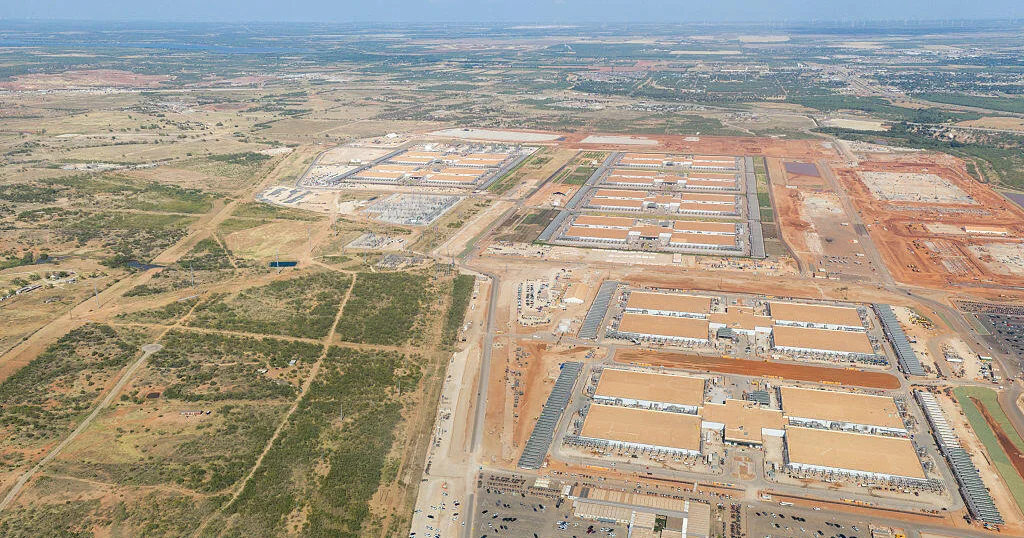
Data centres have become a major issue in the 2026 midterm elections, creating a split between the Trump administration and Republican candidates seeking office in states where much of the artificial intelligence infrastructure is being built.
Once concentrated mainly in Democratic-leaning states, the facilities are now increasingly being developed in Republican territory. About 68% of data centres currently online were in red states by 2025, while 75% of those under construction and 80% in the planning stage are in predominantly Republican states, according to Cleanview Research.
The shift has brought growing opposition from residents concerned about property values, noise, electricity bills and the use of local resources. Calls for construction moratoriums are spreading, with polling indicating that opposition to new data centres outweighs support by 30 percentage points and that most Republicans do not want one built near them.
Chris Millay, a data centre analyst at the macroeconomic consultancy Greenmantle, said Republican candidates could find it difficult to support the developments in the face of local resistance.
“It’s such a consensus issue it’s really impossible to take the other side,” he said. “When voters see a politician who supports data centres, they think, ‘Well, how am I going to trust him with my job?’”
President Donald Trump has argued that the expansion is essential to the economy and national security. At a rally in Ohio, he said: “We want them … look, there’s so much money to be made for Ohio — you can’t just turn them off. They’ll go to China.”
Mr Trump has also criticised communities that oppose the projects, writing on Truth Social that “the only reason that communities throughout the U.S.A. should not want Data Centers is if they want to end up being backwards and poor”. He has resisted regulation while calling on developers to support education, job creation, lower taxes and protections against rising energy costs.
Republican candidates distance themselves from data centre expansion
Some of the president’s allies are taking a more cautious position. In Texas, which has the largest number of data centres under construction, Republican governor Greg Abbott has paused environmental permits and grid connections for new facilities.
Ken Paxton, the Republican candidate in Texas’s Senate race, has called for an end to the state’s sales tax break for data centres. He has also said companies should face criminal liability if they power AI chatbots that endanger children.
In Ohio, Democratic gubernatorial candidate Amy Acton has called for a conditional moratorium. Her Republican opponent, Vivek Ramaswamy, has pledged to halt approval of new projects on his first day in office until lawmakers pass legislation requiring data centres to provide free electricity to nearby residents.
The issue is also affecting the Senate contest in Ohio, where a recent poll found voters preferred the Democratic candidate by 11 points over Republican senator Jon Husted when asked which candidate was stronger on data centres.
Campaign advertising mentioning the facilities has reached $45 million this year, with most of the spending opposing their construction. Georgia has accounted for nearly $13 million, more than any other state.
Republican gubernatorial candidate Rick Jackson has continued to support Mr Trump’s position in Georgia, saying decisions should be left to local officials. His Democratic opponent, Keisha Lance Bottoms, has called for a temporary halt to construction.
Mr Jackson has argued that data centres could bring major financial benefits to communities. In Effingham County, where OpenAI plans a $20 billion facility, officials have promised to use some of the revenue to reduce homeowners’ property taxes.
With most of the next wave of projects planned for states won by Mr Trump in 2024, Republican candidates face a choice between backing the president’s support for rapid expansion and responding to voters who want construction restricted. Their decisions could determine whether developments are paused, made more costly or abandoned.
