


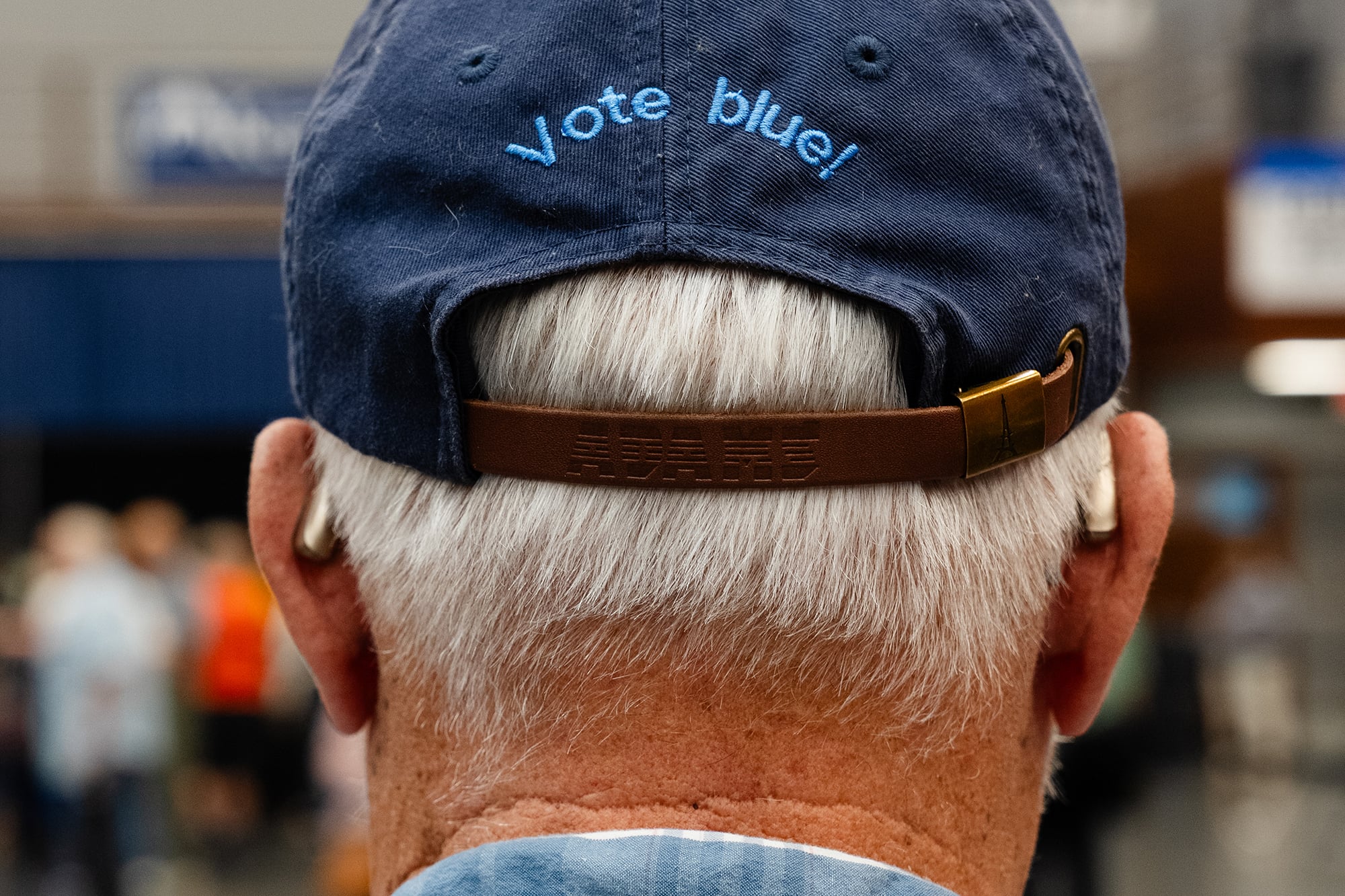
Democrats are poised to make significant midterm gains next week, but party figures and strategists warn that a defeat for Republicans would not necessarily represent a positive verdict on the Democratic Party itself.
With the election increasingly framed as a referendum on Donald Trump, Democrats could regain control of the House, the Senate or both. Yet lawmakers, campaign operatives, pollsters and donors say the favourable political climate has concealed unresolved weaknesses that contributed to the party’s defeat in the 2024 presidential election.
“Don’t confuse them losing with us winning,” said Morgan Jackson, senior adviser to Roy Cooper’s Senate campaign in North Carolina, where the Democratic candidate has consistently led by a wide margin in a state won by Mr Trump three times.
A veteran Democratic pollster working on Senate campaigns said the result would be “very much a rejection of Trump”, rather than an endorsement of the party.
Democrats’ approval rating fell sharply after the 2024 election and remains relatively weak, despite voters saying they trust the party more than Republicans on issues including the cost of living. Rising prices are consistently identified as the most important issue of the campaign.
The party has struggled to settle on a coherent economic and political message, while progressive and moderate factions have clashed over how to respond to the Trump administration.
Democrats argued over whether to prolong government shutdowns in protest at funding for Immigration and Customs Enforcement and cuts to health care subsidies in late 2025 and early 2026. They also turned on one another after the Democratic National Committee published its review of the 2024 defeat.
But as public opinion turned against Mr Trump’s agenda and the Iran war pushed up costs, candidates increasingly adopted a broad message focused on “costs, chaos and corruption”. It allowed them to attack the White House without resolving the party’s internal divisions.
“When your opponent is destroying themselves, just get out of the way and let it happen,” said Matt Barron, a Democratic strategist who has worked in the rural Midwest and Rust Belt.
That approach may be sufficient in an election held during a president’s period of deep unpopularity, but party figures fear it will not provide a route to victory in 2028.
“If all you do is say the other people are terrible, that only gets you so far,” said Democratic donor Oliver Libby. “You can have a minimum viable product of a midterm with criticism. You definitely don’t win a presidential year with just criticism.”
A poll conducted by PF Global found that more than half of Americans believed that a Republican loss of both chambers would be down to Mr Trump’s actions in office or weak Republican campaigns. Only one in four said a Democratic-controlled Congress would reflect a strong Democratic campaign.
“There are people who are going to vote in this election who are going to vote against Republicans,” said Antjuan Seawright, a Democratic strategist and adviser to Hakeem Jeffries, the House minority leader. “That does not mean they are in love with Democrats. It just means they are voting against the people in charge.”
Democratic candidates distance themselves from national party
Lis Smith, a strategist who worked on Pete Buttigieg’s 2020 presidential campaign, said Democratic candidates succeeding in traditionally Republican territory were often distancing themselves from the national party.
In Kansas, Senate candidate Adam Hamilton asked Kamala Harris, the former vice-president, not to campaign with him and said he would vote against Chuck Schumer remaining the party’s Senate leader. In Texas, James Talarico has promised to challenge the party’s “establishment” and change it, while Iowa candidate Josh Turek says he rarely thinks about the Democratic Party.
“The reality is that a lot of very average and even mediocre candidates get across the line in a wave election,” Ms Smith said. “A wave can hide a lot of weaknesses, and so we need to be able to make sure that the party can survive when the wave recedes.”
If Democrats take control of Congress, they will have an opportunity to deliver the checks on Mr Trump’s use of executive power that many voters have sought. However, party operatives are divided over whether Democrats should continue to rely heavily on an anti-Trump and anti-corruption message.
Bill Neidhardt, who worked on Bernie Sanders’s 2020 presidential campaign, said Democrats should focus on corporate influence and wealthy elites rather than treating corruption as solely a Trump issue.
“What they need to focus on is that corporate power, those billionaire elites who are dictating the terms of our economy, that’s what people are upset with,” he said.
William Garcia, co-chair of Wisconsin’s La Crosse County Democratic Party, said the party would need to demonstrate that it could improve people’s lives after the election. Democrats are campaigning to recover support in the state’s rural-heavy third district, where voters have moved towards Mr Trump in recent years.
“If we get to the end of 2027 summer and we haven’t passed bills to make a substantial difference in people’s lives, that’s my biggest fear,” Mr Garcia said. “We gotta deliver.”
Failure to fulfil promises on holding the Trump administration to account and reducing living costs could leave Democrats vulnerable in 2028, particularly if voters expect more from a party controlling both chambers of Congress.
The party also faces a longstanding difficulty in persuading voters that it is best placed to manage the economy. In 2024, Mr Trump convinced most voters that they would be financially better off with him in the White House, while portraying Democrats as more focused on social issues.
“If we start getting back into a party that cares more about non-economic issues, then we haven’t learned the lesson,” said Pete Giangreco, a Democratic strategist. “People just are going to keep hitting the change button until the economy starts working for them again.”
