


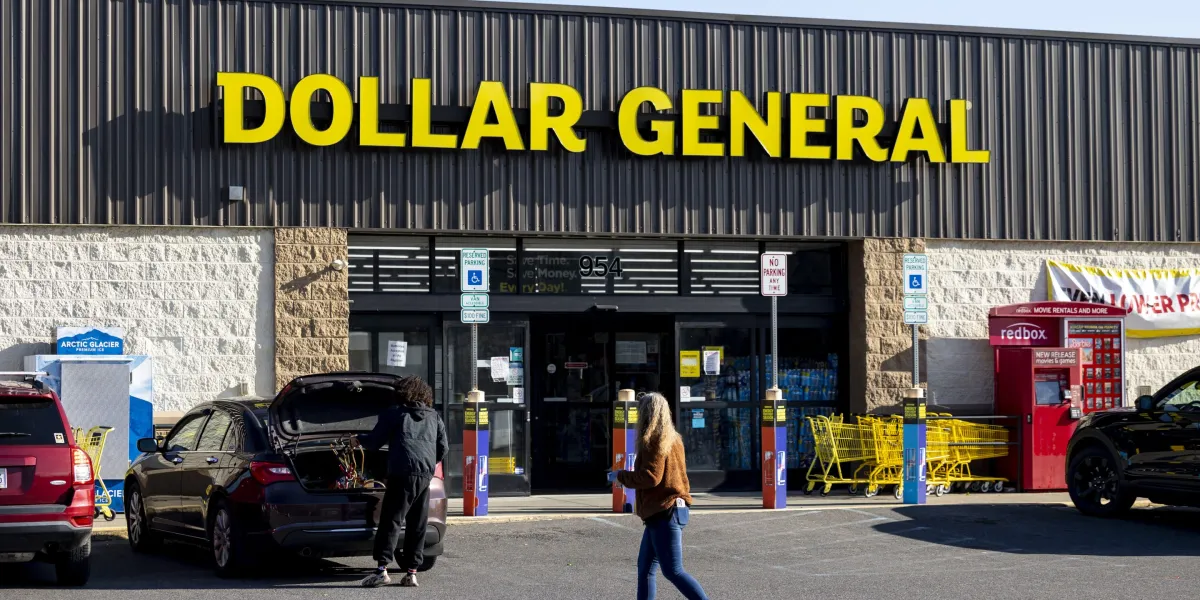
Six-figure earners are increasingly shopping for bargains at discount chains such as Dollar General as inflation continues to erode the value of a $100,000 salary, its chief executive has said.
Todd Vasos told the Goldman Sachs Global Consumer and Retail Conference that households on middle and upper-middle incomes were beginning to behave more like lower-income shoppers after years of rising costs.
“But the interesting thing with this economy, because of the other sustained headwinds of inflation over the years that have passed, even that middle to upper middle is acting more like a lower-income shopper these days,” he said.
Dollar General’s core customers, which the company defines as people earning less than $45,000 a year, typically change their habits when petrol reaches $4 a gallon, Mr Vasos said.
They shop closer to home, make more frequent trips and buy less each time. The pattern reflects uncertainty about future prices and household finances, he said, with customers purchasing what they can when they can.
But the squeeze is now affecting people well beyond the retailer’s traditional customer base. Mr Vasos said households earning $100,000 or more were telling the company they no longer felt affluent.
“I would tell you, what we’re hearing more and more from them is ‘I don’t feel like I’m higher income at $100,000 any longer,’ because of all of the headwinds that I just mentioned,” he said.
Petrol prices have risen sharply, while diesel has reached $6.50 a gallon, increasing the cost of goods transported by lorry. Utility bills, cars, insurance, food and caregiving have also become more expensive.
The national average petrol price was $4.476 a gallon, up from $3.189 a year earlier, according to AAA. The source material attributed the rise to disruption in global oil markets caused by President Donald Trump’s war on Iran.
Despite the pressure, Mr Vasos said consumers had remained resilient, largely because they had stayed in work. US retail sales rose 1.2% in August, while sales excluding petrol increased by 1.1%.
He said Dollar General was positioned to serve shoppers across different income groups, adding: “Having 2,000 items at or below $1 is very meaningful for the consumer, always has, but especially in this environment.”
Other indicators suggest that six-figure salaries are no longer viewed by many Americans as a guarantee of financial security. A Harris Poll survey last year found that 64% of people earning $100,000 or more regarded that income as the minimum needed to stay afloat rather than a milestone of success.
Among those earning at least $200,000, 64% said they had used rewards points to pay for essentials, while half had used buy-now, pay-later plans for purchases below $100. A further 46% said they relied on credit cards to make ends meet.
Michael Green, chief strategist and portfolio manager at Simplify Asset Management, has argued that the effective poverty threshold should be $140,000 because conventional measures do not reflect the cost pressures facing households.
