


JD Power’s latest car technology survey has found that motorists are most satisfied with features that work quietly in the background, rather than prominent screens and increasingly sophisticated driving systems.
The study questioned 68,084 owners of new 2026 model-year vehicles after their first 90 days with the car. It assessed 40 technologies across areas including comfort, connected services, driver assistance, electric vehicles and smart functions.
Smart ignition received the highest satisfaction rating. The system starts and switches off the vehicle in response to the driver’s actions, and recorded just 2.4 problems per 100 vehicles.
Smart heating and air-conditioning systems also performed strongly. These use automated controls, including artificial intelligence, to adjust the cabin temperature and ventilation for comfort and efficiency without requiring constant input.
Doron Hikry, director of customer success at JD Power, said manufacturers should concentrate on technology that reduces the effort involved in driving.
“The features that solve real problems without adding effort or stress for the driver are the ones resonating most with customers,” he said.
Passenger screens among least popular features
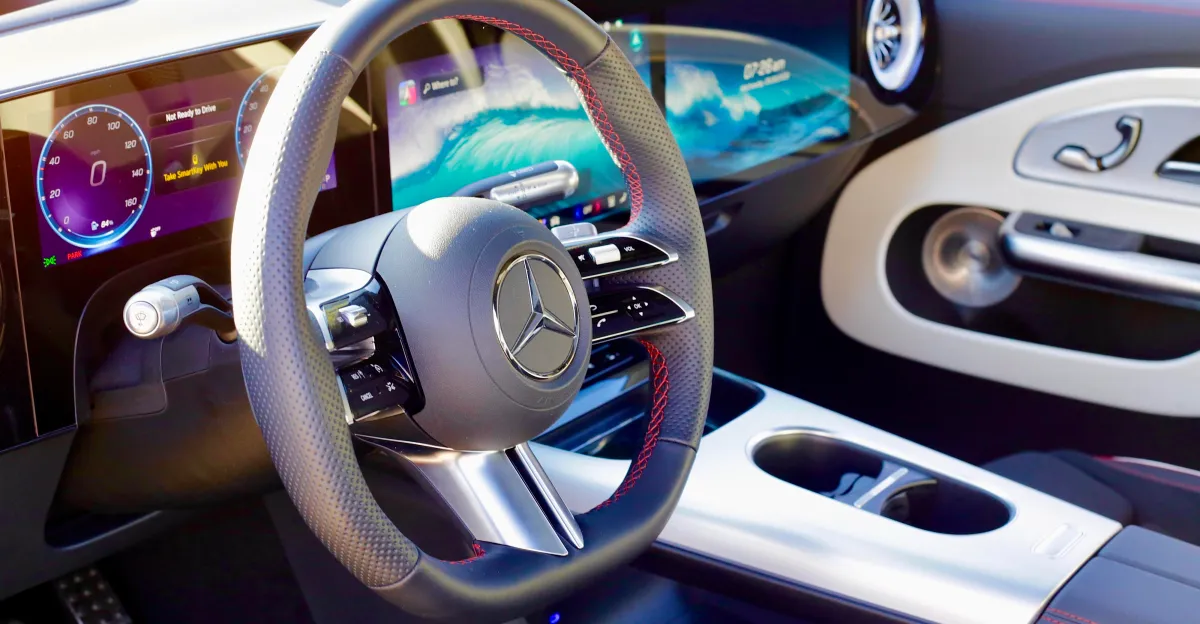
By contrast, passenger display screens embedded in the dashboard were rated among the least satisfying technologies in the survey. The feature has appeared mainly in premium models from brands including Mercedes, BMW and Porsche.
More than a third of owners with a passenger screen said they had never used it, while only 6% said they used it on every journey.
Hands-free driving systems, sometimes described as Level 2 Plus automation, also struggled to win over owners. Examples include Tesla’s Full Self-Driving, Ford’s BlueCruise, General Motors’ Super Cruise and Mercedes’ Drive Pilot.
Owners gave conventional Level 2 driver-assistance systems higher ratings for design and quality of experience than the more automated Level 2 Plus systems. That was despite Level 2 systems recording slightly more problems: 14.3 per 100 vehicles, compared with 13.8 for Level 2 Plus.
“The results indicate that owners may currently be more comfortable with systems that clearly assist the driver rather than those that introduce a greater degree of automation,” Mr Hikry said.
The survey’s individual technology awards further reflected the preference for practical additions. The Cadillac Escalade and Toyota Tundra were recognised for camera mirrors, while other winners included blind-spot cameras, digital keys, one-pedal driving and electric vehicle charging schedules.
