


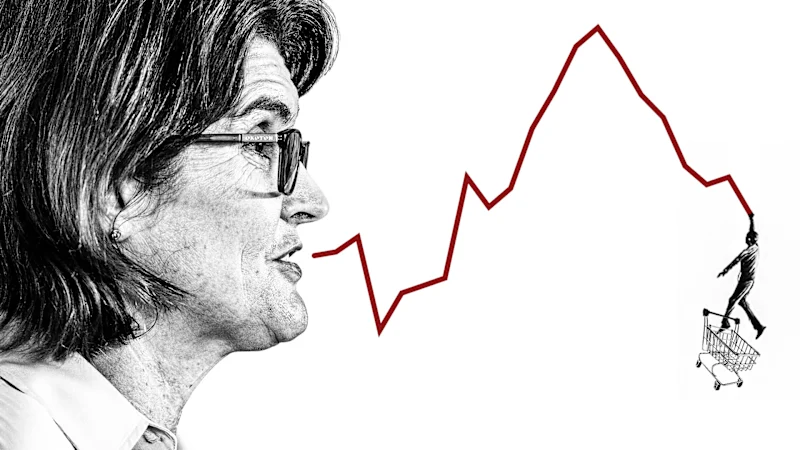
The Reserve Bank of Australia has raised interest rates to a 15-year high despite weak economic conditions, warning that further increases may be necessary if inflation remains above target.
The latest move is the fourth increase in eight months, taking the central bank’s benchmark cash rate higher as unemployment approaches a five-year high, house prices fall and economic growth per person remains weak.
Reserve Bank governor Michele Bullock said the decision would be difficult for households with mortgages and businesses carrying loans, but argued that persistently high inflation would cause greater harm, particularly to vulnerable Australians.
“I know this decision is difficult for households with a mortgage and businesses with loans, but high inflation hurts all Australians, especially the most vulnerable,” she said.
Reserve Bank warns of further rate rises
The bank has repeatedly highlighted inflation in recent weeks, including through public appearances by senior officials and podcast interviews. Deputy governor Andrew Hauser had warned three weeks ago that inflation remained the central problem facing the economy.
Higher energy prices linked to the conflict in the Middle East have complicated the inflation outlook. The Reserve Bank said global energy costs were now “much higher than had been assumed” only a month earlier, while Ms Bullock described the conflict as “a big shock” that had “made us all poorer in this country”.
Inflationary pressure is also being driven by constraints on domestic capacity, with spending by consumers, businesses and governments contributing to the problem. The federal government’s budget deficit has renewed questions about whether it could do more to help control inflation by reducing its spending.
The Reserve Bank’s monetary policy board said it would “continue to do what it considers necessary to bring inflation sustainably back to target, including increasing the cash rate target further if needed”.
Financial markets are pricing in another rate rise by February, with a 70 per cent probability of a further increase by June next year.
However, the central bank faces the difficult task of bringing inflation under control without causing lasting damage to the economy. Five years of low unemployment could quickly come to an end if borrowing costs rise too far.
The next decision will depend partly on how households and businesses respond to the latest increase. A deteriorating jobs market and further falls in property prices could discourage another rise, but a prolonged Middle East conflict and continued inflationary pressure could leave the Reserve Bank concluding that it has little choice but to tighten policy again.
