


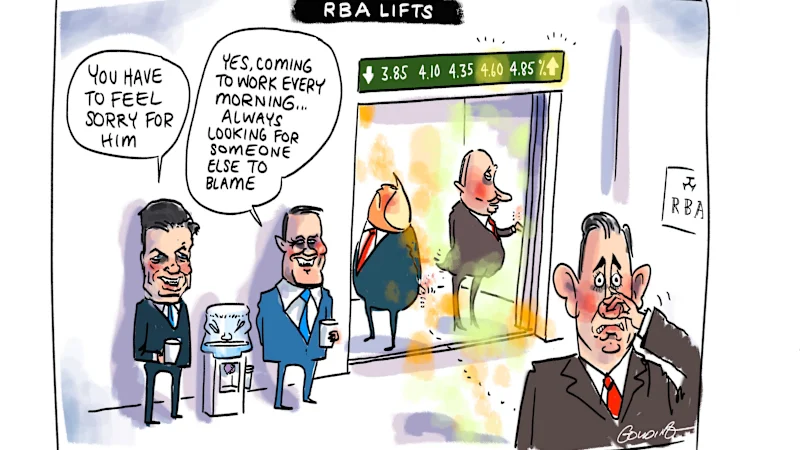
Letters to the editor have linked Donald Trump’s policies and the actions of his administration to rising economic pressure on Australian mortgage holders, renters and borrowers.
Andrew Trembath, of Blackburn, argued that the Trump administration’s second term had harmed countries around the world and made managing Australia’s economy more difficult for the Reserve Bank and the federal government.
He pointed to the closure of USAID, the US withdrawal from the World Health Organisation and a lack of support for Ukraine. He also blamed the administration’s conflict with Iran for the closure of the Strait of Hormuz, saying the resulting rise in oil prices was contributing to inflation globally.
Mr Trembath said tariffs imposed by Mr Trump were adding to inflationary pressures and slowing world trade, while the United States’ expanding budget deficit and public debt were pushing up international interest rates as investors sought higher returns on government bonds.
He said the circumstances made it more important for democracies to co-ordinate their economic, aid and strategic policies in response to the effects of the US administration’s decisions.
Other correspondents focused on the domestic consequences of efforts to control inflation. Craig Jory, of Albury, said Australia’s wealthiest 200 people had increased their combined fortunes by 39 billion Australian dollars to 707 billion dollars during the last financial year, while mortgage holders and renters were being left to bear the cost of bringing inflation under control.
He argued that Australia had developed an economic system which encouraged an extraordinary concentration of wealth. Lorraine Bates, of Balwyn, similarly criticised the Reserve Bank’s approach, saying its policies caused hardship for mortgage holders and failed to show sufficient concern for unemployed people.
Garry Meller, of Bentleigh, said criticism of government spending was incomplete unless opposition politicians Angus Taylor and Tim Wilson specified which spending they wanted reduced. He described their argument that government expenditure was responsible for the Reserve Bank’s four interest rate rises this year as empty without such detail.
Another letter proposed varying the goods and services tax as an alternative way of sharing the burden of economic management. Harley Powell, of Elsternwick, said changing the GST rate could spread the cost of cooling or stimulating the economy more evenly than relying primarily on interest rates, which he said placed particular pressure on people with mortgages or other debts while benefiting lenders.
