


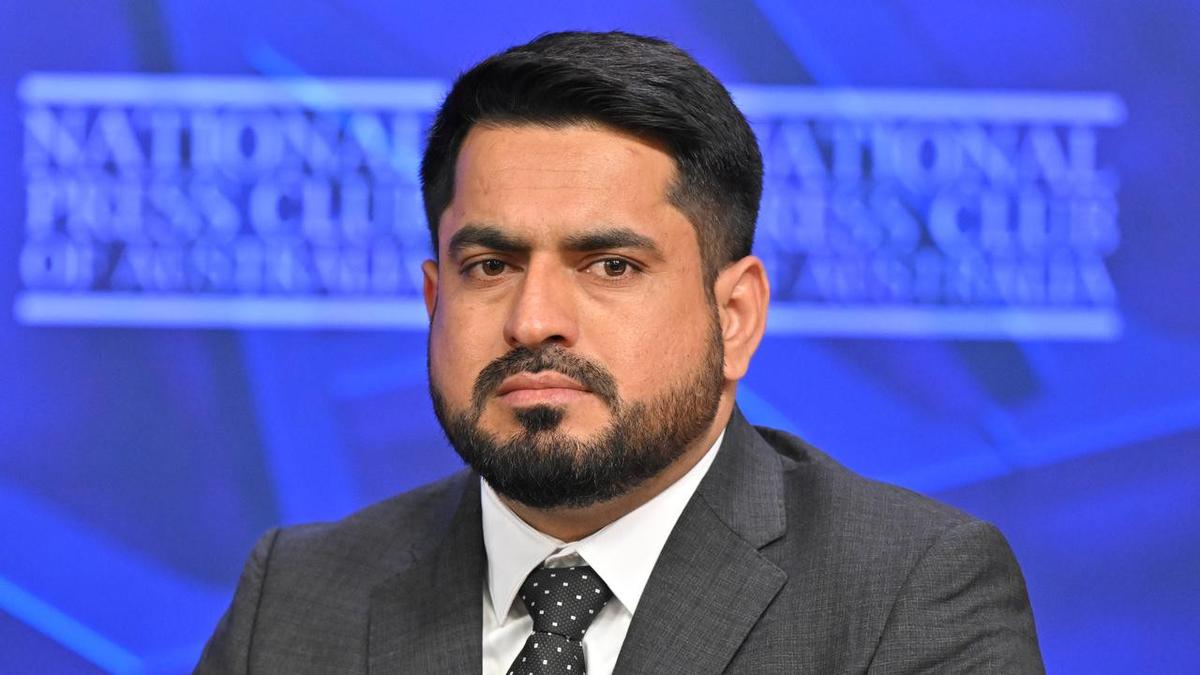
Australia has been urged to pursue diplomatic engagement with the Taliban without granting legitimacy to the group, five years after it returned to power in Afghanistan.
Geopolitical strategist Sami Omari said contact could be necessary because Afghanistan could not be isolated from the rest of the world, but warned that ordinary Afghans should not bear the consequences of their rulers’ actions.
“Engagement with the Taliban may be sometimes necessary, because Afghanistan cannot be simply sealed off from the rest of the world,” Mr Omari told the National Press Club on Wednesday.
“Ordinary Afghans should not be punished for the actions of who’s governing them.”
The Taliban took control of Kabul in 2021, weeks after the United States withdrew all troops from Afghanistan following two decades of involvement in the country.
Mr Omari said diplomatic contact must not evolve into acceptance of the Taliban’s rule. “Engagement must not quietly become normalisation,” he said. “(There should be) no assumption that contact equals legitimacy.”
Conditions for diplomatic engagement with the Taliban
He raised concerns over recent sanction-free visits by Taliban officials to Belgium and Germany, saying such interactions risked providing legitimacy to what he described as a terrorist organisation in government.
Mr Omari called for any Australian diplomatic approach to be guided by strict conditions. Women’s rights and girls’ education, he said, must remain central to discussions rather than being raised only after security, trade and regional interests.
“Any diplomatic concession should be connected to verifiable improvements, including on women’s rights, education, counter-terrorism commitments, and inclusive government,” he said.
Australia should also urgently protect hundreds of Afghan nationals who had worked with or supported the country, Mr Omari said, while maintaining humanitarian pathways for other Afghans at risk.
He backed continued Australian support for independent Afghan media, ideally within Afghanistan itself.
Mr Omari fled the country after his car was fired upon while his wife and two young children were inside. He said there was no appetite for another military intervention in Afghanistan, which had been ravaged by war for 40 years, but argued that other forms of support remained available.
“Keep reporting Afghanistan. Keep talking about Afghanistan. Keep asking questions,” Mr Omari said. “Do not let silence become acceptance.”
“The war ended for Australia in 2021, but our responsibility did not.”
