


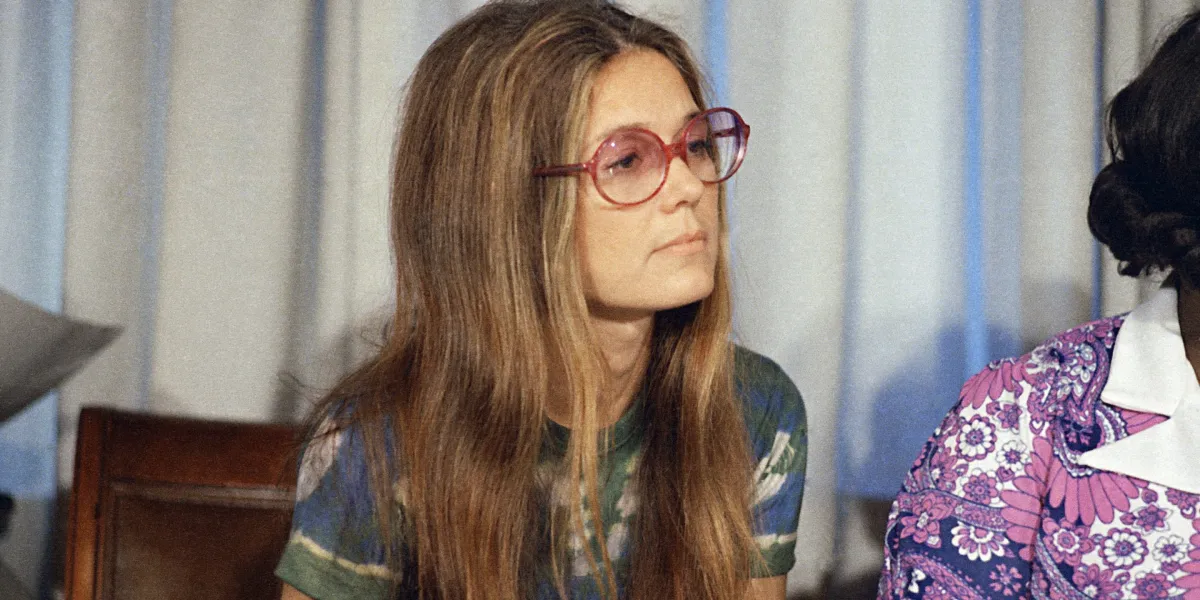
Gloria Steinem, the journalist, author and activist who became one of the defining figures of the modern women’s movement, has died aged 92.
Steinem died on Wednesday, September 2, at her home in New York City. Her foundation said she had passed away peacefully surrounded by people who loved her; no cause of death was disclosed. ([abcnews.com](https://abcnews.com/US/feminist-icon-journalist-gloria-steinem-dies/story?id=82183161&utm_source=openai))
“Gloria’s near-century on earth were years well-lived, and she continued working for equality until the very end,” the statement said.
For more than six decades, Steinem campaigned on women’s rights, reproductive freedom, political representation and equality. With her centre-parted hair, aviator glasses and calm but incisive manner, she became one of the most recognisable faces of American feminism.
She was a co-founder of Ms. magazine in 1972, helping create a publication that put women’s experiences and political arguments at the centre of national debate. She remained an adviser to the magazine after it was acquired by the Feminist Majority Foundation in 2001.
Gloria Steinem’s path from journalism to activism
Steinem began her career as a journalist, but became increasingly involved in political organising during the late 1960s. She later said that attending a women’s abortion rights hearing in 1969 marked the turning point in her life.
She had undergone an illegal abortion in London at the age of 22, an experience she kept private for years. Reflecting on the issue in 2022, she said: “Either our control over our own bodies is equal, regardless of sex or race, or we’re not living in a democracy.”
In 1971, she helped establish the National Women’s Political Caucus alongside Betty Friedan, Shirley Chisholm and Bella Abzug. She also formed a notable partnership with Dorothy Pitman Hughes, a Black feminist and child welfare campaigner, at a time when the movement was often criticised for being dominated by white, middle-class women.
Steinem’s public profile grew rapidly, although she admitted that she had once been afraid of speaking before crowds. “I was terrified,” she told the Associated Press in 2015. “But I’m grateful, even though I still get scared even now.”
Her first major newspaper assignment had come in 1963, when she went undercover as a Playboy Bunny for an investigation into working conditions in Hugh Hefner’s organisation. She later described the episode as a mistake that was used against her for years.
“I could not have made a bigger mistake,” she said. “It was personally and professionally a disaster.”
A lifetime of feminist campaigning
Steinem spent much of her life travelling across the United States and abroad, addressing students, campaigners and community groups. She argued that political organising depended on personal contact and the ability to listen.
“You can’t do it on the phone or on the web,” she said in 2015. “You have to be there with all five senses.”
Her causes ranged from abortion rights and protection from violence to economic equality, international women’s rights and racial justice. She continued to speak publicly well into her eighties, including at the Women’s March in Washington in January 2017, when hundreds of thousands gathered after Donald Trump’s inauguration.
“We are linked,” she told the crowd. “And this is a day that will change us forever because we are together.”
In later years she remained a prominent advocate, while expressing frustration that media coverage often focused on her appearance. She objected to being described as beautiful or glamorous when her work had been built on years of political activism.
“The most hurtful part is that you work very hard, and people say it’s because of your looks,” she said in a 2011 interview.
Steinem frequently met hostility with humour. Before marrying at 66, she joked: “I can’t mate in captivity.” She also wrote that laughter was “the only free emotion — the only one that can’t be compelled.”
Steinem’s later years
Steinem never had children and said she had no regrets about that decision. In 2000, she married British activist and businessman David Bale in a Cherokee ceremony in Oklahoma. Bale, the father of actor Christian Bale, died from brain lymphoma in 2003, with Steinem caring for him during his illness.
Her books included the memoir My Life on the Road, published in 2015, despite her never learning to drive. She said remaining a passenger allowed her to talk to the people who collected her from airports and railway stations, as well as to taxi drivers.
Her life was dramatised in the 2020 film The Glorias, and earlier this year she collaborated with Liberian peace activist and Nobel laureate Leymah Gbowee on a picture book intended to encourage young people to create social change.
Steinem had recently completed another memoir, due to be published this autumn.
Abigail Disney, a friend and fellow activist who visited her shortly before her death, said Steinem remained “just as funny and just as sharp as I have ever known her”.
Steinem often resisted the idea that she alone had transformed the women’s movement, saying that if she had not emerged as its leading voice, someone else would have taken up the work.
“The primary thing is not that they know who I am,” she once said, “but that they know who they are.”
