


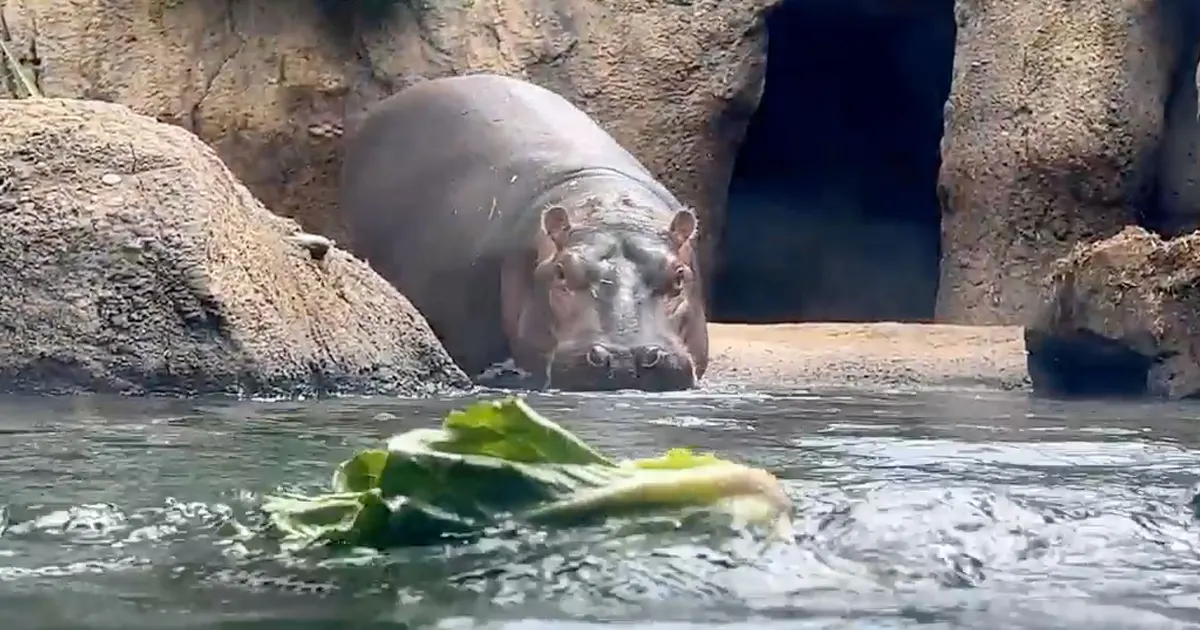
A necropsy has found that Fiona, the much-loved hippopotamus at Cincinnati Zoo and Botanical Gardens, died after a knitted cap swallowed 11 days earlier became lodged in the middle of her small intestine.
The nine-year-old Nile hippo died on Thursday, despite intensive efforts by the zoo’s veterinary and care teams to help move the item through her digestive system.
Fiona’s multi-chambered stomach and lengthy gastrointestinal tract were unable to break down the synthetic fibres in the cap. The examination found it had travelled beyond the final compartment of her stomach but remained about 50 feet from the end of her intestines.
Mike Wenninger, the zoo’s director of animal health, said supportive treatment had been the only viable option.
“No treatment aside from supportive care had any chance for success, and the necropsy confirmed that no amount of supportive care would have worked,” he said.
How the cap entered Fiona’s enclosure
The cap was accidentally thrown into Fiona’s habitat when a visitor tossed it into the air in front of the enclosure. It became caught in a ceiling fan, which propelled it over the viewing windows and into the hippo’s surroundings.
Fiona initially showed no signs of distress, but her appetite began to deteriorate several days later. By Monday, she was receiving veterinary care, with staff keeping her hydrated, offering treats and monitoring her closely.
The team also borrowed a vibration plate from a nearby horse farm and had Fiona stand on it several times a day in the hope that the movement would help pass the obstruction. An upper gastrointestinal endoscopy and a colonoscopy were carried out, but the cap was beyond the reach of the instruments.
“Laparoscopic surgery wasn’t possible given the location,” Wenninger said. “Open incision in a hippo that size with an incision that’s that long would have been a death sentence for her. So the only option we had was supportive care, and unfortunately it just wasn’t enough.”
Visitors have since left flowers and handwritten notes at a hippo statue in a makeshift memorial at the zoo. Watermelons and pumpkins, among Fiona’s favourite treats, have also been placed there.
One note read: “She brought so much love in her lifetime.”
Fiona became known around the world after she was born six weeks premature in 2017. She was too small to stand or nurse from her mother, Bibi, and was cared for by the zoo team, whose efforts were followed by fans using the hashtag #TeamFiona.
Her survival inspired books, beer and clothing ranges, as well as an ice cream flavour.
“The support that we’re feeling from all over the world reminds me of the time when everyone pulled together to root for her to survive,” Cincinnati Zoo director Dave Jenike said. “She did, and she gave us almost a decade of smiles.”
