


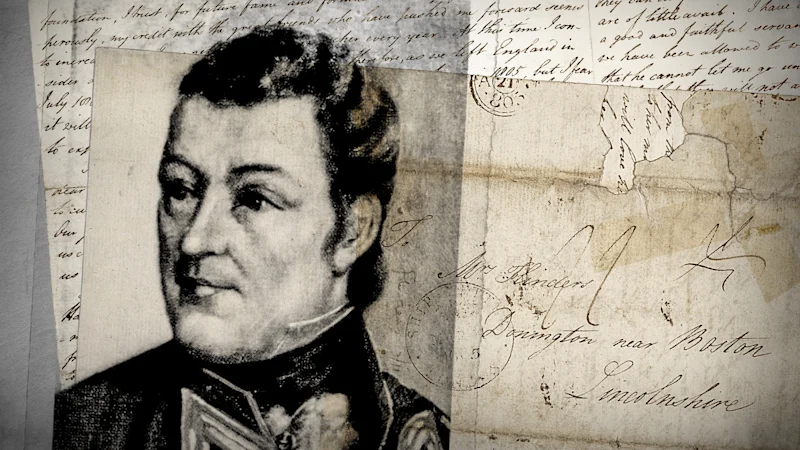
A rare Matthew Flinders letter charting both the explorer’s triumph and personal anguish is expected to fetch up to $400,000 when it is auctioned in London next month.
The document, which has remained with Flinders’ family for more than 200 years, will be offered at Christie’s Valuable Books & Manuscripts auction on December 10. It carries an estimate of £150,000 to £200,000.
Flinders began writing to his stepmother, Elizabeth, on June 10, 1803, the day after returning to Sydney aboard the Investigator following the first recorded circumnavigation of mainland Australia.
He opened with a succinct account of the voyage: “We arrived here yesterday from having circumnavigated New Holland.”
But the letter soon turned from professional achievement to grief. Flinders had learned that his father, Matthew Flinders senior, had died during his absence, robbing him of the chance to share the success with the surgeon.
“One of my fondest hopes is now destroyed, – Oh my dearest, kindest father, how much I loved and reverenced you, you cannot now know,” he wrote.
Flinders also considered his responsibilities towards his stepmother and younger sisters, having hoped that his growing reputation and prospects would allow him to support his father in retirement.
A Matthew Flinders letter completed in captivity
The letter took on a darker significance after Flinders was detained by French authorities while trying to return to England. He had been forced to seek refuge in Mauritius aboard the leaking schooner Cumberland during the war between Britain and France, and was suspected of espionage.
He eventually completed the letter on August 25, 1804, after spending months in confinement. “What is written above has been lying by me a very long time: I little expected to finish it in a prison,” he wrote.
Flinders described receiving money and assistance from sympathetic French residents, and said that he and two companions had eventually been allowed to walk in a garden after months of confinement.
Despite facing an uncertain future, he believed he would be cleared and released. “My great consolation is, that as I have done nothing to forfeit my passport, or that can justify them for keeping me a prisoner, so I must be set at liberty with honour when the time comes,” he wrote.
Thomas Venning, head of books and manuscripts at Christie’s London, said the document revealed both the significance of Flinders’ achievement and the personal suffering that followed it.
“This letter could claim to have the best opening line of any letter relating to the early history of Australia,” he said. “But there is much more to the letter than the victory lap you might expect from that opening: you see the human side of Matthew Flinders in his reaction to learning, at the moment of his greatest achievement, that his beloved father has died.”
Venning said only three Flinders letters had sold at international auction in the past 40 years, making the appearance of the document particularly unusual.
Flinders’ circumnavigation, carried out with a crew that included the Aboriginal navigator Bungaree, helped establish the shape of the Australian continent and produced detailed charts of its coastline.
After his release in 1810, Flinders returned to England and completed A Voyage to Terra Australis, the work that helped popularise the name Australia. He died in July 1814, aged 40, the day after the book was published.
Two earlier letters written by Flinders to his father during the Investigator’s voyage to Australia in 1801 will also be sold. Written from Madeira and the Cape of Good Hope, they have a combined estimate of between £40,000 and £70,000.
