


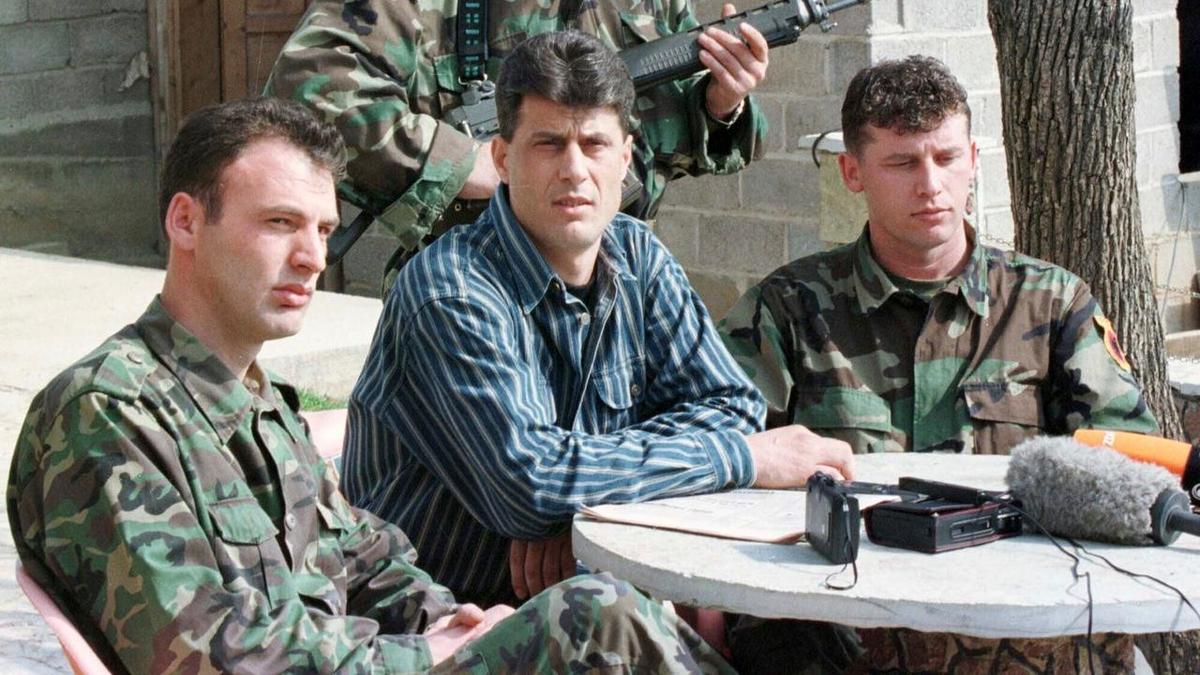
Former Kosovo president Hashim Thaci has been sentenced to 25 years in prison after being found guilty of war crimes including murder, torture and illegal detention by the Kosovo Specialist Chambers in The Hague.
Thaci, 58, was convicted over crimes committed while he was a senior commander of the ethnic Albanian Kosovo Liberation Army (KLA) during Kosovo’s violent break from Serbia in the 1990s.
The tribunal found that KLA forces murdered 96 political opponents and people suspected of collaborating with Serbian security forces. Thaci was also convicted over the arbitrary detention of 385 people, the torture of 303 and the cruel treatment of about 50 others.
Presiding judge Charles Smith said Thaci had “actively participated in and encouraged crimes”, adding that “the scale and nature of the crimes committed were very serious”.
The court said that information used to arrest, detain and kill many of the victims amounted to little more than unverified rumours. Victims were labelled spies or collaborators before being subjected to violent treatment, it said.
Thaci stood in silence as the verdict and sentence were read out. He has denied all the charges and can appeal against the ruling.
Reaction to the Kosovo war crimes verdict
The judgment was closely followed in Kosovo and Serbia, where the legacy of the 1998-99 conflict and Kosovo’s 2008 declaration of independence remain a source of tension between ethnic Albanians and Serbs.
In Pristina, thousands watched the proceedings on a large screen, booing the verdict and chanting Thaci’s name. Some people were seen crying, while a billboard displaying the defendants’ faces declared: “In the name of the people you are declared innocent.”
“This verdict is shameful. From today, there will be no peace in Kosovo,” said Raif Pllana, a former KLA fighter who had gathered in central Pristina in support of Thaci.
Police said preparations had been made with foreign peacekeeping forces in case demonstrations became violent. Albania’s prime minister also criticised the verdict, posting an image of barbed wire across a map of Europe with the word “Unbelievable”.
Prosecutors had sought a 45-year sentence for Thaci and three other former KLA commanders. However, the three-judge panel dismissed six charges of crimes against humanity, ruling that prosecutors had not shown the alleged offences formed part of widespread or systematic attacks against the civilian population as a whole.
The judges nevertheless found that Thaci and his co-accused were involved in a joint criminal enterprise, with a common plan to seize control of Kosovo’s politics after independence by targeting political opponents.
Thaci’s lawyers argued that the accusations were unfounded and represented an attempt to rewrite history. They said there was no evidence directly linking him to the alleged crimes or proving that he controlled other KLA commanders.
The Hague-based Kosovo Specialist Chambers was established in 2015 under international pressure to prosecute former KLA fighters over alleged wartime and post-war crimes. The tribunal remains deeply unpopular in Kosovo, where Thaci is still regarded as a revered figure by many ethnic Albanians.
