


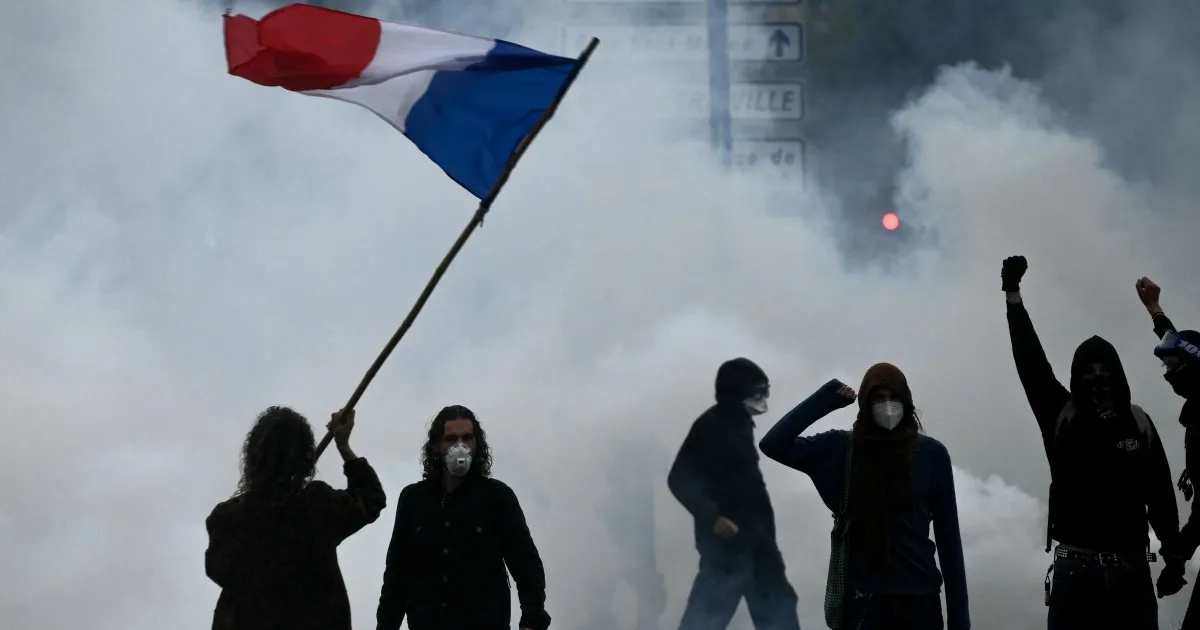
French protests over inequality, dignity and marginalisation have exposed a deeper crisis of trust between parts of society and the state, reviving debate over what has been described as a new French malaise.
The unrest has included demonstrations by students, workers and other disaffected groups, with some protests turning violent. Attacks on symbols of state authority and looting on October 17 prompted Emmanuel Macron to say that the perpetrators were seeking “to tear down our institutions”.
The language echoed the French government’s response to the upheaval of May 1968, when student protests were portrayed as an “attack on the Republic”. But the two periods are markedly different: the protesters of 1968 demanded greater freedom, while today’s demonstrators are presented as seeking equality and dignity.
The current movement is also described as being driven less by privileged students than by people who feel they have been left behind. Its roots, the argument goes, reach back to the unrest of 2005, when the deaths of two teenagers, Bouna and Zyed, who were pursued by police, triggered three weeks of disorder in the suburbs of Paris and other major cities.
Residents of impoverished neighbourhoods used the protests to express anger over police violence and their exclusion from French society. The events highlighted a divide between prosperous urban communities and racialised, marginalised populations living in underdeveloped and poorly served outskirts.
France’s police force is portrayed as central to that divide. Rather than acting primarily to protect citizens, it is said to be focused on defending the state, with accusations that it uses force disproportionately, fails to prioritise de-escalation and polices affluent and impoverished areas differently.
The analysis also claims that policing is marked by discrimination between the white majority and communities of colour. It says more than 60 per cent of police and military personnel vote for the far right.
France’s divided society
The idea of a fractured nation was developed by political scientist Jérôme Fourquet in his 2019 book, The French Archipelago: The birth of a diverse and divided nation. He argued that society had broken into increasingly isolated groups, changing how people viewed both themselves and others.
Immigration alone does not explain that division, according to the argument. A more important factor is the withdrawal of the elite, including sections of the political left sometimes described as the gauche caviar, or caviar left.
Institutions that once brought different groups together, including schools, summer camps and compulsory military service, are described as no longer working effectively or having been abolished. Their decline has weakened shared experiences and the sense of belonging they helped create.
In their absence, one section of the population has increasingly been blamed for wider problems. Islamophobia and the belief in the “Great Replacement” conspiracy theory are said to have flourished, while political and legislative developments have helped entrench hostility towards Muslims.
The argument points to a contrast between France’s relatively smaller immigrant population compared with neighbouring countries and its louder political rhetoric about integration. It also highlights the gap between demands placed on people from immigrant backgrounds and the limited action taken by the state to help them secure a meaningful place in society.
Some citizens consequently feel French only on paper. Formal citizenship, the analysis argues, cannot be separated from access to rights, social justice and human dignity.
That sense of exclusion led activists in 2005 to call themselves the “Natives of the Republic” and demand the country’s decolonisation. The central claim is that France has reproduced elements of a colonial order within its own borders.
The resulting crisis is presented not simply as a dispute over individual protests, but as a failure to treat some citizens as full members of the Republic. That, rather than the demonstrations alone, is identified as the core of the new French malaise.
